


Ragweed vs Goldenrod: Determining Friend from Foe
As the onset of cool, autumnal winds pushes out the corn-sweatingly sweltering summer, we northern gardeners enter one of the most fleetingly beautiful times of our year: harvest season! The little window of time between the State Fair and the first frost is the perfect time to reap the prized vegetables you’ve spent cultivating during the better part of our climate’s short growing season.
Our home-grown crops aren’t the only plants that reach maturity in early fall: A large variety of local flowering plants reach adulthood concurrently with our seasonal harvest. This final wave of blooms is truly spectacular, setting our native landscapes aglow in hues of gold, purple, pinks, and reds for a ‘last hurrah’ before the frost.
While many of our fall-flowering friends coexist with us in relative harmony, there is one whose very name triggers the ire and sneeze of millions: Ragweed!
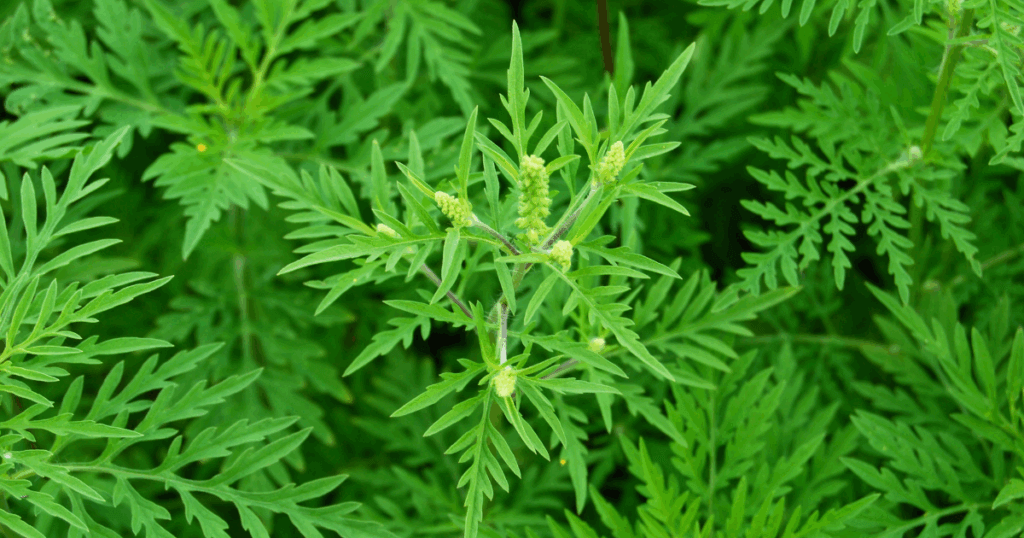
What is Ragweed?
Ragweeds are the common name for a collection of flowering plants that belong to the genus Ambrosia. Although the genus shares its namesake with the heavenly food of the mythological Greek Gods, this Ambrosia shares more in common with a curse from the underworld.
In Minnesota, ragweeds produce more pollen each year than every other pollen-producing weed species combined. Ragweed produces pollen from early August through mid-October, and one ragweed plant can produce up to 1 billion grains of pollen each season.
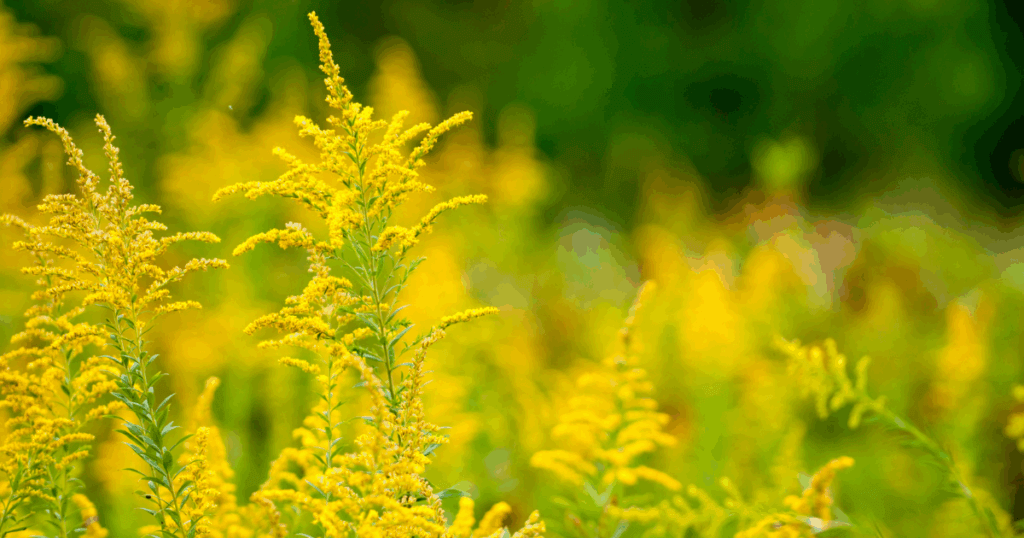
Goldenrod: Caught in the crossfire
For many who suffer seasonal allergies, a simple fix to the ragweed menace comes in the form of weeding. After all, ragweed is a weed, and if it’s killed, it can’t produce pollen, right?
While this proposal is an understandable and simple solution,the trouble lies in the execution of said “ragweed removal”. Even among gardeners, many folks cannot confidently identify and differentiate ragweed from its beautiful, non-allergenic counterparts.
The sad fact is, ragweed isn’t a flashy or conspicuous plant, but it often grows near beautiful cornerstone native wildflower species that are. These species are invaluable habitat for pollinators like bees and butterflies, pollinators that are at this time of the year making their last big push to forage and stock up on food before they hibernate or migrate for the winter.
Enter, Solidago: aka, goldenrods. Tall, native wildflowers that grow a crown of schoolbus-yellow flowers during the final days of the state fair. It is a key habitat and food species for countless native animals, from butterflies to beetles to even woodpeckers— and a civilian casualty in the war against ragweed.
Growing up, I was confidently told by multiple adults that goldenrod was ragweed, and therefore the cause of both my parents and my own seasonal misery. I would venture that millions of other Americans still confidently hold this belief. At a glance, it makes perfect sense: the large clusters of small yellow flowers found on goldenrod plants this time of year can easily be mistaken for the platonic ideal of a pollen factory. But precursory glances can be misleading!
In reality, goldenrod pollen makes up only 0.2% of all weed pollen each year— absolute peanuts compared to ragweed’s 58.8% of all pollen. This plant may golden-hued, but it is certainly a “red herring” in the war against seasonal allergies!
Goldenrod vs. Ragweed: Identification guide
|
Ragweed (Ambrosia) 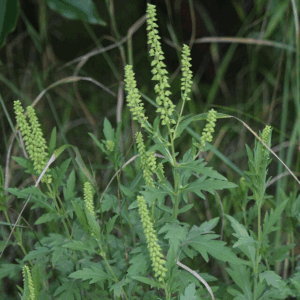 |
Goldenrod (Solidago) 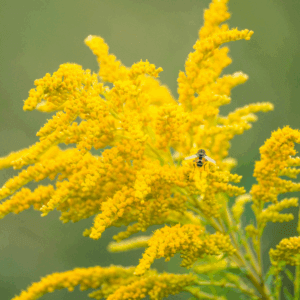 |
|---|---|
|
Ragweed Flowers:
|
Goldenrod Flowers:
|
|
Ragweed Leaves:
|
Goldenrod Leaves:
|
|
Ragweed Height:
|
Goldenrod Height:
|
|
Ragweed Location:
|
Goldenrod Location:
|
Shared Characteristics:
The following traits and characteristics either are or can sometimes be shared by both goldenrods and ragweeds. Do not rely on these traits alone to determine the identity of the plant!
- Native range (both ragweeds and goldenrods are native to much of the United States, including Minnesota)
- In the asteraceae family
- Can grow in the same habitat
- Have spike-like flowers
- Plant height
If you’re still having trouble telling the difference between these two plants, try using the technique my horticulture professor in college taught us: “Solidago is “solid gold” while Ambrosia is “the cause of your woes, duh!” I like to imagine ragweed as a shifty guy “laying low” (it’s often found low to the ground) after trying to pin the blame for his allergy crimes on the unsuspecting goldenrod.
Send this article to someone with a ragweed allergy!

Netanya Sadoff is a bold young writer and science educator with a passion for all things gardening. A lifelong plant enthusiast, Netanya is delighted to contribute to Northern Gardener as their the Education + Marketing Support Intern since June 2025.
Follow them at @Netanya.rose on Instagram

This article is super helpful! I always thought goldenrod gave me allergies, but now I know ragweed is the real culprit. The comparison chart is great for identification. Thanks for clearing things up!
This was super helpful! Finally, an article that clarifies the myth about goldenrod causing allergies. The comparison table is a game-changer for identifying the real culprit, ragweed. Great job!
I’ve tried to explain this to so many people over the years. Their reaction. Is typically sceptism. My husband and I have several patches of Goldenrod in our yard and flowerbeds. They are always covered with pollinators, as are the Joe Pye. We also have a number of Asters. Prairie Asters, and Fleabane…all for our busy pollinators.
Great article, Netayna! I have wondered if my goldenrod patch contributed to seasonal allergies and am relieved they they are not responsible. Will keep my eyes out for the proper target of concern, ragweed!
Very interesting, especially since the topic of Goldenrod has come up in my gardening club. I have ‘Little Lemon Goldenrod’ in my garden and defended the use of this plant. Others, had expressed that goldenrod was invasive. ??♀️