


How-to Create a Tabletop Water Garden
Transform a stylish container (or even a bedpan!) into a tabletop
water feature for your patio or deck.
On a january day more than a decade ago, I spotted a white bowl with a spout in the kitchen section of a discount department store. It was labeled a “batter bowl.” Until that moment, I had never thought of turning something so small into a water garden. But this time, I could see potential.
Surprisingly, my selection of plants and how I put it all together that first year worked. Beginner’s luck? I used the same assortment of plants the following year, and almost every year since. Each season, the bowl water garden looks the same but different as one plant grows more vigorously one year and others the next.
Now, whenever I am in a garden center, discount home-improvement store or an antique mall, my eyes search for unusual containers for these tiny water gardens. I found my most unusual vessel—an old hospital bedpan—tucked away in our garage.
Getting Started
To create a tabletop water garden, select a watertight container that fits well on your table. Choose plants no taller than 10 inches that like moisture and the light available on your patio or deck. I use only foliage plants in these petite water gardens. Water plants are my first choice but I experiment with annuals and perennials, too, referring to their identification tags regarding water and light requirements. It’s trial and error—some plants adapt to the wet, small confines of the container
better than others.
STEP-BY-STEP INSTRUCTIONS
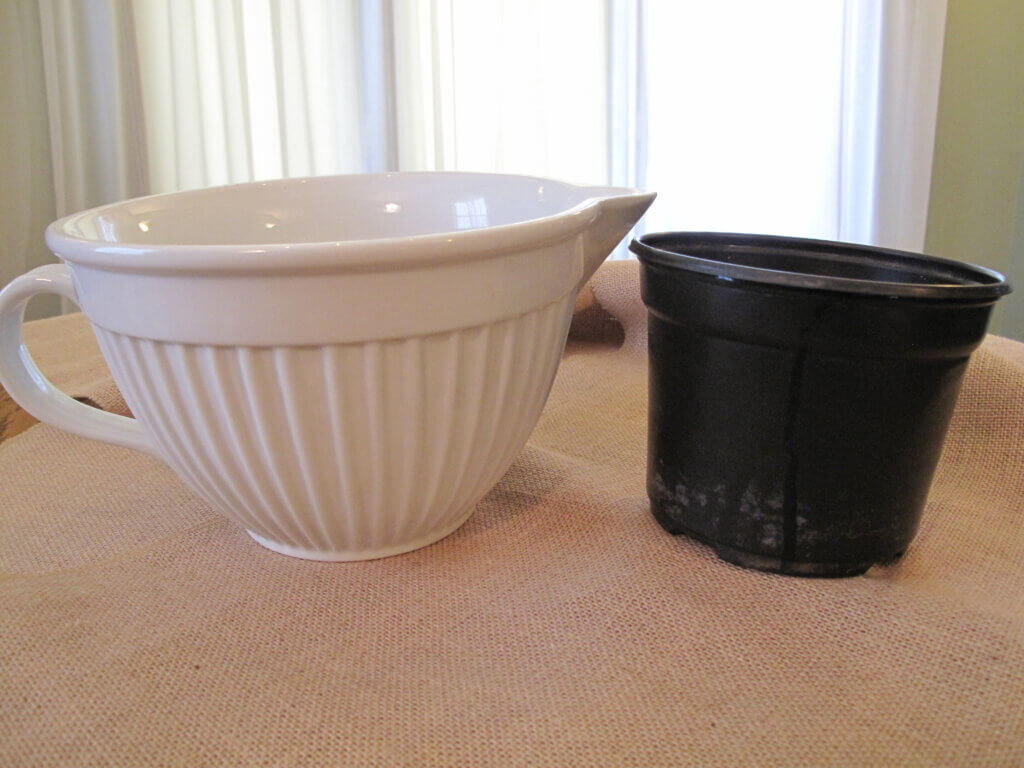 From left to right, the outer and inner containers for starting a water garden
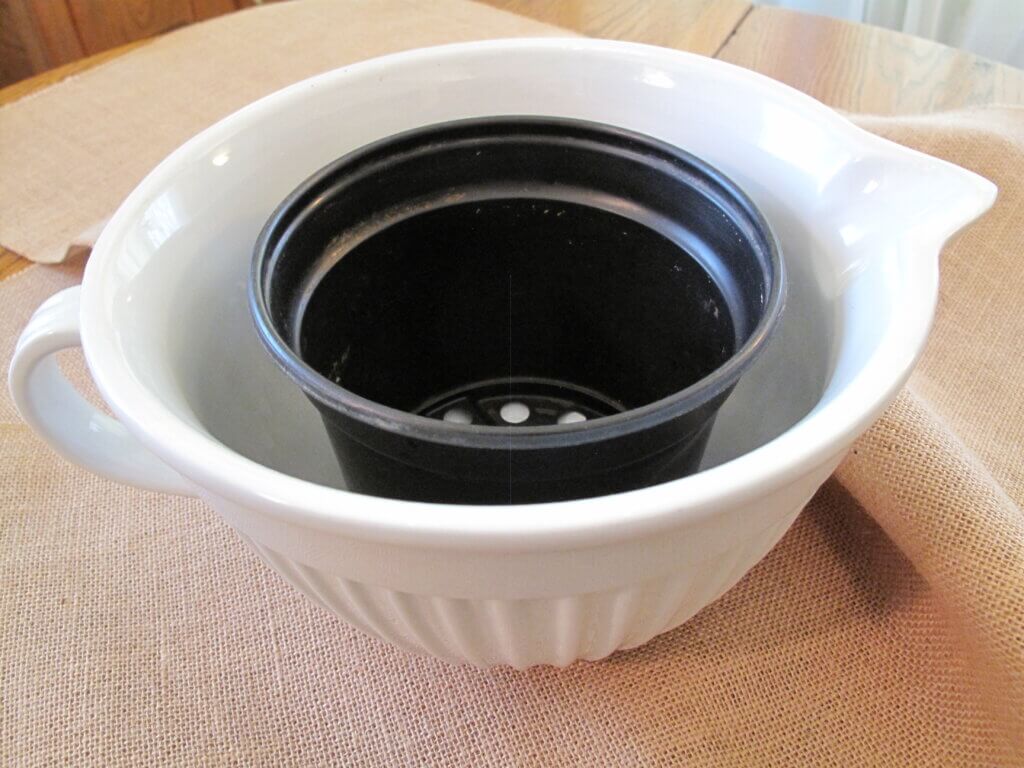 To begin constructing your water garden, place the inner 4-inch pot inside the outer vessel.
How-to build a tabletop water garden
- Selecting your main vessel
Chose a container that is big enough for at least one plant and
sized for the table. - Pick your inner pot
Select an inner pot that fits comfortably into the outer one. Depending on your vessel, you may use several 4- or 3-inch square or round plastic growers’ pots.
- Prepare for planting
Select the number and size of plants for the bowl (see guide to water plants) . If available, use topsoil for the planting medium or bagged potting mix. Cover the drain holes in the inner pot(s) with landscape fabric or several layers of newspaper to keep the dirt in.
- Put it all together!
Place the planted containers into the vessel and fill with water. Check the water level frequently as it is absorbed and evaporates. Fertilize occasionally by adding a few drops of liquid houseplant food to the water. Water hyacinth and lettuce need fertilizer. I don’t
usually add mosquito dunks, but if you choose to, break off a small piece, crush it, and sprinkle it into the water. - Seasonal maintenance
In the fall, decide if you want to overwinter the plants or buy new ones next year. Toss the floaters into the compost pile or discard in the weekly trash. It is illegal to toss water hyacinth or lettuce into a natural waterway. Clean the outer container and put it away
for next season. Vinegar will help remove any mineral deposits on the vessel.
Water Garden Inspiration photos
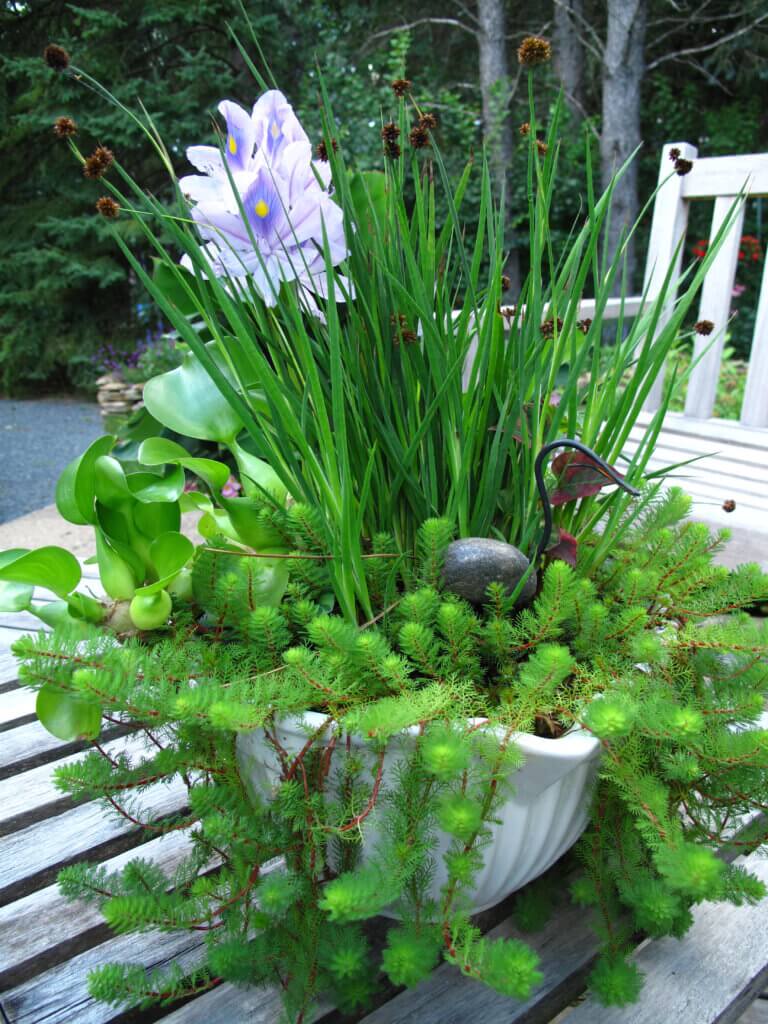 Three moisture-loving plants grow in one 5-inch plastic pot that fits inside the bowl. In the center is swordleaf rush. Barely visible behind the heron ornament is a chameleon plant, and red-stemmed parrot’s feather spills over the edge. A water hyacinth is squeezed into the narrow space between the inner and outer pots. My original vision was that the rush and chameleon plant would grow evenly but the rush won.
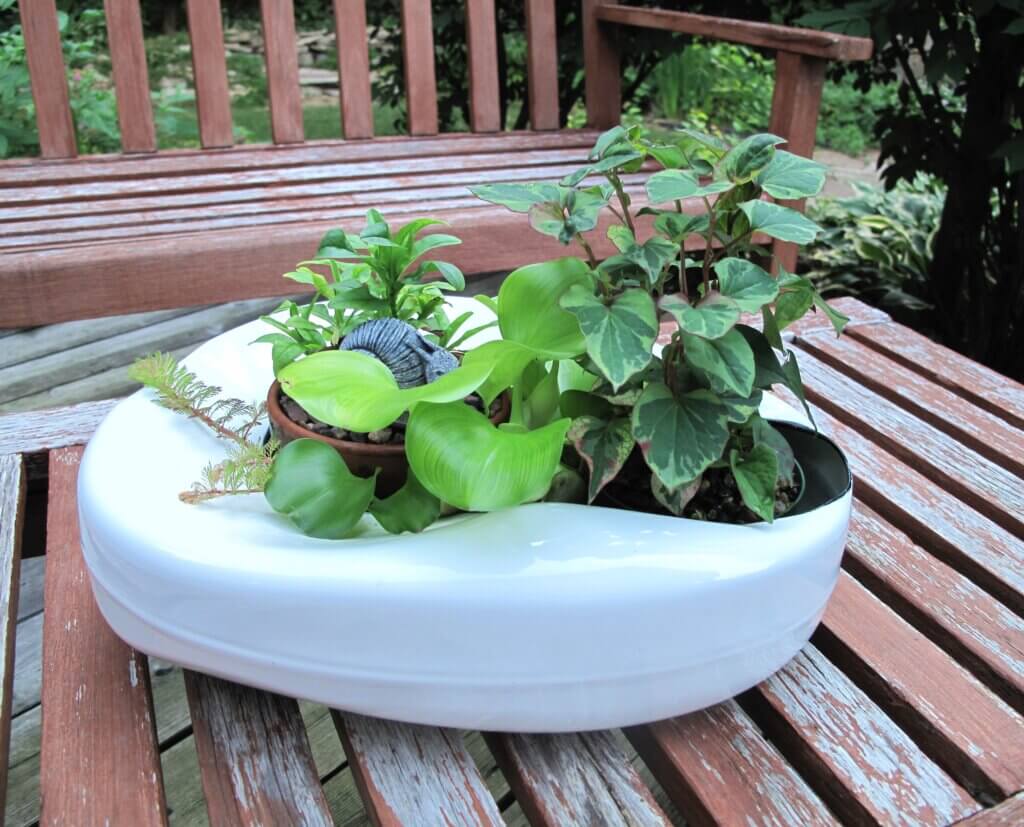 A flea-market purchase years ago, the pan will accommodate a couple of planted pots plus a floating aquatic plant or two. In this design, a snail nestles in a pot of water-forget-me-nots, water hyacinth, and a chameleon plant. A couple of pieces of red-stemmed parrot
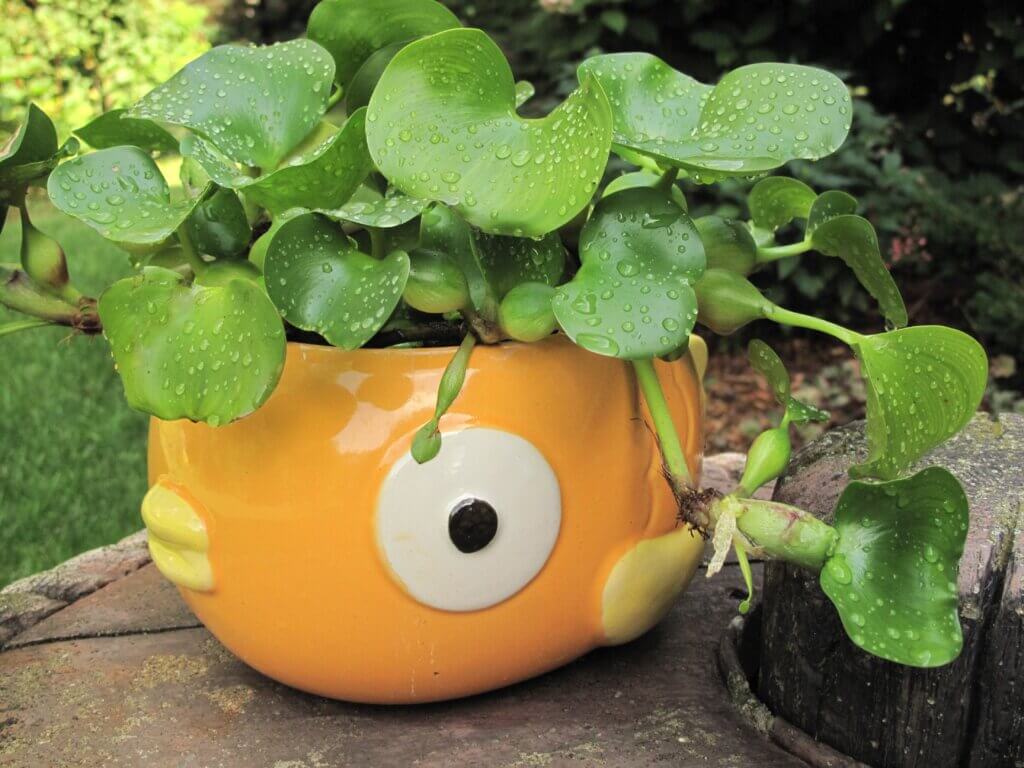 A water hyacinth floats in a fish planter bought at a discount store. It’s simple to create—fill a cute bowl with water and add a floating water plant. No planting required.
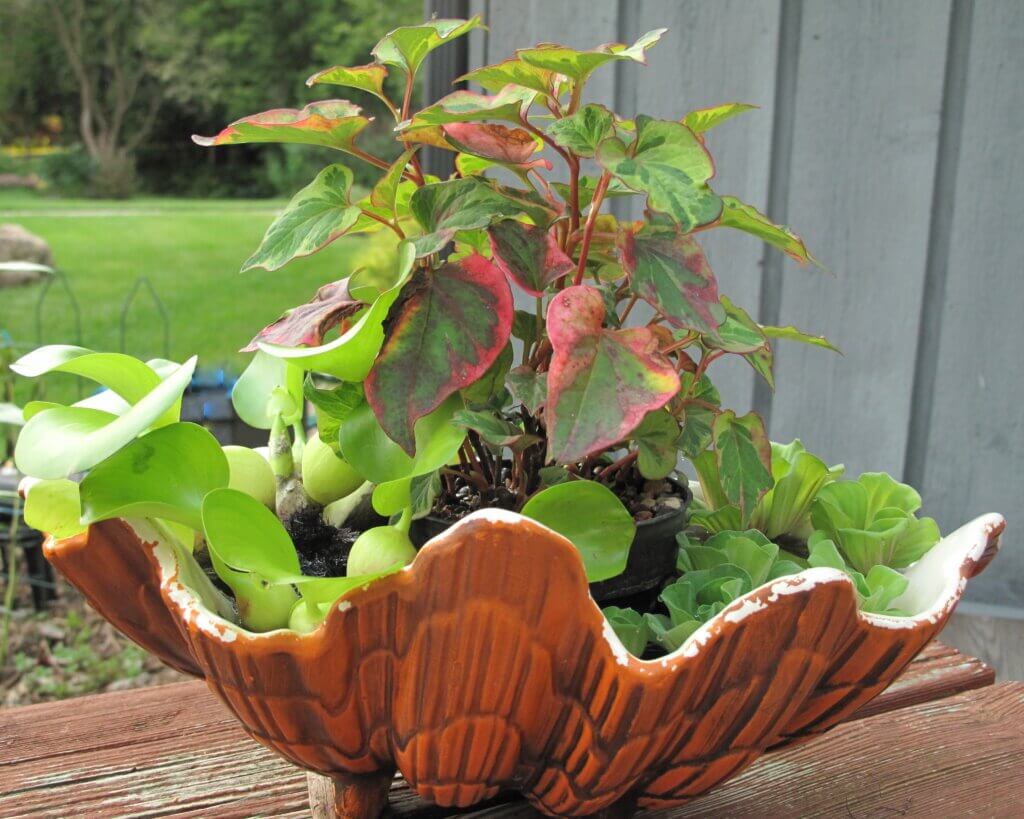 A chameleon plant grows in a 4-inch round pot surrounded by aquatic floating plants, water hyacinth, left, and water lettuce in a bowl from an antique mall.
Authors’ Plant Picks for Tabletop Water Gardens
Each of the following six plants do excellent in small-scale semiaquatic environments, making them perfect choices for filling your tiny water garden! Each of these plants need at least part sun. Most like or tolerate full sun. Plant them in 4-inch pots, except for floating plants and parrot’s feather.
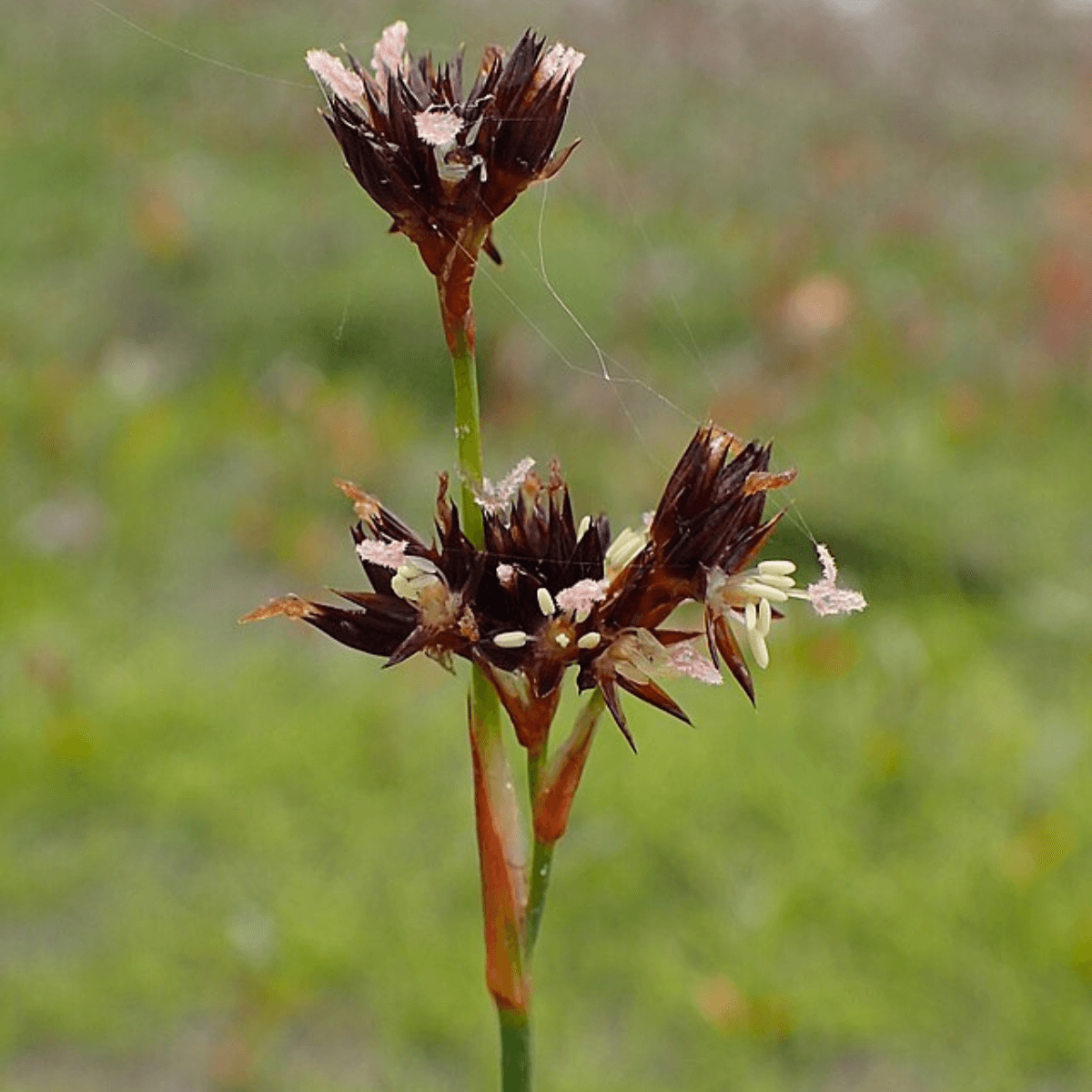
Swordleaf rush (Juncus ensifolius)- A shorter native rush with slightly blue-green foliage topped with round, dark brown seed heads that stay on most of the summer.
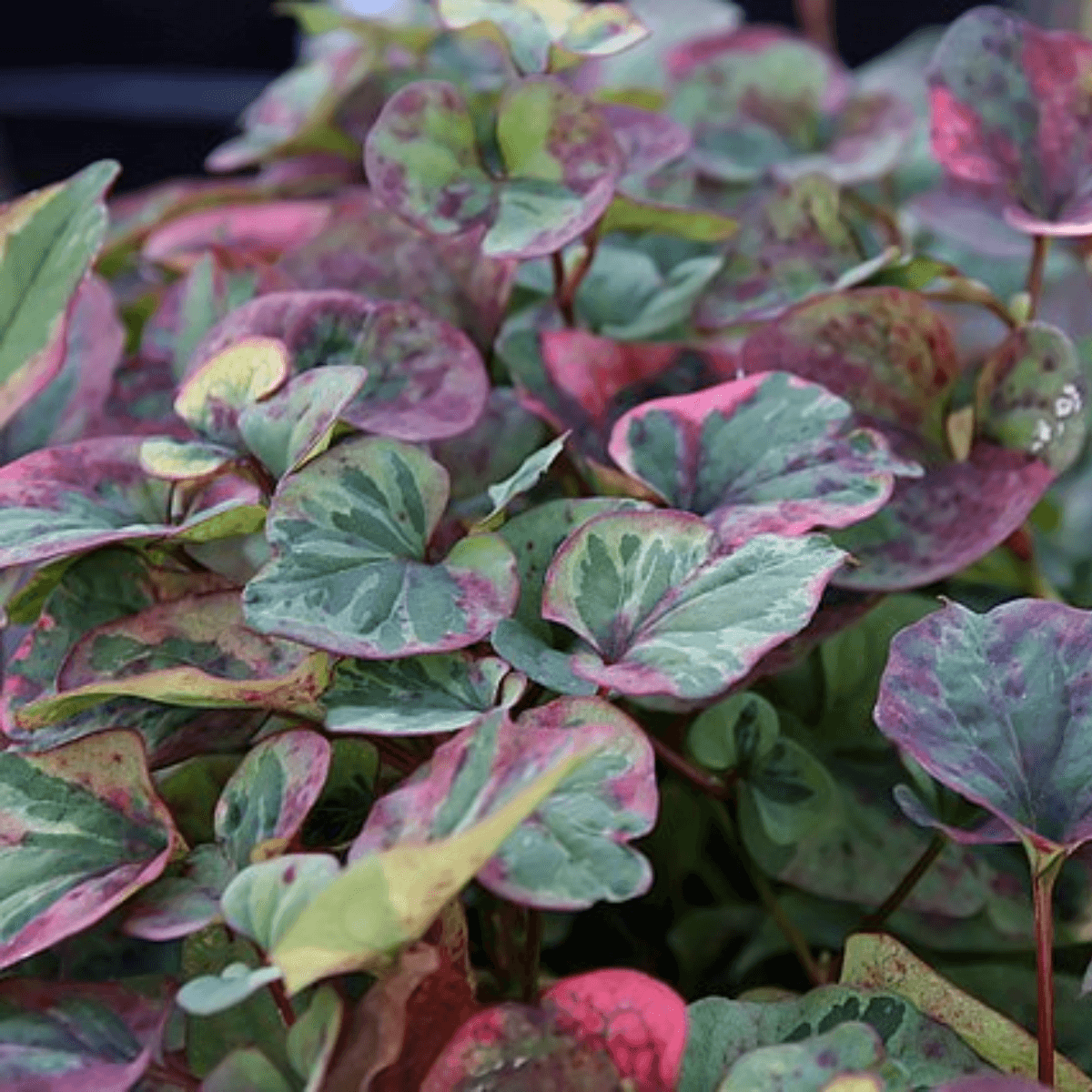
Chameleon plant (Houttuynia cordata) – A rapidly spreading plant with
variegated heart-shaped foliage. It is found with groundcovers in garden
centers or with water plants. Marginally hardy.
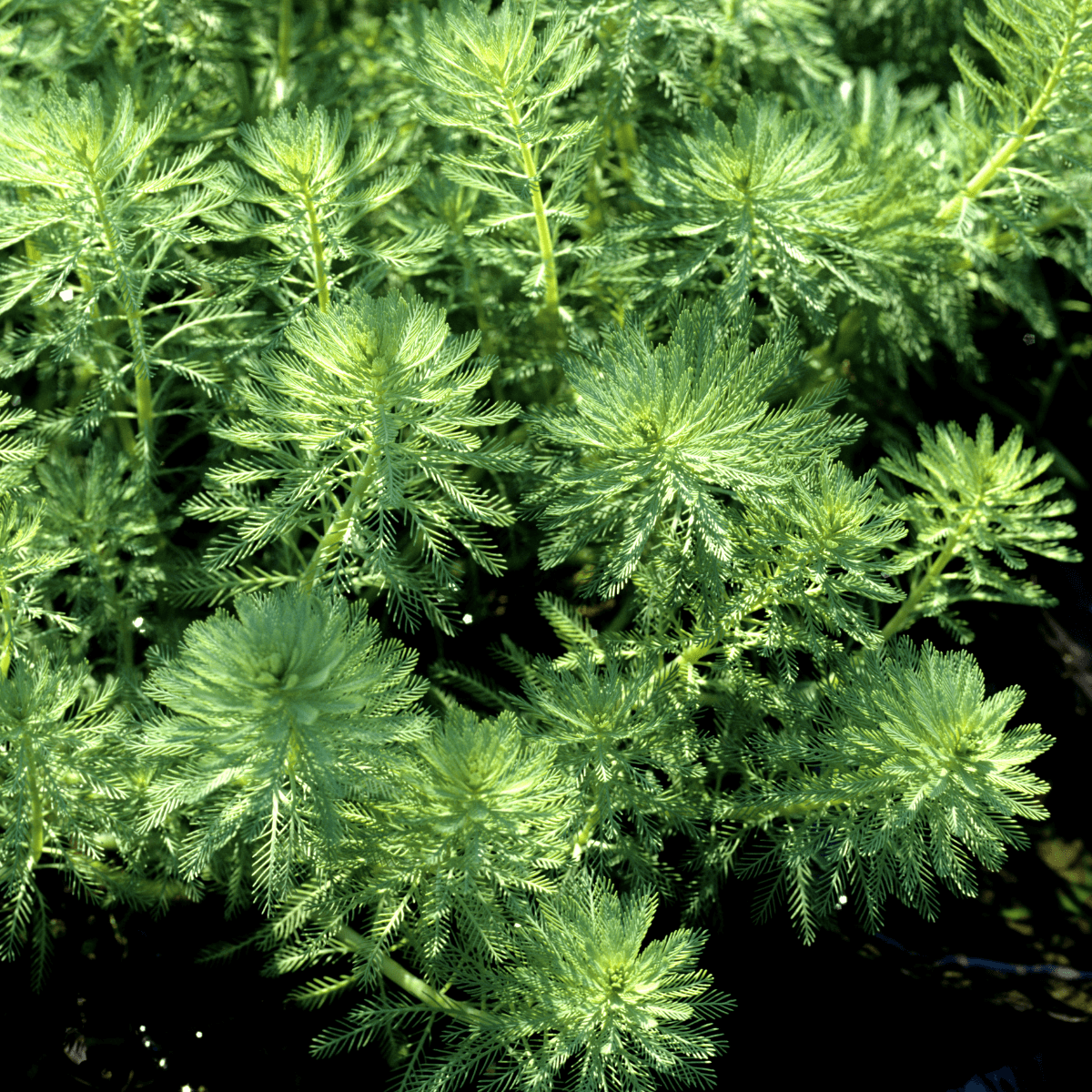
Red-stemmed parrot’s feather (Myriophyllum brasiliensis) – Whorls of
featherlike foliage on trailing stems that crawl over the water’s surface and
creep over the edges of containers. Trim regularly to maintain groomed look.
To plant, push a few stems into a planted container. Tropical.
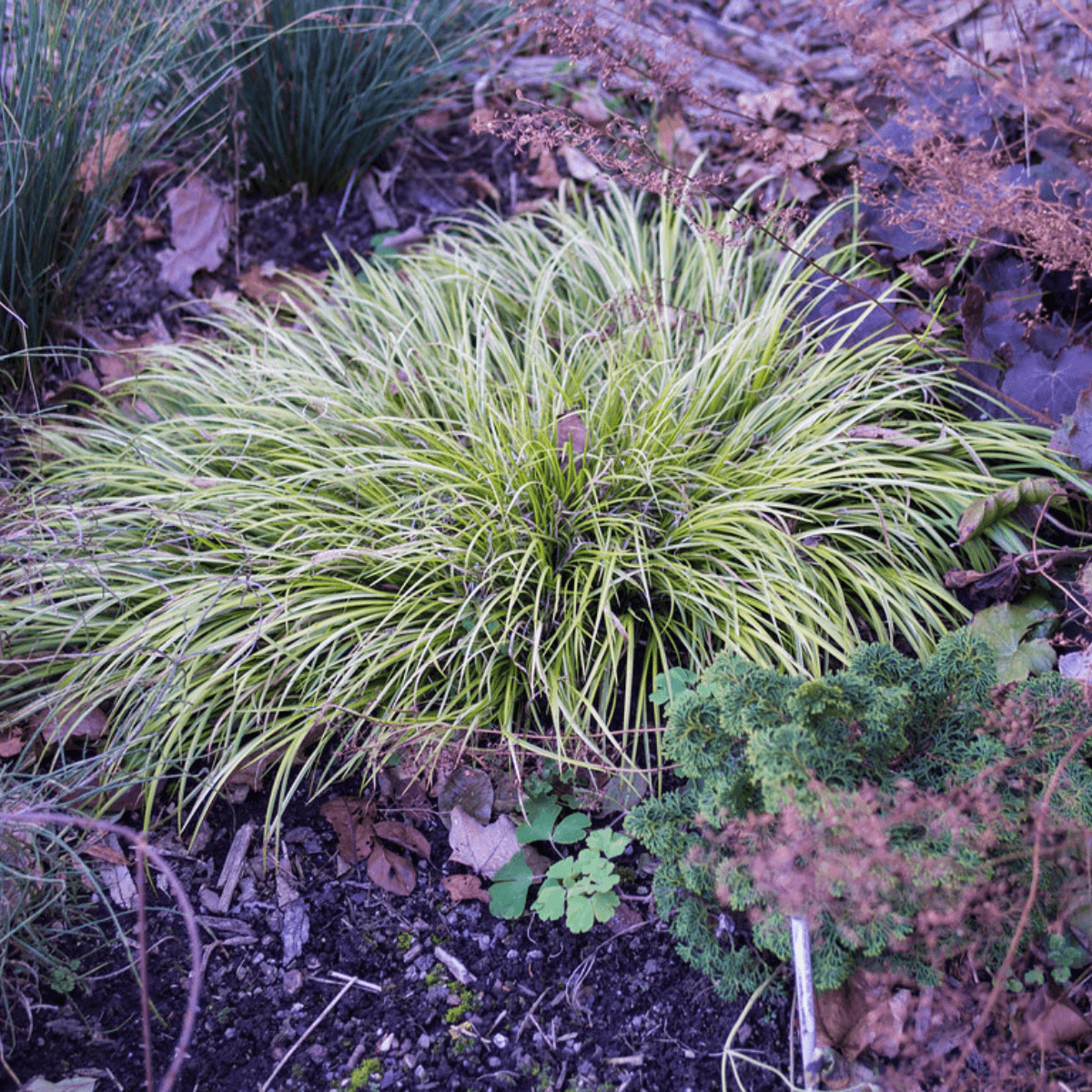
Golden Japanese sweet flag (Acorus graminius ‘Ogon’) – has light green
foliage accented with golden yellow vertical stripes. Generally found in
garden centers with filler plants for mixed containers. Marginally hardy.
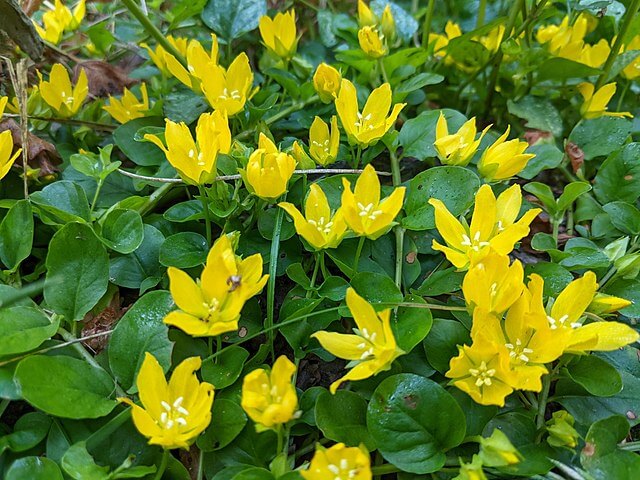
Creeping jenny (Lysimachia nummularia) – a lime green
groundcover sometimes used as the trailing plant in a mixed container.
Readily available in garden centers.
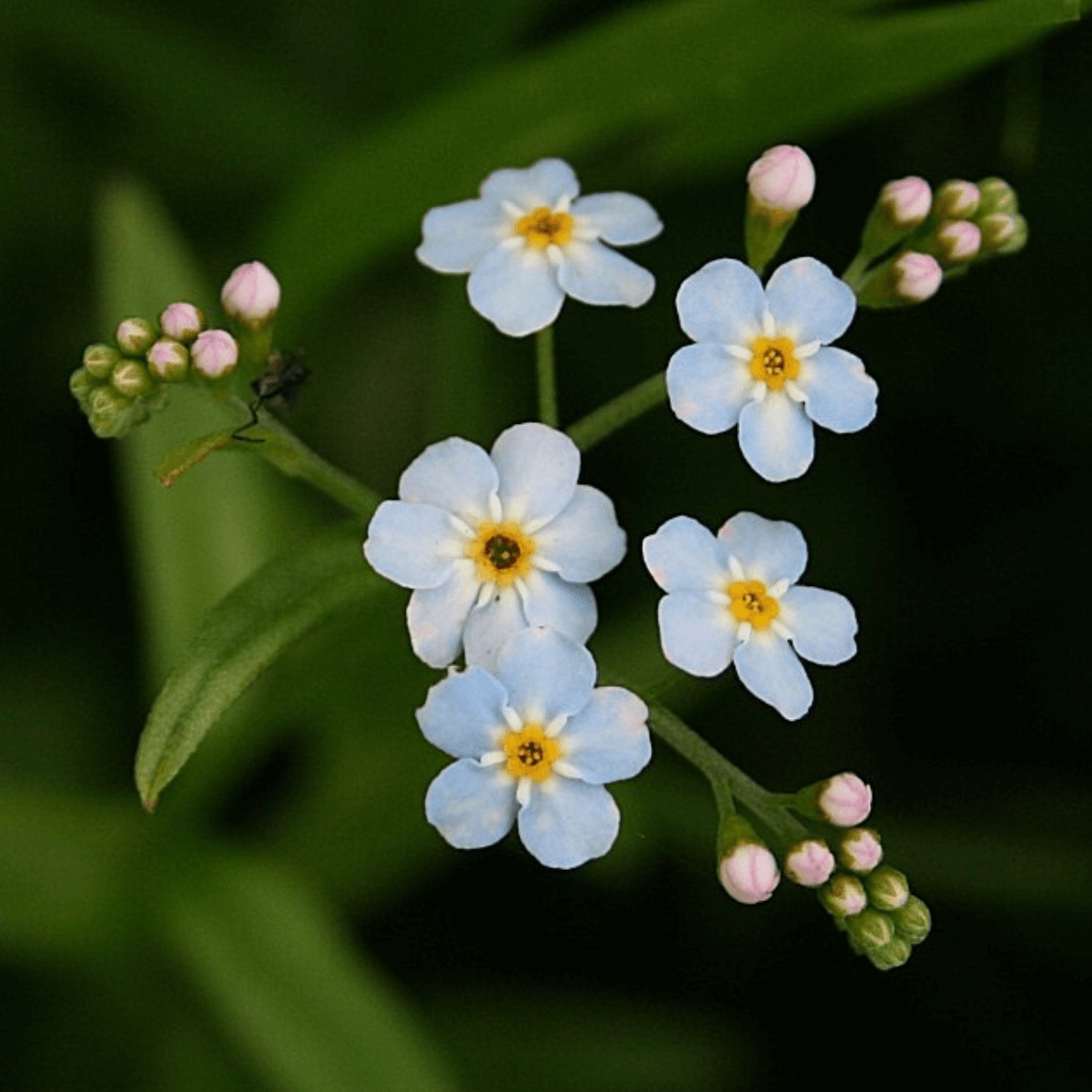
Water forget-me-not (Myosotis scorpioides) – is a short water plant with light blue five-petaled flowers. Provides a sentimental, delicate touch to any water garden.
Now it’s your turn!
These tiny water gardens are accents for deck or patio tables and are the perfect size for anyone with limited outdoor space. Tabletop water gardens are small but are as unique as their owners. Be original when choosing a container. Let your creativity shine!
Resources:
- DIY Tabletop Water Gardens – Even more of Soni’s captivating water garden creations. Check them out for more inspiration!
- Minnesota Water Garden Society – A must-know resource for MN-based water gardeners of all experience levels!
This article originally appeared in the Spring 2023 issue of Northern Gardener® Magazine.

Soni Forsman is a longtime contributing author to Northern Gardener® magazine. She is a specialist in water features and water gardening from Eagan, Minnesota.
You may be interested in:
DIY Tabletop Water Gardens
Soni Forsman’s article on do-it-yourself tabletop water gardens was one of the most popular items in the Spring 2023 issue of Northern Gardener® magazine (available…
Small Space Vegetable Gardens
If your only growing space is on a deck or patio, don’t fret.Almost any veg can grow in a container. I began to grow vegetables…
Creating Community Gardens