


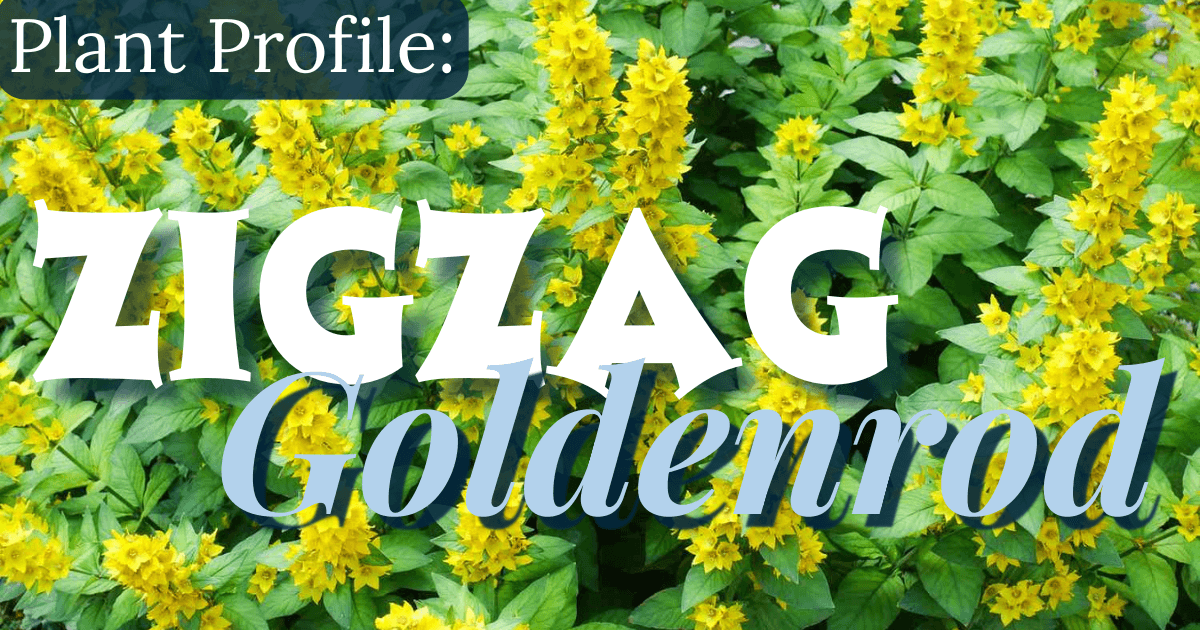
Plant Profile: Zigzag Goldenrod
Zigzag goldenrod (solidago flexicaulis) is one of the few goldenrods that thrives in partial to full shade. Most sources agree that it will grow well in sun, too, if tended and watered regularly.
Identification and Native Ecology
This goldenrod is easy to identify by its large, broad, serrated lower leaves and its zigzag stems. Yellow flowers grow along a stem that is 2 to 6 inches long, and each flower is about one-half inch across with three to five petals. It can be found throughout most of eastern North America, with a greater prevalence in deciduous woodlands, woodland edges and wooded uplands. (Note: Goldenrods do not cause hay fever, as traditionally thought.) Like most goldenrods, this one is a pollinator magnet, attracting native bees, honey bees, butterflies, moths and other insects.
In addition to providing nectar for pollinators, goldenrods are host plants to more than 100 species of caterpillars, including the larva of the goldenrod gall moth and the brown-hooded owlet moth.
Along with other goldenrods, it’s a particularly valuable nectar source for monarch butterflies as they migrate south in the fall. It tends to bloom from August through autumn frosts. The many insects that feed on goldenrods are a food source to woodland songbirds and upland gamebirds.
Zigzag goldenrod in the Garden
Be aware that deer and rabbits often browse on the foliage of zigzag goldenrod. Zigzag goldenrod provides bright color to the shade garden. The tall spires hover above shorter plants, providing a pleasant backdrop for other autumn-blooming plants, and the seed spires can provide late autumn and winter interest after frost. It has no serious insect or disease problems.
Good companion plants include others that bloom in late summer and fall, such as asters, sunflowers, ironweed, phlox and grasses. It’s also a great choice to take the stage after
nearby midsummer bloomers are fading.
Zigzag goldenrod is a reliable cut flower, with a 7- to 10-day vase life, for a bright autumn bouquet. And it dries well for winter displays. While this goldenrod will tolerate total shade, it blooms more in partial or dappled shade, or sun. It tolerates all soil types but prefers well-drained sites. In a garden setting, it performs well in wildlife and natural settings, mass plantings, cottage gardens, perennial borders and low-maintenance plantings. It tolerates both lime and black walnut (Juglans nigra).
Propagation and Care
Zigzag goldenrod propagates well from division or seed. Seeds do need a winter or cold period to germinate, so they should be sown in fall or winter, or refrigerated for artificial cold stratification.
This is a reliable plant for a shady or partially shaded area of the garden. If you have deer or rabbit visitors, consider surrounding zigzag goldenrod with alliums or other mammal-repellent plants present through the growing season.
One of the later plants to emerge and flower, it will sport low-growing foliage through midsummer, and then reward you with larger displays and bright color from late summer through midautumn.
Zigzag Goldenrod: At-a-Glance
This article originally appeared in the Sep/Oct 2021 edition of Northern Gardener® Magazine.

Horticulturist Laura Schwarz gardens and writes in Minneapolis.
You may be interested in:
Plant Profile: Compass Plant
Seeing a prairie or a meadow full of blooming compass plant (Silphium laciniatum) in mid-to-late summer is an optimistic sight. Among the three species of…
Plant Profile: Snake Plant
Snake plant (Dracaena trifasciata or sometimes Sansevieria trifasciata), is one of the easiest houseplants to grow, which explains its popularity in malls. It’s a great…
Plant Profile: Jade Plant
One of the easiest houseplants to grow, jade plant (Crassula ovata) is native to provinces on the eastern side of South Africa and in Mozambique….