


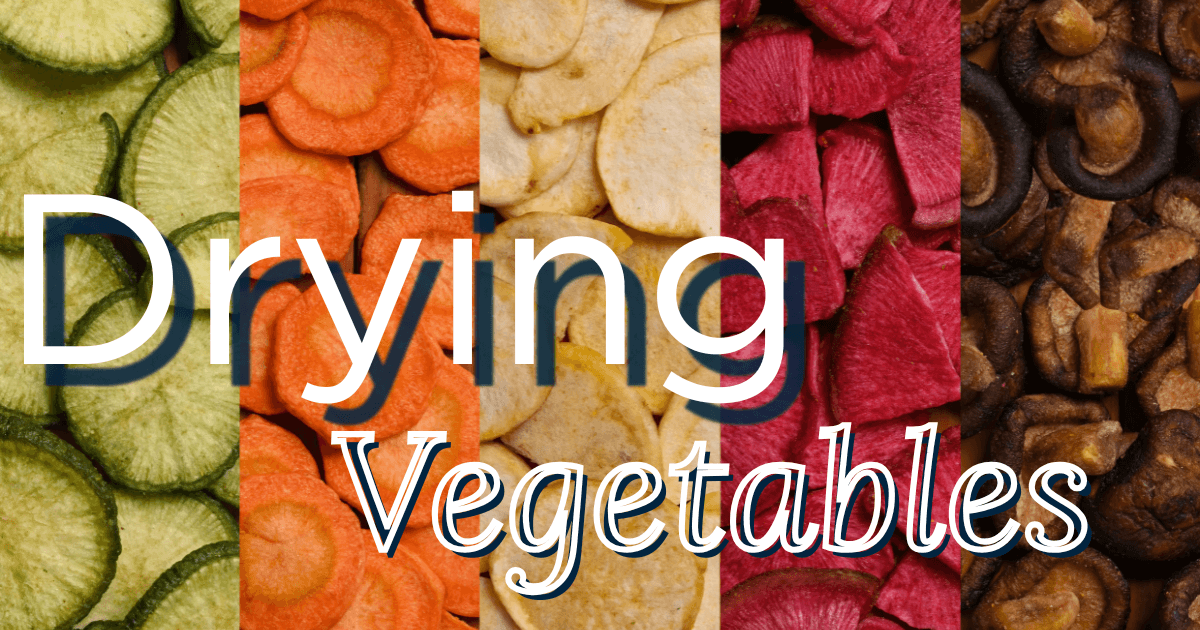
Drying Vegetables
As short-season gardeners, we’re always looking for ways to extend the season and prolong the joy of the harvest. We can do this in the garden through season-extending techniques like row covers and succession planting, or we can do it in the kitchen with preservation techniques such as canning and freezing. Drying vegetables is another time-tested way to preserve the harvest.
For many people, there’s nothing better than fresh vegetables that go from garden to table in the span of an afternoon.
But sometimes on a hazy August day when we’re surrounded by the bounty of the summertime garden, we can’t help but think of those cold January days when we can only dream of the magic of vegetables from the garden. And that’s why we end up preserving vegetables in some fashion.
All preservation methods have their pros and cons, and drying vegetables is no different. Properly dehydrated vegetables don’t require refrigeration or freezing and will keep for years. Another advantage of dehydrating is it concentrates flavors. But drying vegetables is a time-consuming process, requiring precise cutting and preparing of the vegetables.
Which veggies can you dry?
Some of the best options for drying include corn, sweet potatoes, peppers, beans, zucchini, carrots, potatoes and snap peas. That’s not to say that you can’t dry other veggies, but the process maybe more challenging.
How to Dry
Sun drying isn’t recommended for vegetables. The humidity levels in the Upper Midwest are too high for outdoor drying. You can use an oven to dry foods but it takes longer and isn’t as efficient (or sometimes as effective) as drying in a food dehydrator. Electric food dehydrators come in a variety of sizes and price points, from about $50 to over $500. The advantage of a dehydrator is that
it offers enough air flow and heat to safely and efficiently dry vegetables. Most come with a set of trays on which you place the sliced vegetables before inserting into the dehydrator.
To achieve the best success with your dried vegetables,
keep in mind these tips:
- Harvest the vegetables at the peak of maturity but not when they are overripe. You want the best flavor and the highest quality for the veggies you choose to dry.
- When you prepare your vegetables for drying, aim for pieces that are uniform in size. When all of the pieces are the same size, they’ll dry consistently. When they’re completely dry, the vegetables will be brittle.
- Carefully follow the specific steps for the particular vegetable you’re drying. Always research the appropriate times/temperatures for each vegetable (and find out if that vegetable needs to be blanched before it is dried). Follow any and all manufacturer’s instructions that come with your food dehydrator for food safety.
- After drying, follow recommendations for appropriate long-term storage of your dried vegetables so that you can enjoy them in the months to come!
- Dried vegetables work best as part of a soup or stew, rather than served on their own.
Freeze Drying
A new option for food preservation is freeze drying. The equipment investment for freeze-dried vegetables is significantly higher—$2,000 and up—but if you’re drying vegetables on a large scale and want to invest in the tools, freeze drying is certainly something to consider. Freeze-dried vegetables have a longer shelf life and retain their nutrients better than dehydrated foods. —B.S.
If canning isn’t your thing, try drying vegetables. With some time and effort, you can capture their fleeting flavor and enjoy it in the months to come.
This article originally appeared in the Sep/Oct 2021 edition of Northern Gardener® Magazine.

Samantha Johnson is the author of several books, including Garden DIY, (CompanionHouse Books,
2020). Visit her online portfolio at http://samanthajohnson.contently.com
You may be interested in:
Unusual Vegetables for Northern Gardeners
Updated May 2025 In this previous post, we offered a few tips from Jackie Smith of the University of Minnesota Extension Master Gardeners of Carver…
Day 30: Preserving the Harvest from Your Vegetable Garden
While it’s hard to imagine on a cold January day, there may come a time when you look at your vegetable garden and wonder what…
Day 2: Where to Put Your Vegetable Garden
Vegetables want to grow — remember that when things don’t seem to be going right in your new vegetable garden — they want to produce…