



Plant Profile: Thicket Creeper
Ask gardeners how they feel about thicket creeper and you’ll likely get a range of answers. It’s a tough, spreading plant, so it can overtake smaller, more delicate species. A fast-growing, vining ground cover, it can be a good native-plant choice to help eradicate non-native, invasive species.
Description and Ecology
Very closely related to Virginia creeper (P. quinquefolia), thicket creeper lacks aerial roots and adhesive disks or pads, and has nearly hairless leaf stalks and stems. Where Virginia creeper tends to climb high along supports, thicket creeper tends to sprawl, although it will sometimes climb trees, fences and other structures. There are other minor differences but, historically, they were considered natural varieties of the same species and are often confused with one another. In most other ways, it’s difficult to tell the two species apart.
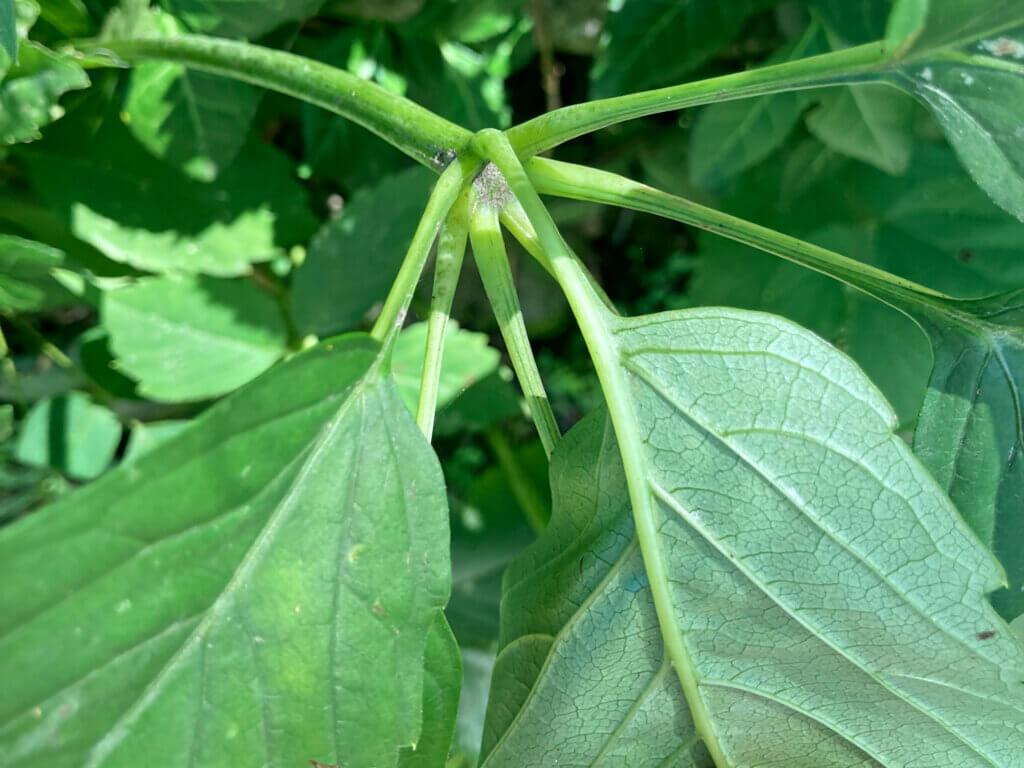
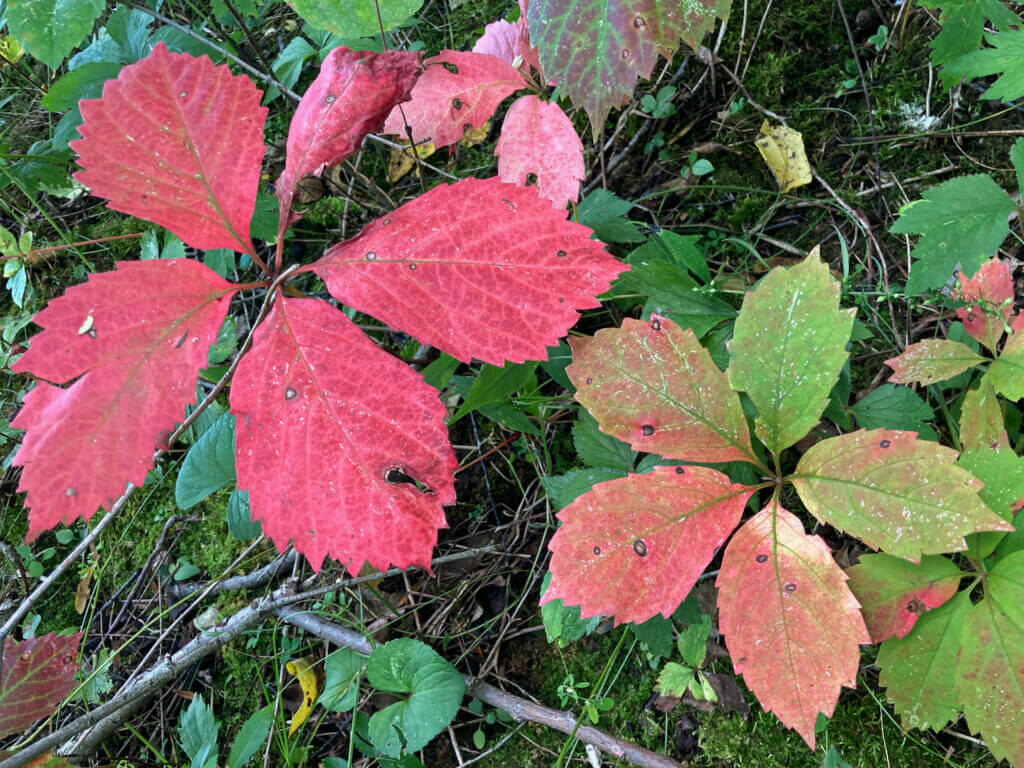
Like Virginia creeper, thicket creeper’s foliage can be particularly colorful (orange-red to burgundy) in autumn when grown in full sun, although it’s also an excellent green groundcover in shade. Plants in shade also have fewer flowers. Greenish-white blooms appear in late spring to early summer, and attract a wide range of pollinators, including bees and butterflies. It’s a host plant for several sphinx moths and other moths. Berries form after pollination and change from green to blue-black in the fall.
The blooms, berries and access to cover tend to attract many bird species, including woodpeckers, nuthatches, chickadees, bluebirds, cedar waxwings and tufted titmice. The berries, high in oxalic acid, are inedible to humans but provide an important food source for songbirds, squirrels and other small animals.
Thicket Creeper in the Garden
In addition to these benefits, thicket creeper is attractive in its own right. It can provide a frame for other plants along a rock wall or border, or climbing along a tree line. It tolerates a wide range of soils and is drought-tolerant once established. Deer and rabbits may browse the foliage, but the plant is so vigorous that their nibbling is unsubstantial. Thicket creeper also is tolerant of pruning for shaping and confining as desired.
Great companion plants include tall species that grow up, over, and through it, such as Ostrich ferns (Matteuccia struthiopteris) and Solomon’s Seal (Polygonatum biflorum), and shrubs such as
Highbush cranberry (Viburnum trilobum). Thicket creeper tends to naturally appear, and it performs well in semi-open areas. It thrives from full shade to full sun, and from dry to moist locations in just about any soil type. It’s also drought-tolerant and urban pollution-tolerant, so it thrives in both rural and city landscapes.
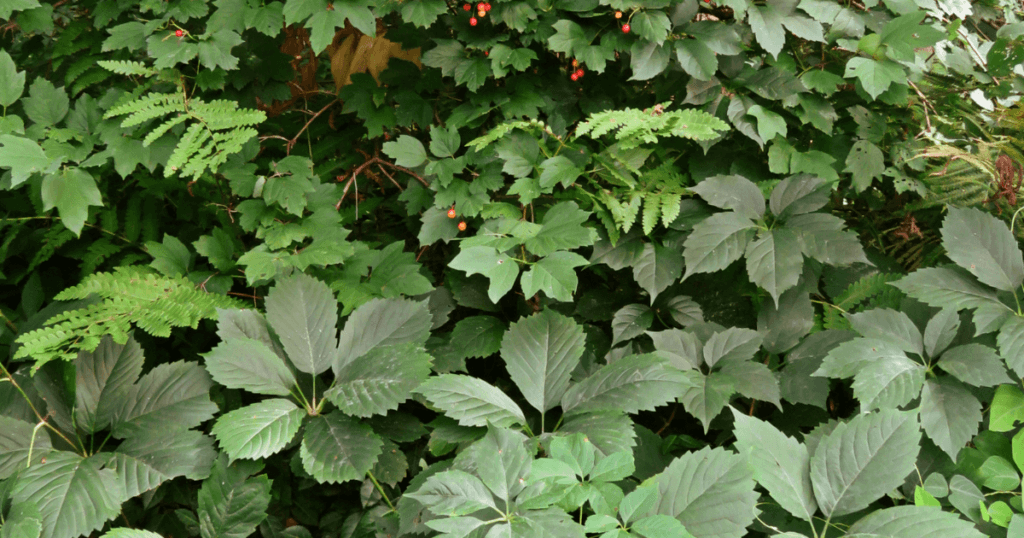
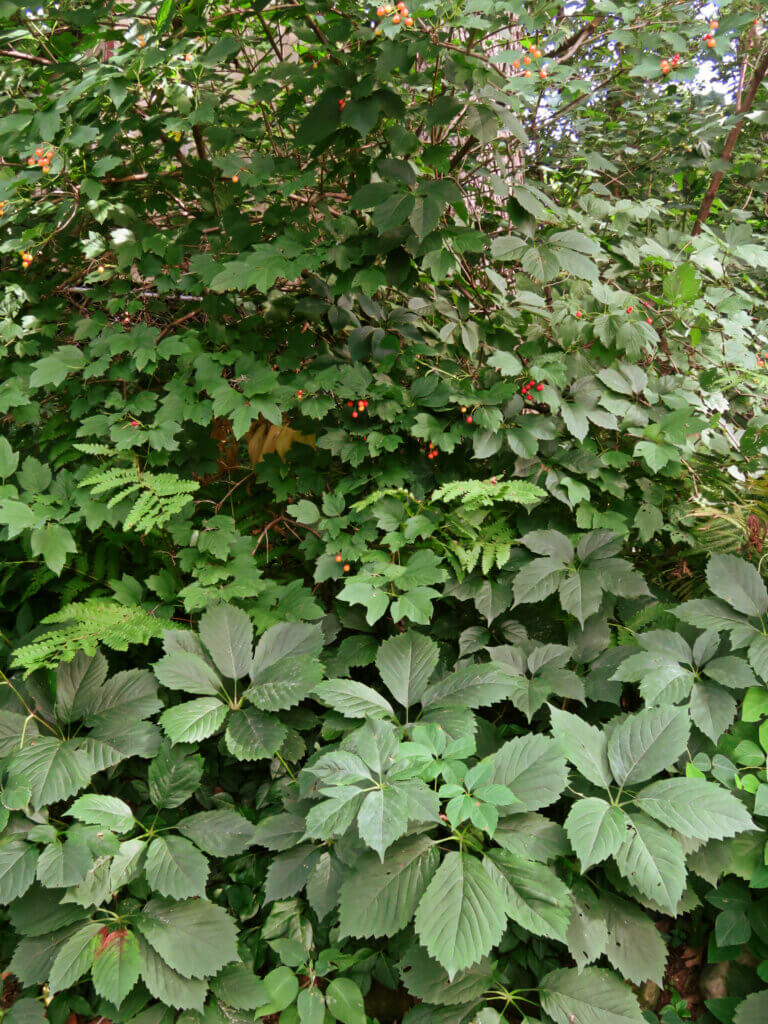
Like Virginia creeper, thicket creeper can be started from seed or by transplanting hardwood or semi-hardwood cuttings. Both tender cuttings in late summer and woody cuttings in early spring should perform well. Thicket creeper is a good choice for garden edges, in areas needing groundcover, or spots where you’re attempting to eradicate persistent non-native, invasive plants. Since it prefers to sprawl rather than climb, it’s a good “creeper” choice for all but climbing walls, where Virginia creeper thrives.
Thicket Creeper: At-a-Glance
This article originally appeared in the Winter 2022 edition of Northern Gardener® Magazine

Beth Stetenfeld is an organic gardener, native-plant enthusiast and garden blogger and writer. She’s also a master naturalist volunteer and instructor.
You may be interested in:
Plant Profile: Compass Plant
Seeing a prairie or a meadow full of blooming compass plant (Silphium laciniatum) in mid-to-late summer is an optimistic sight. Among the three species of…
Plant Profile: Snake Plant
Snake plant (Dracaena trifasciata or sometimes Sansevieria trifasciata), is one of the easiest houseplants to grow, which explains its popularity in malls. It’s a great…
Plant Profile: Jade Plant
One of the easiest houseplants to grow, jade plant (Crassula ovata) is native to provinces on the eastern side of South Africa and in Mozambique….