


Growing Vegetables in Containers
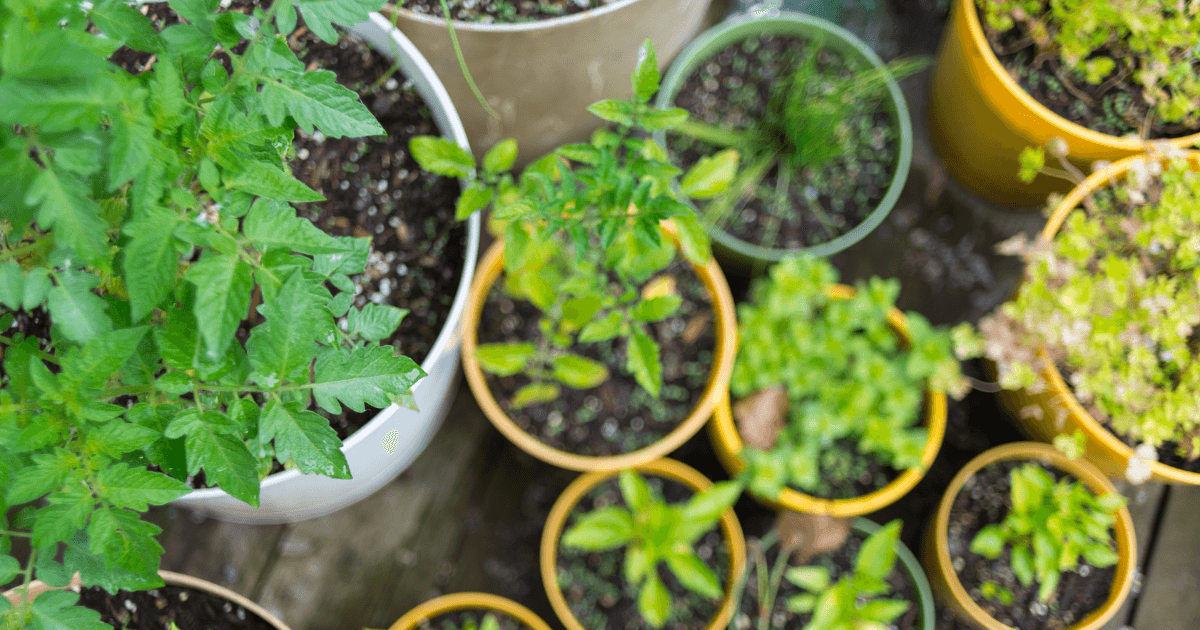
Growing vegetables in containers is fun and easy, as long as you have three elements working together: container size, proper light and good potting soil.
Selecting a Container
To get started, find a large container, roughly the size of a 5-gallon bucket. That shape can vary, of course, but that’s the ideal minimum volume. I would not use anything less than 10-12” deep.
I also plant vegetables in three stock tanks that I purchased years ago—if you go this route, be sure to cut generous holes in the bottom for drainage. My stock tanks are 45” long by 24” wide by 24” tall.
I like bigger containers for several reasons, but the main one is that the soil won’t dry out as fast as with smaller ones. Vegetables need very rich soil and plenty of water, and you’ll have an easier time keeping up with a larger container.
Finding the Right Location
Next, stick that container in the sunniest spot you have. Almost all vegetables require full sun, which means 8+ hours. Happily, you could still grow lettuce or other greens in a container which receives less sun, but still try and make sure it gets at least 4+ hours.
Finally, fill your large container with good potting soil. If you have old potting soil from last year that you want to re-use, that’s fine, but mix it 50/50 with new compost first.
Picking Out Your Vegetables
So what vegetables are good to grow in containers? Nearly all vegetables can be grown in pots, but here are some of my favorites. When I plant my containers, I generally use the “square foot gardening” recommendations for plant spacing—many of these can be found online.
For the purposes of this, I’ll outline the number of plants per 1.5 square feet—which is the approximate area of a 5-gallon bucket-size pot. If your pot is bigger, or for stock tanks, calculate a rough surface area. This isn’t an exact science, so don’t get too caught up in precision.
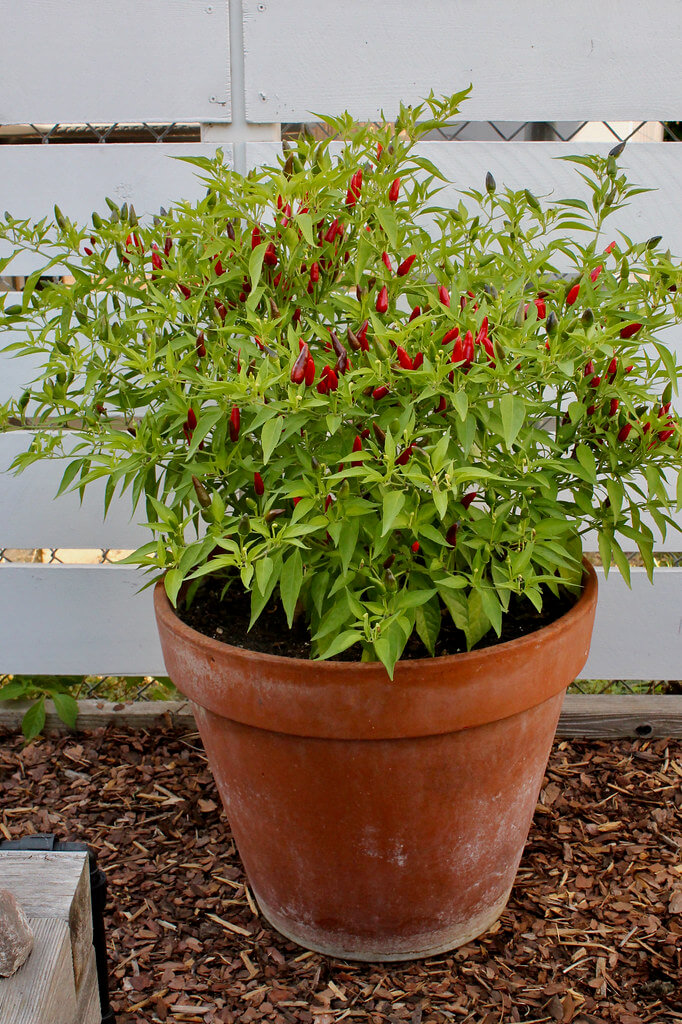
Peppers
It can be challenging to know when to plant peppers outside here in the north, because they hate it when their feet get cold. Plant them in the ground before the soil has completely warmed, and they can go into shock and refuse to grow for weeks and weeks, even if the weather improves. I have had much better luck growing peppers in containers, which warm up quickly.
5-gallon pot: 1-3 pepper plants
Succession planting: I like growing a round of radishes before my peppers. An average pot will only take 10-15 radish seeds, but it makes for a fun treat. Plant in April to make sure they’re done by late May, then plant your peppers in the same pot.
Basil
I grow basil in a large pot, too. This way I can keep it close to the house and make sure I stay on top of pinching it back to prevent bolting. Basil also makes a great companion; I like tucking several of them along the south side of the stock tanks with tomatoes.
5-gallon pot: 5-6 basil plants
Potatoes
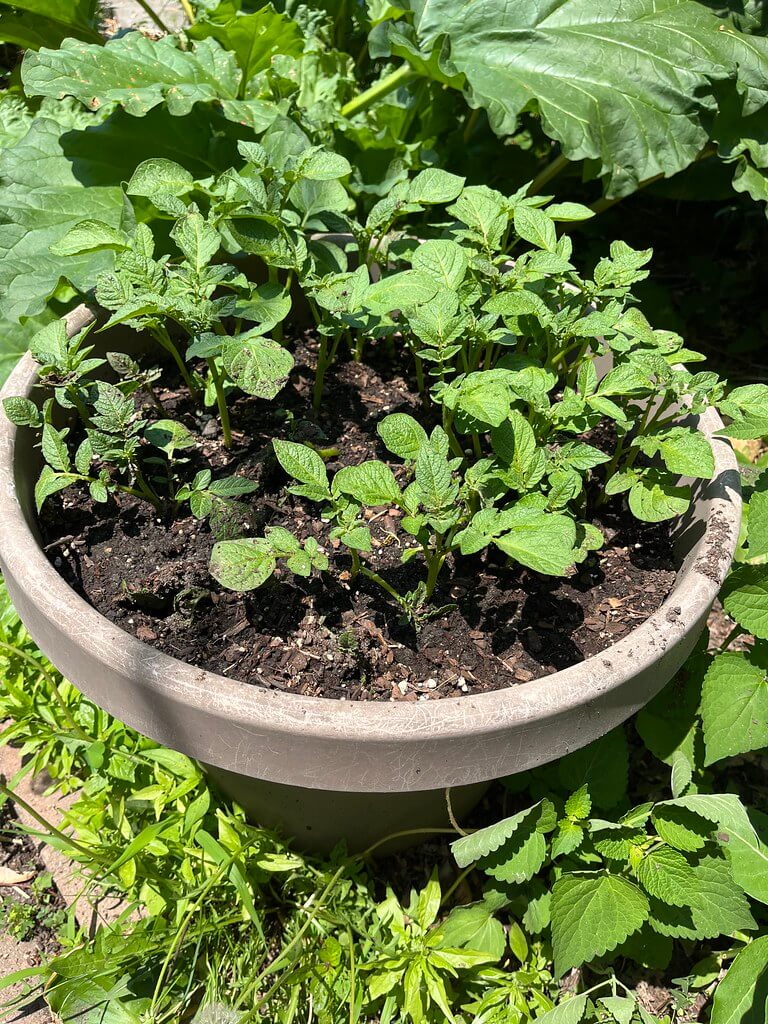
You can grow potatoes in containers, but the procedure is a little different. First, get a nice large container that is still small enough that you can physically tip it over. Next, fill it no more than ¼ full with potting soil. Place 2-3 seed potato pieces. Add more soil, to at least 4 inches above the seed potatoes. Wait until your potato plants start growing, then keep filling the container with soil as they do. Make sure to keep them well-watered, so that the potatoes near the bottom get plenty of water too. To harvest, simply tip over the pot and dig in the dirt for your spuds. Your yield won’t be massive, but it’s still a fun project.
Lettuce / greens
Leaf lettuce and greens such as kale are so easy to grow, and you can space them quite closely, even in containers. “Cut and come again”-type lettuce seed mixes are ideal for containers; you harvest individual leaves rather than a whole head.
5-gallon pot: sow 10-12 leaf-lettuce plants or sow 15-20 lettuce seeds.
Onions
I either start onions indoors from seed or buy them as “starts”—either way, they look a bit like blades of grass when it’s time to plant in late April or so. Simply tease them apart and plant them. I purposely plant them quite close together (about 1-2 inches apart), then start harvesting them as soon as they are at least pencil-width. I strategically thin them out until eventually there is enough space for the remaining ones to get a modest-sized bulb.
5-gallon pot: transplant 16-20 onion “starts” or sets

Mix things up
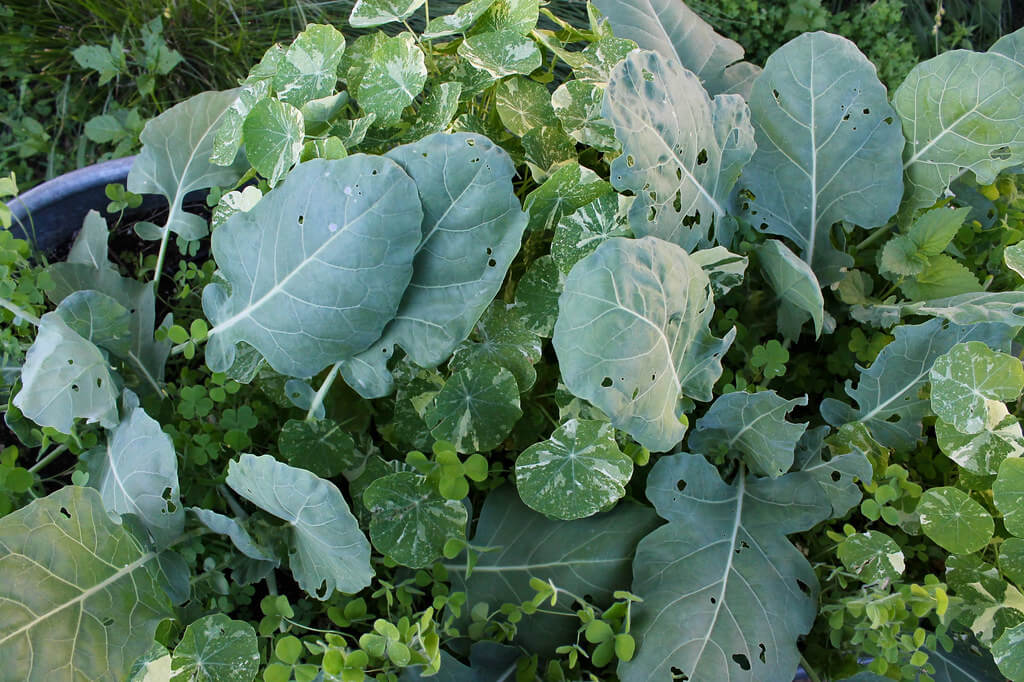
Last summer, I grew 4 kohlrabi and 2 nasturtium plants in one of my stock tanks. I sowed crimson clover seed to fill in around them. There is some evidence that “hiding” cole-family plants in with other companion plants like this can make it harder for destructive garden pests to find them.
Make it pretty
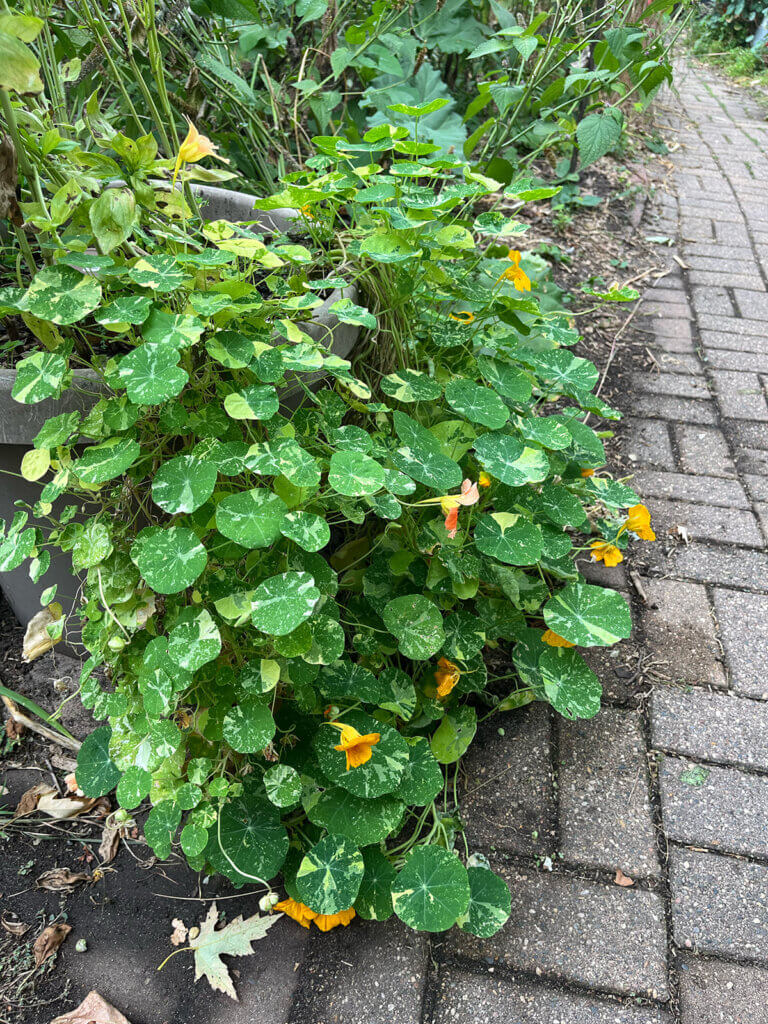
Because I have a lot of large containers around my yard, one way that I tie everything together is by tucking trailing nasturtiums into the edges of many of them. They look great, attract pollinators and hummingbirds and they’re edible to boot. The flowers make a salad or a batch of spring rolls look extra special, and add a little peppery kick.
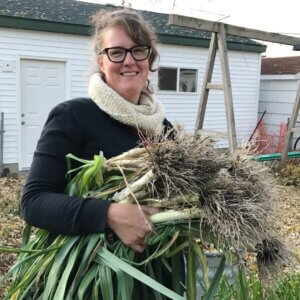
Jennifer Rensenbrink is a University of Minnesota Extension Master Gardener Volunteer for Hennepin County. She somehow has two mini-prairies on her tiny south Minneapolis property.
Photo credit: Jennifer Rensenbrink.

I’m a master gardener in northern NY. I enjoyed this article and plan on sharing some tips that are in it with my fellow MGs.