


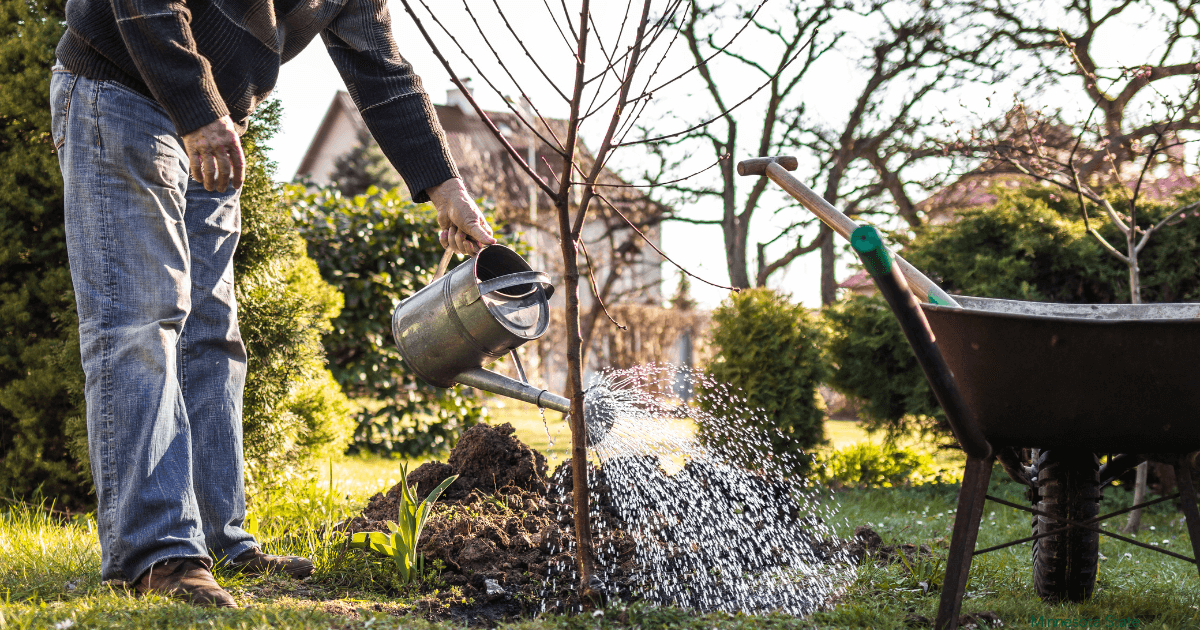
Watering Trees and Shrubs in Autumn
Three summers ago, someone in my neighborhood planted a long hedge of pyramidal arborvitae. For the past two years, I’ve watched half of these lovely (and expensive!) trees die each winter. They’ve now been replanted for the third time.
I keep thinking about knocking on the front door and telling these homeowners how to prevent this unnecessary loss yet again. The solution is simple: newly planted trees and shrubs need consistent watering throughout the growing season until the ground is completely frozen.
During the first few years after planting, new trees and shrubs can use ten to twenty gallons of water per week! As a fellow owner of trees and shrubs, I’ll admit that it’s difficult to fully commit to a regular watering schedule for the entire growing season, especially during these past few super-dry years.
We’ve been lucky that this year’s growing season hasn’t been as dry as the previous two, but as of mid-November, much of the upper Midwest region is still experiencing abnormally dry to moderate or severe drought conditions. Even during years with “normal” precipitation levels, newly planted trees and shrubs are especially susceptible to damage or even winter-kill when they haven’t been watered enough—overall dry conditions make it that much more likely to occur.
Why should I water trees in the fall?
Regular deep watering promotes root growth deeper in the soil where there is more protection from cold temperatures. Furthermore, moist soil holds more heat than dry soil does, which means that damaging frosts can’t reach as deeply into the ground when it’s wet. Roots need extra protection from winter injury because they are less cold-hardy than stems, branches, and buds are. Most of our hardy woody plants have roots that will die at temperatures around zero degrees Fahrenheit.
Luckily, the ground doesn’t usually get colder than that here; our soil temperatures are regularly higher than our air temperatures. Snow can also help insulate the ground, keeping it warmer than the surrounding air. But when we don’t get adequate snowfall prior to the temperature dropping, the ground isn’t protected from sub-zero temps. It’s even riskier for tree and shrub roots when we’ve had a dry autumn, as these plants have experienced cumulative stress throughout the growing season.
Steps for watering trees and shrubs in the fall
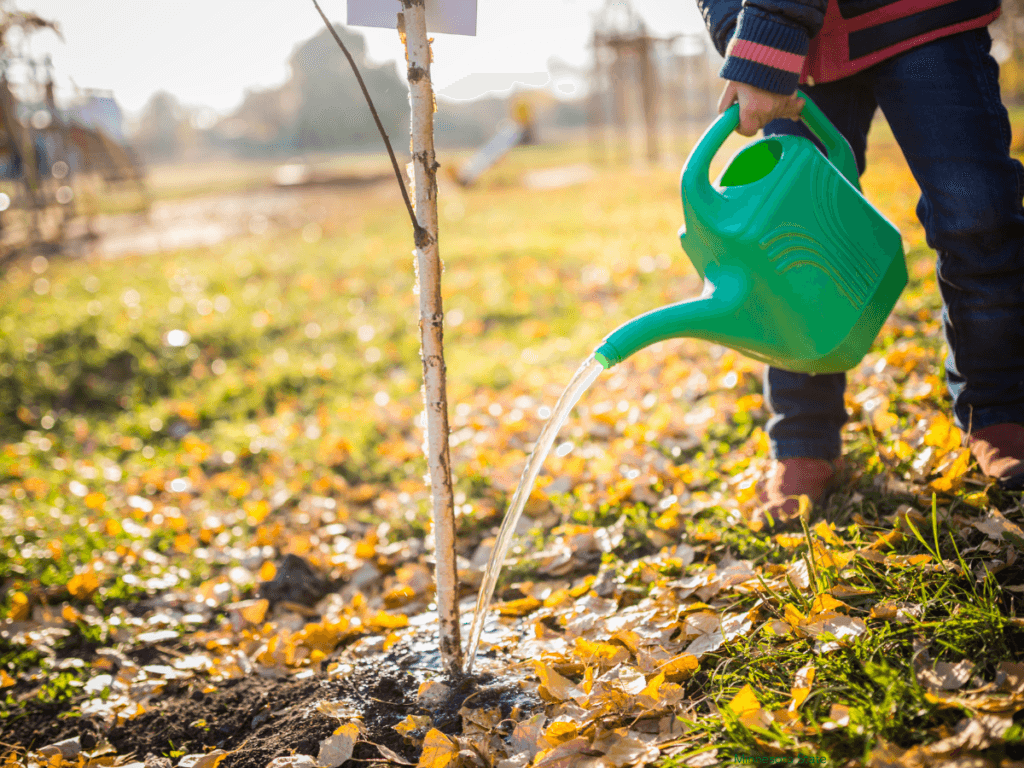
Even when the autumn days are cool and you don’t notice any visible signs of wilting, you should check around the base of your new plants to see how dry the soil is. If the first few inches of soil are dry, you should water. Place a trickling hose at the base of each plant for approximately thirty minutes, allowing the water to slowly soak into the entire root system.
Trees and shrubs that have been planted or transplanted within the last season need consistent (often weekly) supplemental watering throughout the growing season, which includes the final few weeks before the ground completely freezes for the winter. Fall watering is especially important for evergreens, which continue to lose moisture through their needles during the winter months—and for plants that aren’t quite zone-hardy here.
Once the ground is fully frozen, it’s time to stop watering. Although it may seem silly or counterintuitive to water when it’s almost winter, you’ll notice a drastic difference the following season. Your evergreens will have less (or no) winter-burn, while your other trees and shrubs will experience less root injury and overall stress, allowing them to begin growing vigorously right away in the spring.
During years two and three after planting, be sure to continue checking the first few inches of soil surrounding your trees and shrubs and water them on a slow trickle for thirty minutes or so, probably once every second or third week, depending on the season’s precipitation.
Laura Schwarz gardens and writes in Minneapolis.
You may be interested in:
Plant Profile: Highbush Cranberry
Highbush cranberry is a good choice for the edges of either a woodland or a sunny garden. It seems to find its sweet spot where…
Fall Planting: How Late Can You Go?
Fall is a great time for planting. As we get past mid-October, though, the question is how late in the season can you plant? Many…
The Mini Forest Movement
What do you think of when you hear the word forest? Stands of massive redwoods? Old growth forests in Canada? A national forest? The “North…