



How to Outsmart Squirrels
Resistance may be futile, but try these tactics for keeping squirrels out of your garden. I like to imagine what a squirrel real estate listing for my backyard would look like:
Mature silver maple tree with several nice south-facing holes, excellent sheltered sunlight in winter. Heated birdbath nearby provides ample water year-round. Black dog on property is inept and need not be feared; cat is kept inside. Property features a wealth of food, with a variety of fruits including apples, raspberries and strawberries, as well as fresh vegetables such tomatoes, green beans and zucchini. Pumpkin occasionally available. Proximity to alley garbage cans makes this a prime location; be prepared to defend your territory.
No matter where you garden, you are going to deal with furry critters. Since I live in the heart of south Minneapolis, my two most common furry yard visitors are rabbits and squirrels. Over the years, I’ve learned enough rabbit-proofing techniques that I’m not bothered by them, but squirrels are another story. They are so smart. Too smart. Put up a barrier and they will make it their personal mission to get past it-whether it’s a “squirrel-proof” bird feeder or a tomato plant surrounded by mouse traps. Yes, I’ve done that. It worked for at least a day or two.
There are many ways to fight back against squirrels, but few are 100 percent effective. If you’re going to battle with squirrels, it helps to understand some squirrel behaviors.
In the mind of a squirrel
One squirrel lifestyle hack is respecting the importance of digging to them. They bury food all over the yard-sometimes I find whole bagels or discarded pizza crusts in my garden. When they’re out squirreling about for the day, if they find freshly dug soil (say, in a pot, with some cute pansies) they find it irresistible. They dig it up, either looking for food or to bury some new-found treasure-and this also helps mark their territory. And your pansies are toast.
The important thing to understand is that squirrels will get less interested in the freshly dug soil as soon as it loses that freshly dug smell and texture. This is usually around the time your transplants start actively growing.
You can discourage squirrels from digging for at least a few days by pressing sharp sticks into the soil all around your plants. Set them so that they just barely stick out of the soil, giving the squirrel a painful surprise when it steps in the pot. I’ve had moderate success with this.
I’ve also had moderate success with scare tactic—a big plastic owl, shiny objects on strings that shimmer in the breeze, and the aforementioned mouse traps, which were not big enough to trap a squirrel but enough to scare it. All of these tactics work fine… for a while.
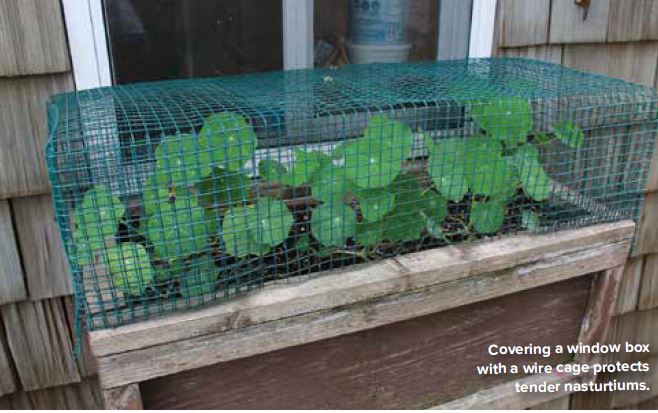
Squirrels in my yard also get very excited when I plant large seeds, such as sugar snap peas and sunflowers. Last year they ate every single snow pea that I planted. Seeds of this type require protection until they’ve fully sprouted and are actively growing-at least three weeks.
If your plants survive those first few days or weeks of active digging, you can then welcome your next big squirrel challenge: fruiting season. From zucchini to cucumbers to tomatoes to pumpkins to raspberries to apples-if it’s a fruit or vegetable, they eat it, with few exceptions. So, what’s a gardener to do?
Squirrel exclusion tactics for your garden
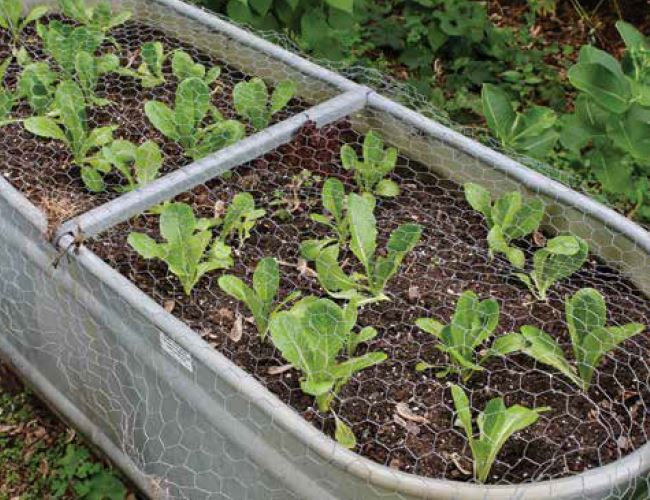
The only completely effective solution is exclusion-and with squirrels you must exclude them on all sides, including the top. Happily, in the spring I have chicken wire cages all over my yard from protecting my shrubs from rabbits all winter. Each spring, I make simple chicken wire cloches and covers of various sizes to cover plants. They’re not pretty, but fortunately they only need to be in place for a few weeks for containers of annual flowers and herbs. I keep all my containers out of sight on the back deck until they’re done settling in, and the cloches can be removed.
For the main vegetable garden, I try to work up my soil and work in my amendments a few days before planting, and just let the soil rest for a few days. That way, it’s lost that freshly dug scent by the time I sow my vegetable seeds and transplants.
I grow large tomatoes, sweet peppers and zucchini in a squirrel-proof fortress with access doors on both sides. My husband designed the fort and built it to fit in my garden. I covered the wooden frame with chicken wire so that it’s still easy for pollinators to get in and out. Someday I’d like to enclose my entire vegetable garden this way, like a reverse chicken coop that keeps creatures out instead of in.
If squirrel exclusion is not possible in your garden…
Another option is to grow extra vegetables and fruit, so you have some to share. Squirrels get some of my raspberries each year, but I have so many that I don’t mind, though I still regularly sic my inept black lab on them. It took squirrels months to figure out that apples were inside my apple maggot covers last year on my new Honeycrisp apple tree, so I’m hoping that holds true again this year. Trees and large shrubs are difficult to completely protect.
Here are several more ideas that work well, just not perfectly:
- Pick your tomatoes when they are a little underripe and let them ripen on a windowsill inside.
- Place a bowl of water next to tomatoes, cucumbers or zucchini. (Sometimes squirrels are just thirsty.)
- Place something that smells unpleasant to squirrels, such as freshly cut human hair (the dirtier, the better) around your plants or spray plants with garlic or hot pepper spray.
Using “pepper paint” as a squirrel deterrent
When we carve our pumpkins each fall, we mix 2 or 3 tablespoons of cayenne pepper with a little water to make a paste, then brush it on the outside of our jack-o-lanterns to protect them from being eaten. It works perfectly well but needs to be re-applied if it rains. If I grow pumpkins or watermelons, I place a small cloche over each fruit as soon as it reaches the size of a golf ball. The cloche is held in place with landscaping staples.
Making peace with the squirrels
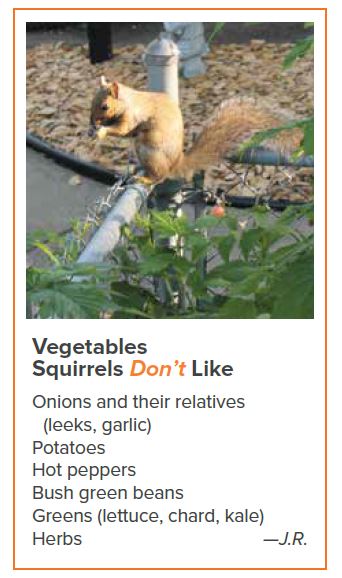
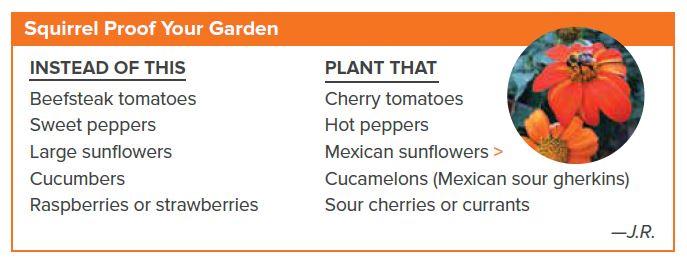
Let’s say none of these options—exclusion, spraying your plants with hot pepper spray, sharing your produce—sounds appealing. You still have other options, because squirrels don’t eat everything we plant. Choosing strategically which edibles to plant is also helpful. Losing a handful of cherry tomatoes is not as devastating as a handful of beefsteak tomatoes. Squirrels don’t eat sour cherries and currants as readily as they eat raspberries and strawberries.
I’m my own worst enemy with squirrels sometimes. They take advantage of the heated birdbath and the bird feeders that I provide all winter, despite my creative attempts to make them squirrel-proof. I could staple hardware cloth over the holes in my silver maple tree, eliminating access to their luxury condominium spaces, but I just never get around to it.
On some level, I’ve made peace with the squirrels and concede that they will get some of my harvest each year. But I still cross my fingers and look hopefully to the sky every time a red-tailed hawk or bald eagle flies over the house.
This article by Jennifer Rensenbrink, a University of MN Extension Master Gardener for Hennepin County, originally appeared in the May/June 2021 issue of Northern Gardener® magazine.
Jennifer Rensenbrink is a University of Minnesota Extension Master Gardener Volunteer for Hennepin County. She somehow has two mini-prairies on her tiny south Minneapolis property.

I put chicken wire, the old-fashioned kind with larger holes, right on the ground over my tulip bulbs. The tulips come up right through the holes and the squirrels can’t dig them up. Some times I pull up the wire when the tulips are a few inches tall. Sometimes I don’t get around to it until they are too big. Then I may have to redirect a few. But I can enjoy my !
Water bowls in a garden are a bad idea. Rats need water and will love coming to find some in your garden , right before dining on your veggies…
I was out of town for only four days the last week of August…The squirrels took every apple in my tree; maybe 4-5 dozen, which were nearing maturity. When I got home, all I could see was two half-eaten apples on the ground…I don’t know where the little b’s took them!
Squirrels or rodents in any cases come in search of food. Make sure to keep the garbage can out and keep the place and surroundings clean. Regular pest control service will also help.
Squirrels are rodents that are not that harmful when compared to other rodents. They just come for food, Most of the times they roam on the trees. To protect garden damages best to keep it fenced.
A salt gun will make them feel unwelcome without harming them much
The squirrels by my house have a lot of room to roam in.There is a 3 acre park with patio homes around it.I enjoy the squirrels but if I see them in my garden I scare them off. We also have a hawk that chases them.