


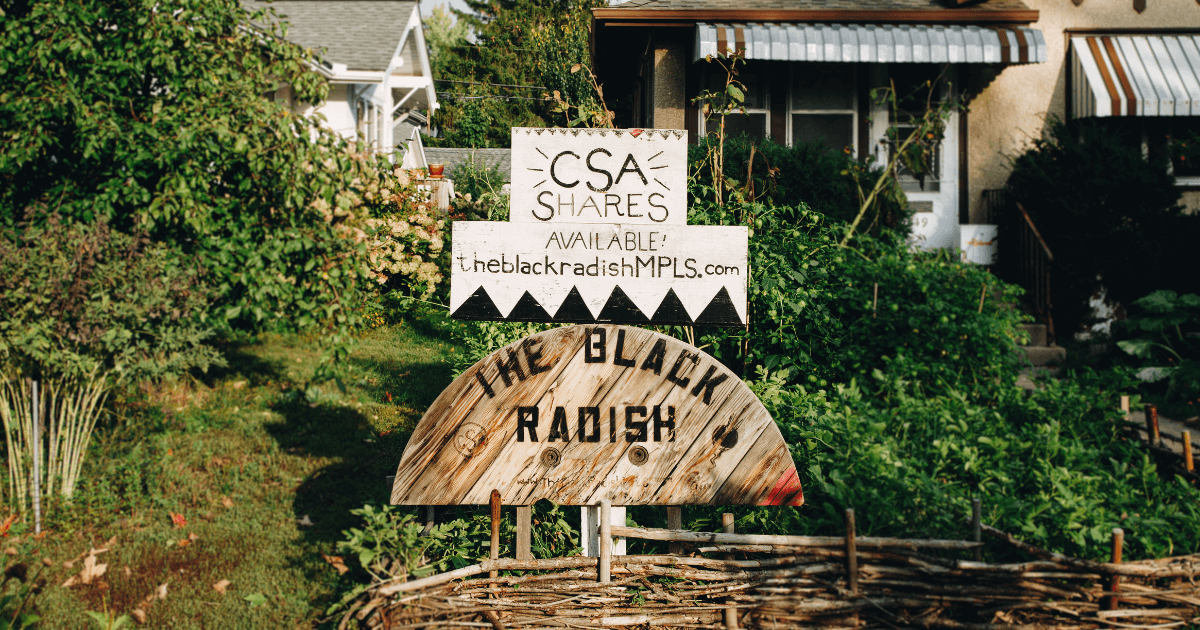
Front Yard Farming: The Black Radish
Imagine discovering blocks of front yard food gardens right around the corner. Thanks to the artists and market gardeners of The Black Radish, there’s a thriving example right in South Minneapolis.
As a couple, Carrie and Jade dove into market gardening after planting a food garden in their own front lawn back in 2018. Nourishing their neighbors with food grown throughout their neighborhood keeps them motivated.
And now they have an amazing opportunity to buy a vacant city lot down the block to DOUBLE their farmable land! Click HERE to support + donate! Any donation helps—consider it an investment in our city’s future. They’ve got until August 1st, 2025 to raise $65,000 in order to enter into a contract for deed with the current owners. At the time of editing this post, they were at $13,066!
Watch the recent TV spot with Elizabeth Reis on Minnesota Live to see their farm in action!
They were also recently featured on the To Greener Pastures website, as if we didn’t love these guys enough!
The Logistics of a Neighborhood Wide Front-Yard Community Farm
Carrie and Jade currently plant on fifteen of their neighbors’ yards and grow for around 50 CSA shares this season. Those neighbors agree to give a certain amount of garden space and water access to the farm for the season. In turn, they get a raised bed constructed in the agreed upon spot(s) and dreamy garden soil along with a CSA share for the season.
“It’s amazing how many people don’t want to mow their lawns. They’d rather have food growing there,” Carrie said. The couple feels they’re simply filling a hole in our food system and our communities, one bike hauled harvest at a time.
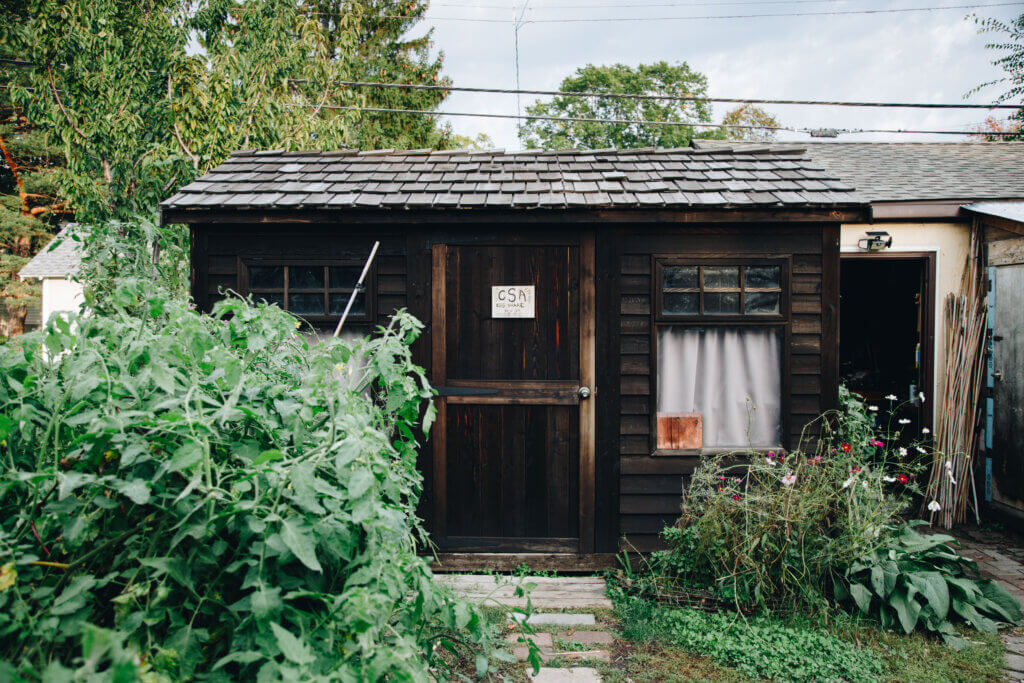
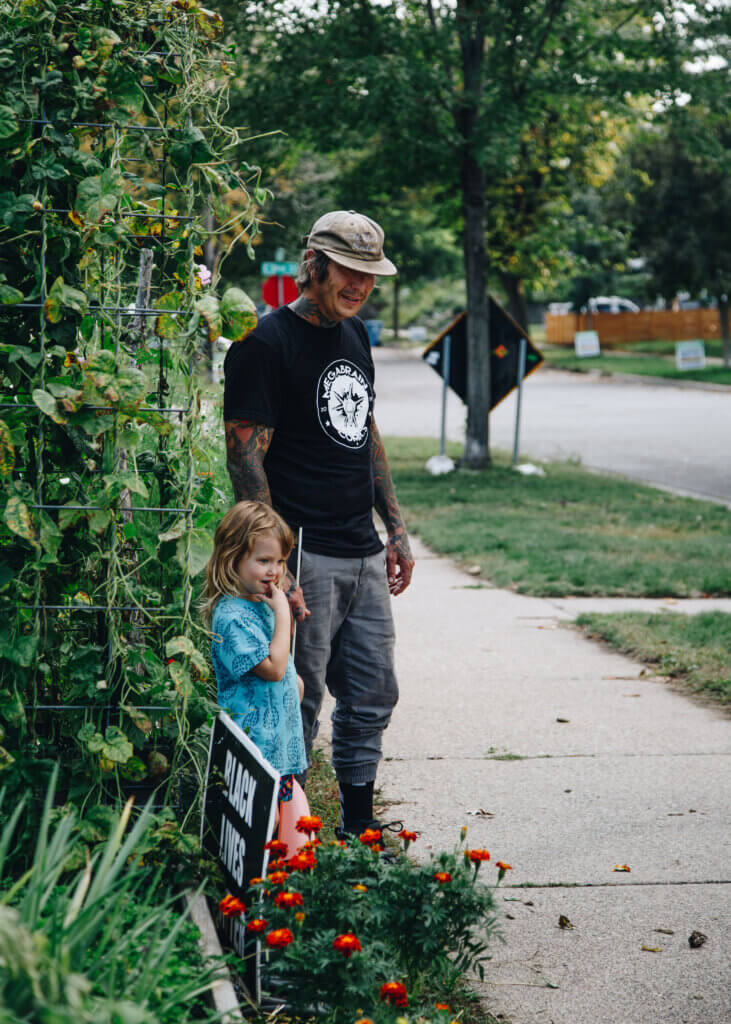
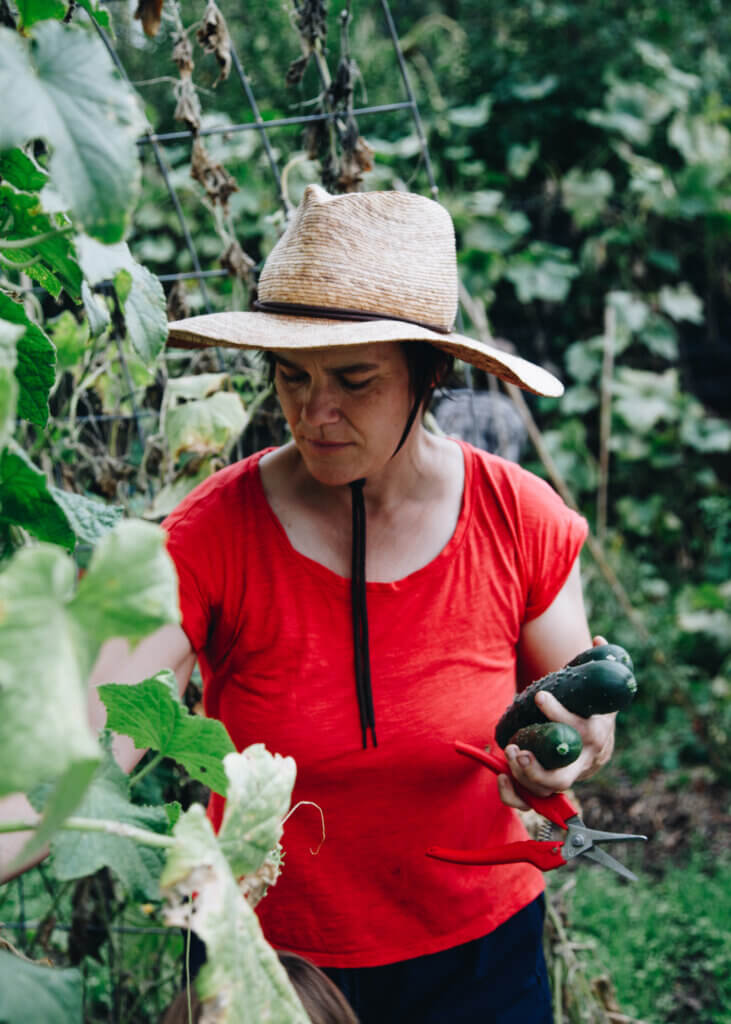
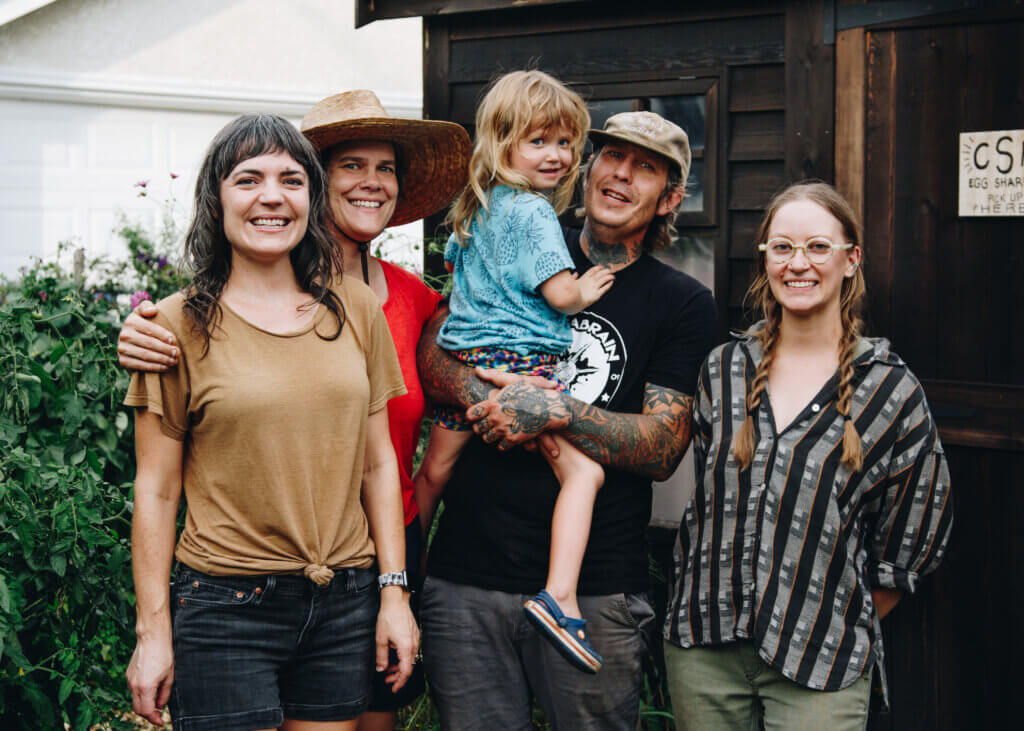
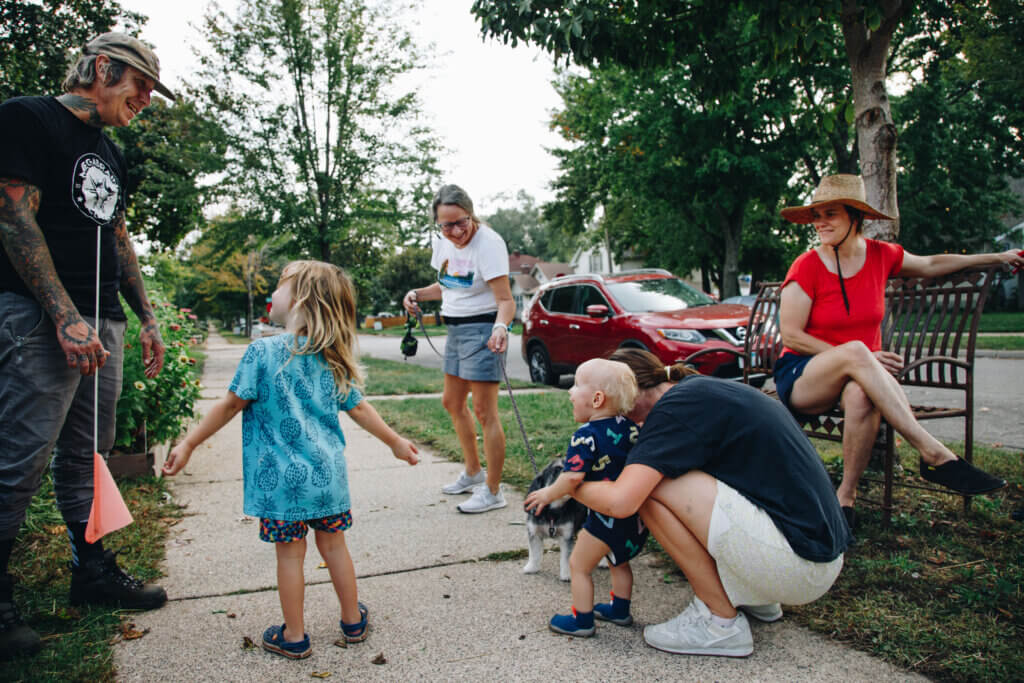
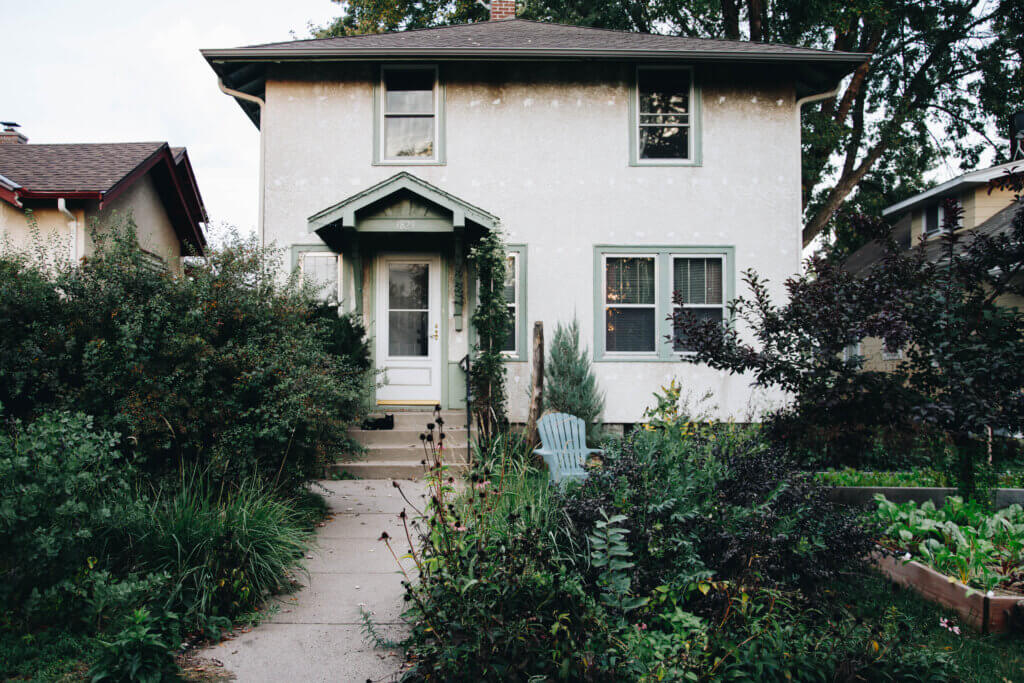
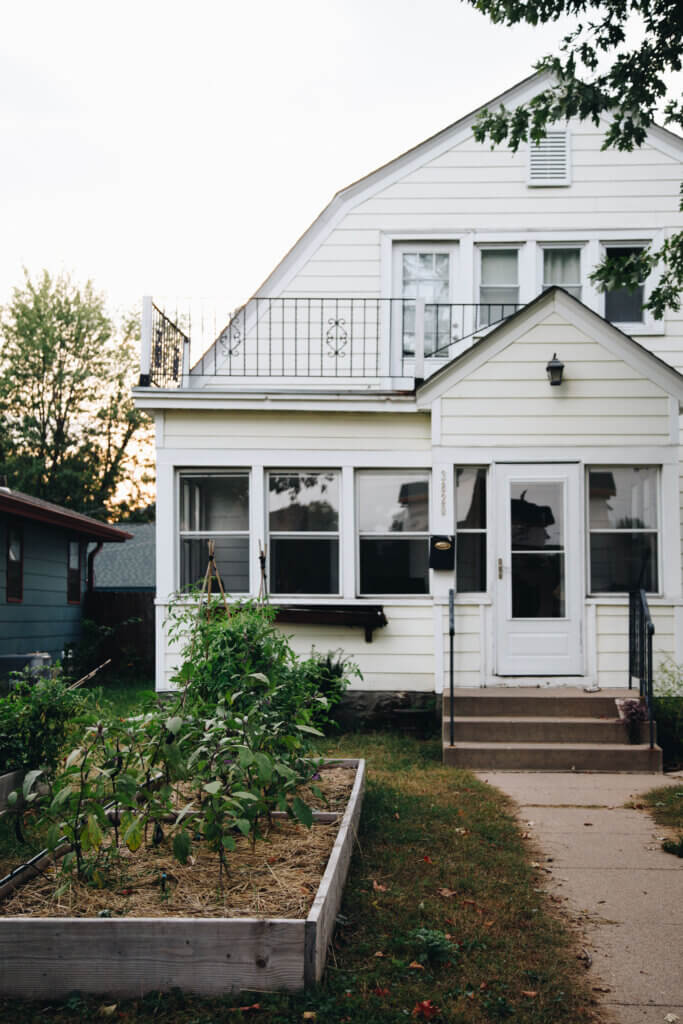
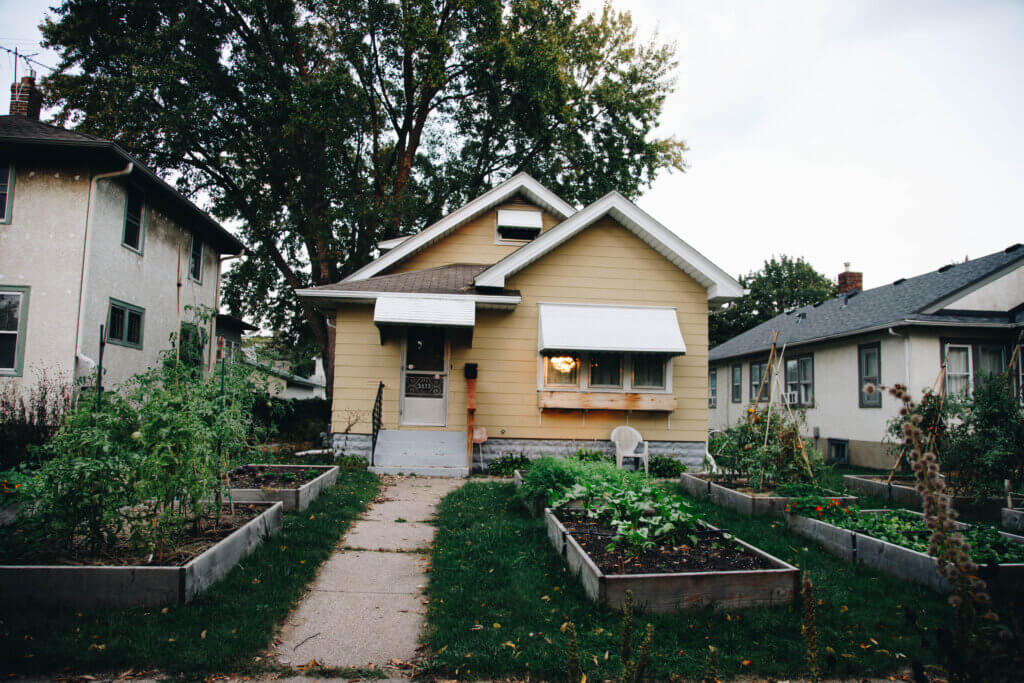
Photo credit: Sarah Carroll
CSA Defined
CSA’s, or Community Supported Agriculture, is a way to support farmers by purchasing a ‘share’ of their produce up front so they have the funds to purchase seed, soil amendments and tools to grow the food.
The Black Radish distributes to about 50 CSA members from an on-site packing shed where neighbors fill their tote bags with what makes sense for their family for that week. This system streamlines distribution and avoids food waste because people are choosing just what they want each week.
They also offer sliding scale CSA shares to make this a truly accessible option for all their neighbors.
Besides growing beyond organic food for so many neighbors, they both donate and sell to the Sanneh Foundation; this group supplies food distribution to the area. They also grow for Restaurant Oro, Standish Café and a few other local restaurants, plus the Nice Time Market + More will occasionally purchase from them.
Obviously, the demand for locally grown—I mean around the corner local food—is continuing to grow…
80% of their CSA shares go to folks withing a few blocks of the farm.
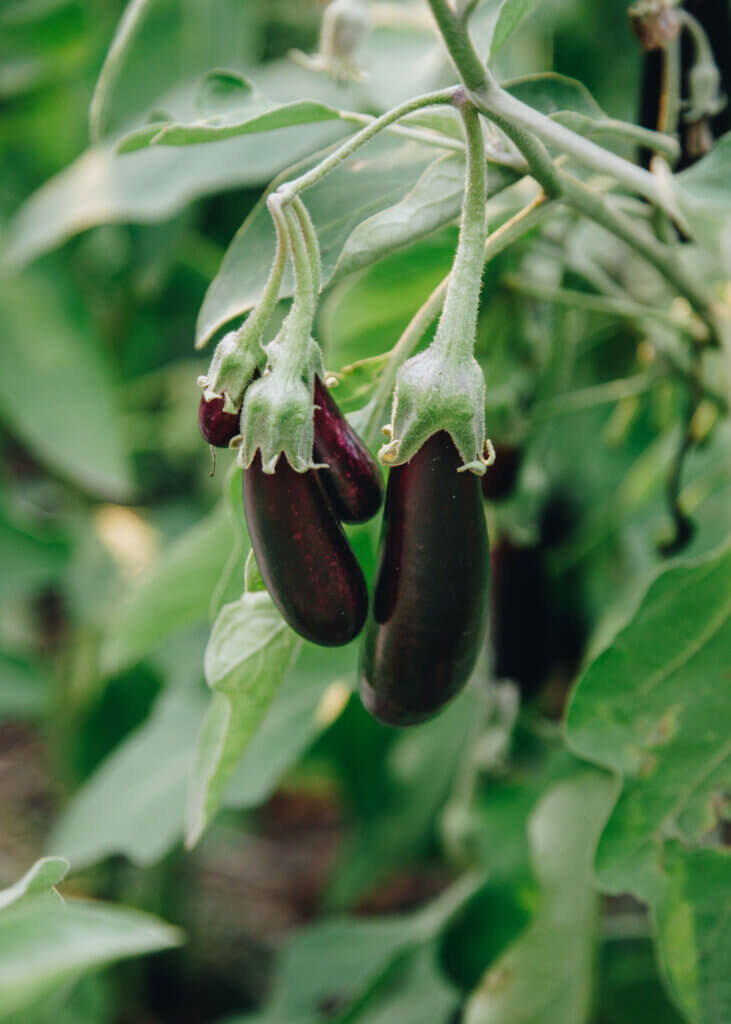
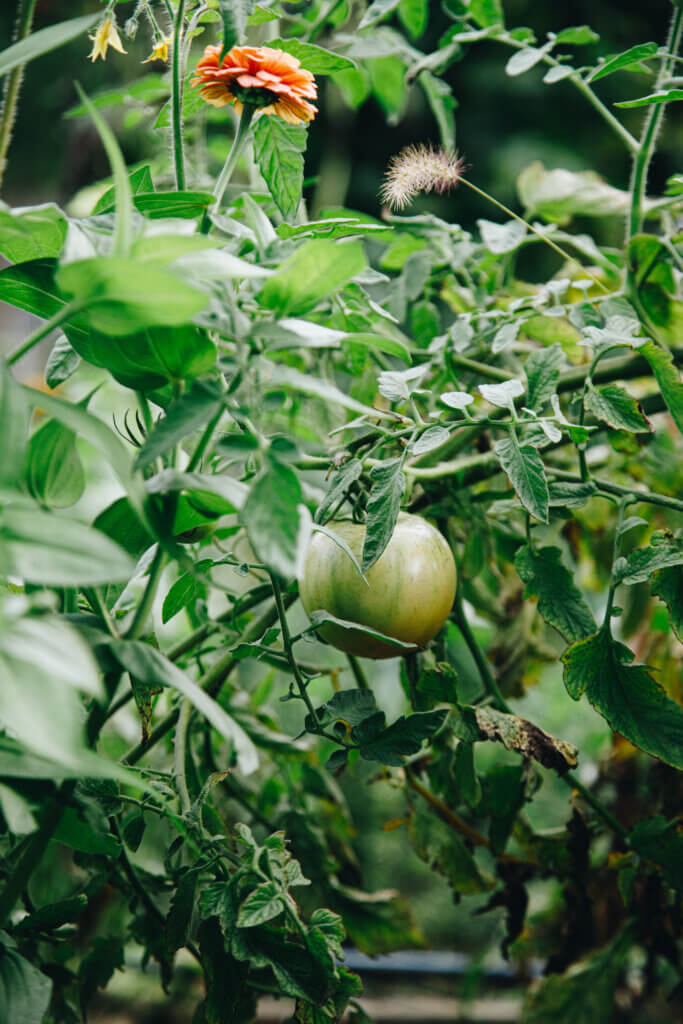
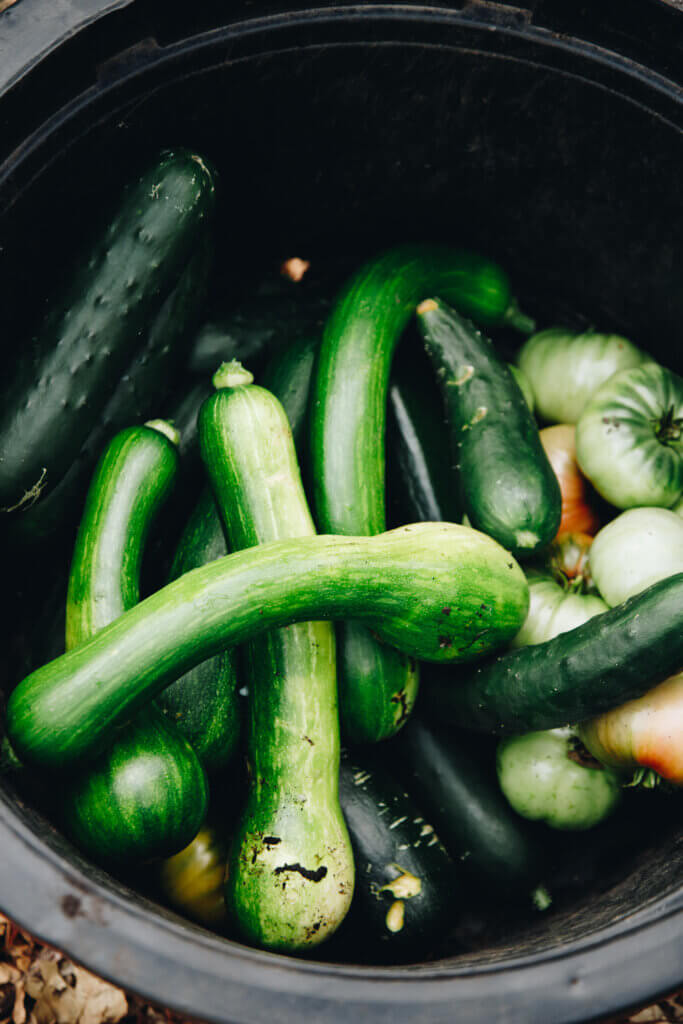
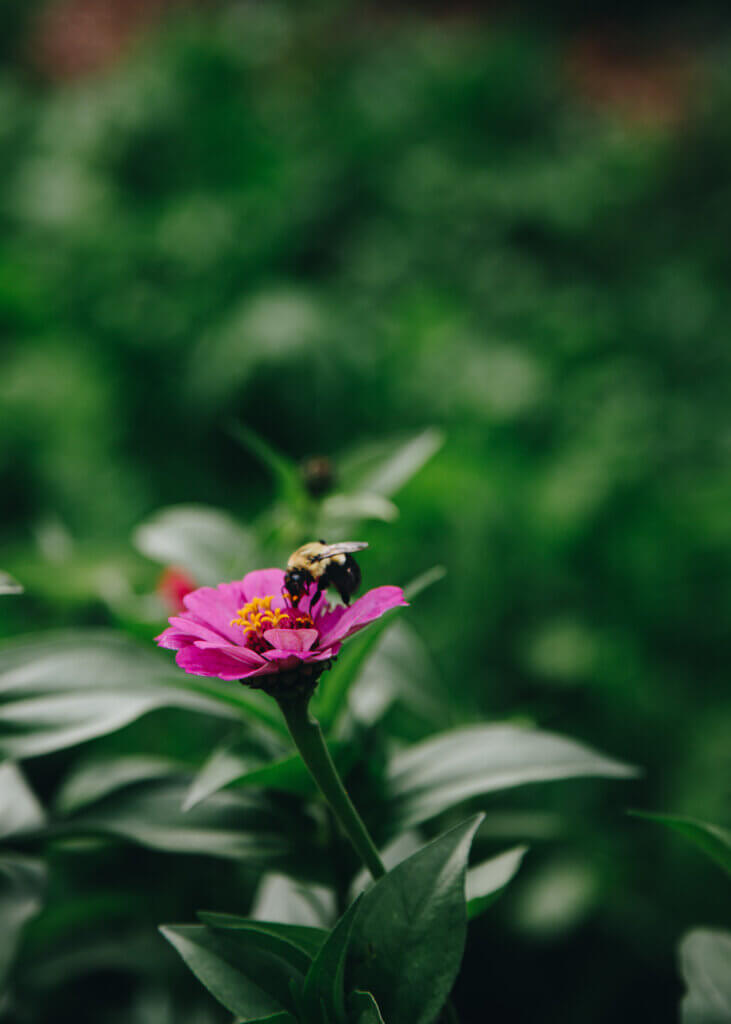
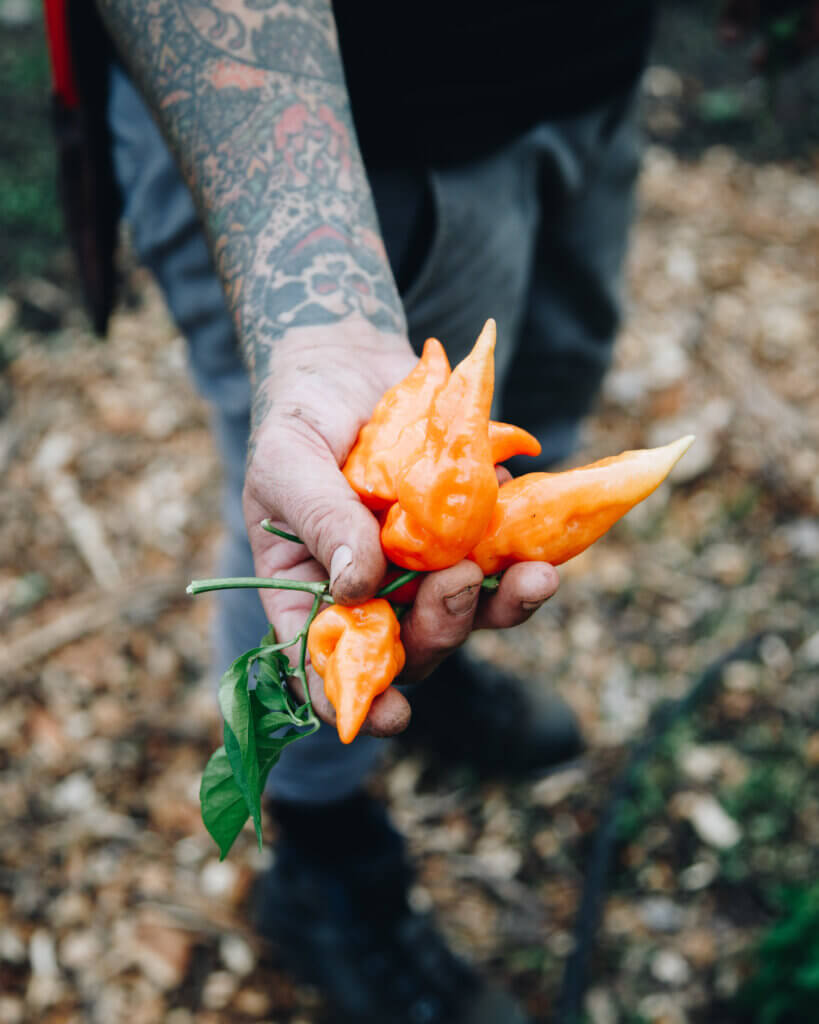
The variety of food and pollinating flowers grown across fifteen different yards directly impacts wider accessibility for all income levels and decreases food insecurity. Photo credit: Sarah Carroll
Community Impact
The CSA not only reduces the neighborhood’s carbon footprint but opens new lines of communication for the whole community. Jade says, “having time out in the neighborhood, sharing gardening tips and recipes has given us the chance to become the stitching in the fabric of the community.”
They envision a future when every neighborhood has a farming family within a few blocks. As Jade shared, “so every neighborhood has the chance to eat vine ripened tomatoes and cook with fresh cut herbs without everyone having to be a gardening expert”.
Community remains at the heart of their grand experiment. They feel like while they used to create art as artists, they now get to live art and partner with nature as gardeners.
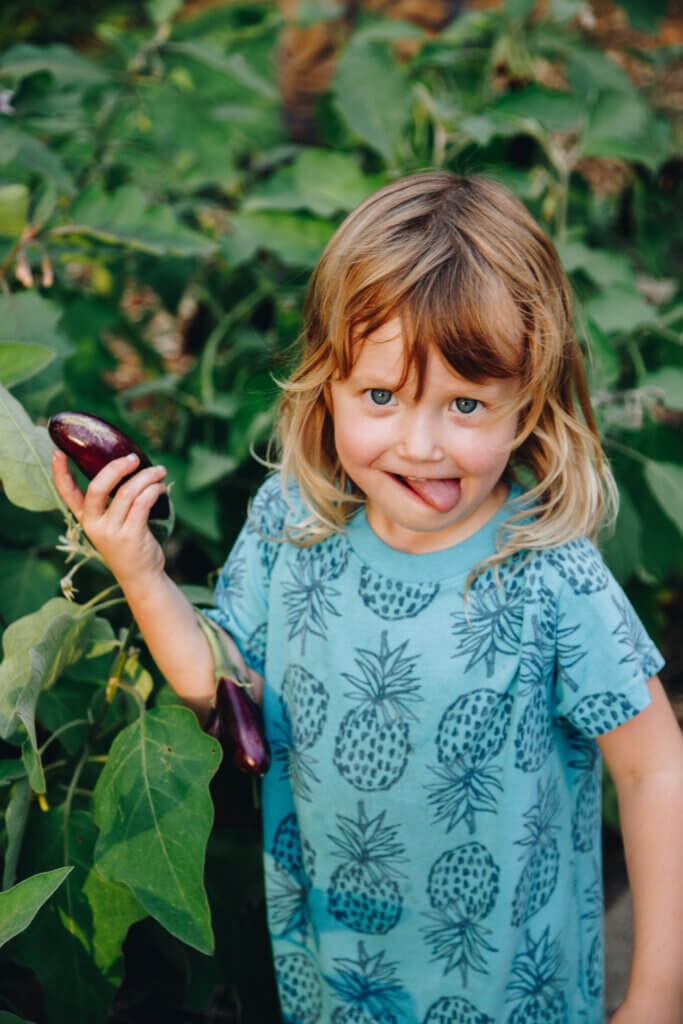
Who doesn’t love picking and eating fresh eggplant right from the garden? Credit: Sarah Carroll
Sharing Small Space Issues
Because they grow intensively on a small amount of land, they focus on making the most of every square foot. They make their own organic fertilizers, use cover cropping techniques to build soil health, practice crop rotation (one spouse more than the other) and top off annually with compost that’s been tested for jumping worms.
From evolving garden issues like jumping worms and Japanese beetles to the Swede midge, they figure out ways to work with nature to solve problems and still produce enough food for all the CSA members. Then they teach what they learn to neighbors and Instagram followers, cultivating community along with weekly CSA shares.
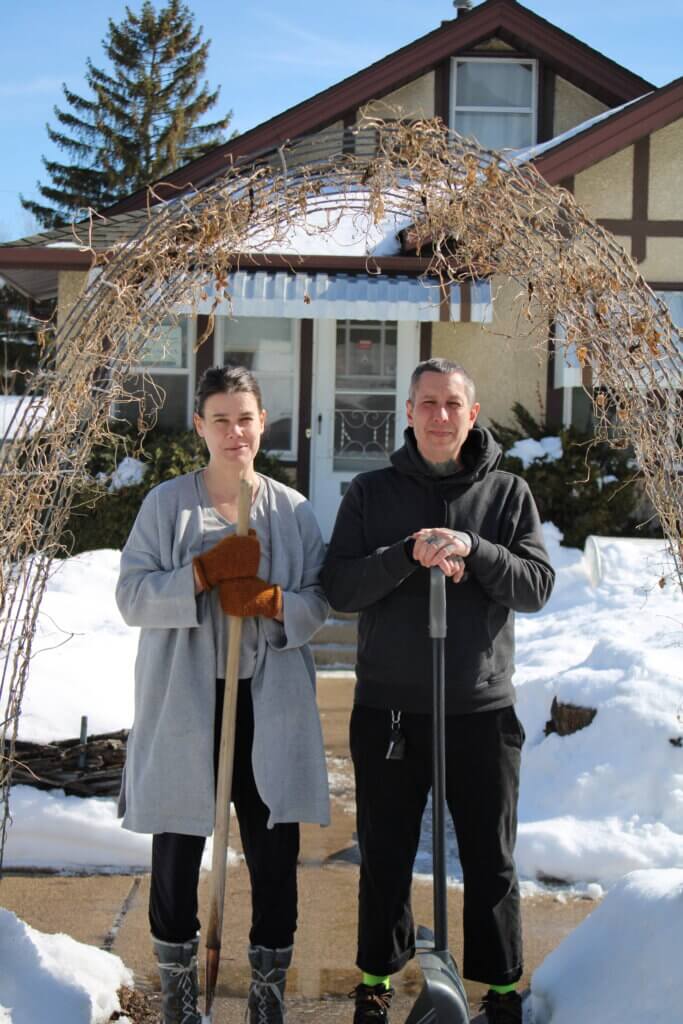

Photo credit: Michelle Bruhn
Visit theblackradishmpls.com to learn about membership options. Their pricing reflects The Black Radish’s goal to provide equitable access to local food. Become a sponsor to enable the purchase of tools, additional plot acquisition and conversion, and a future greenhouse to extend their growing season. Or contact Jade and Carrie directly at theblackradishmpls@gmail.com to get involved with their urban agricultural work.
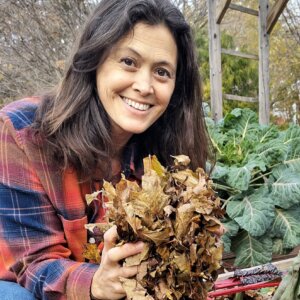
Michelle Bruhn is a Minnesota gardener, writer, speaker, local food advocate and co-author of Small-Scale Homesteading (Skyhorse Press, 2023).
You may be interested in:
Cover Crop Basics
With garden planning season in full swing, many gardeners are thinking beyond which varieties of vegetables they want to grow and wondering how they can…
Minnesota Agriculture in the Classroom
Minnesota Agriculture in the Classroom is an organization dedicated to increasing agricultural literacy through education. Because agriculture affects our quality of life so significantly, it’s…
Latinx Crop Profiles
Read through this list of plant profiles for common Latinx crops if you are an emerging farmer of Latinx origin. Profiles include growing information, common pests or diseases and culinary uses.