


Cover Crop Basics
With garden planning season in full swing, many gardeners are thinking beyond which varieties of vegetables they want to grow and wondering how they can best support those vegetables. Let’s dig in and explore cover crops.
Question:
Can I incorporate cover crops in a home garden, or is that mostly a farmer thing? How should I get started?
Answer:
Cover crops are important for so many reasons. One of my dreams is to see more people adding them in home gardens. Of course, as northern gardeners, we have to be strategic with our short growing season.
The University of Minnesota Extension offers a great article on cover crops, including a graphic outlining timing options. It boils down to this: the easiest option is to plant them in the fall, the second easiest is very early spring and the trickiest is to try and plant them during the height of the growing season.
When to add cover crops

I once revived a handful of very depleted community garden plots with cover crops. Here’s how I did it. I chose to pull out my vegetables a bit early in the fall, which meant I missed out on some late-season produce. But it was worth it in the end, so stick with me.
In the first half of September, I thickly sowed a cover crop of winter rye and hairy vetch—these two make a great pair because the winter rye suppresses other plants from sprouting and it grows into a beautiful, green manure. The hairy vetch is a legume, so it pulls nitrogen down into the ground.
Cover crops like this must be sown a good 3 weeks before a killing frost in order to get established, so use your best guess for timing. The winter rye/vetch combo actually survives the winter, so in the spring it starts growing vigorously again. About 2 weeks before planting, turn the entire bed over, making sure to smother the plants with soil. Now you are ready to plant just as the rye and vetch are decomposing and giving your soil a burst of nutrients.
I was astounded at how well my community garden plots performed after doing this. It really reduced weed pressure, too.
Other times to plant cover crops

This is just one of many “right” ways to use cover crops. Some people prefer a cover crop that is “winter-killed” so you can just plant right through the residue in the spring. You would want to give it at least 3 weeks to get established in the fall before a frost. Examples of winter-kill cover crops include oats and peas.
If you’re really on top of things, you could plant an early spring cover crop, especially for vegetables that you might not plant until later anyway, like tomatoes and peppers. Just be sure to read up on the different options and decide what will work best for you. Some people like to use a flowering cover crop like buckwheat or crimson clover—these are great but must be mowed or turned over before they go to seed so you don’t end up with them as persistent weeds.
Final considerations
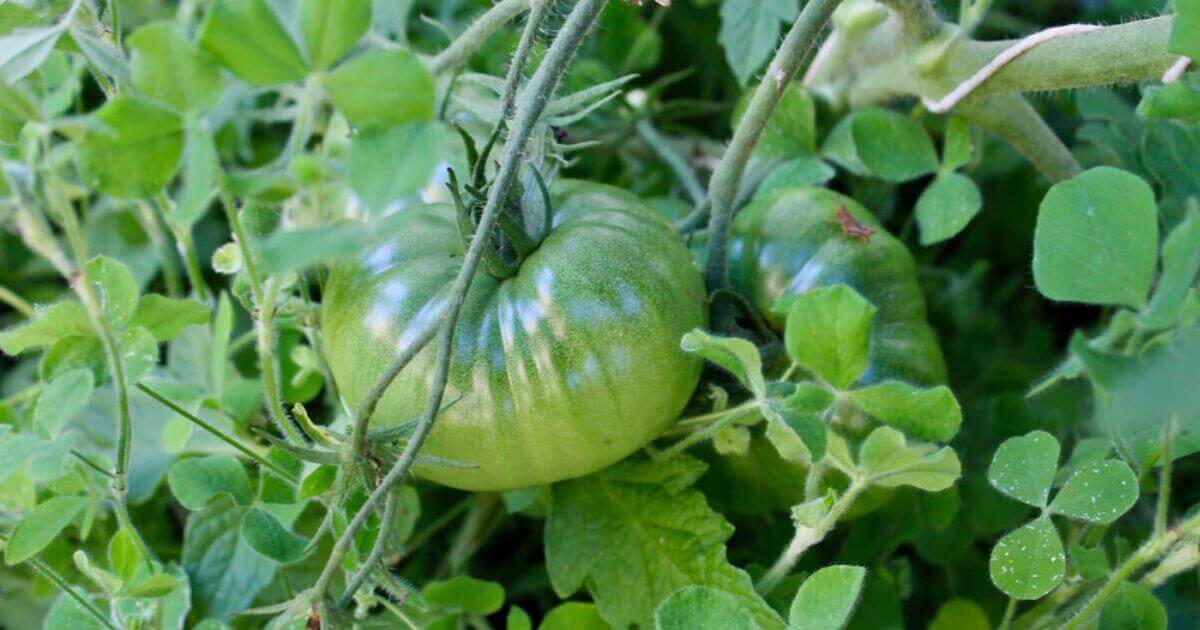
Try cover cropping in between plants to help with erosion, nitrogen fixing… you name it. I have had success planting crimson clover between tomato plants. I let it grow until it blooms, then simply mow it down and use the plants as a mulch in mid-summer. Just be aware that your cover crop or interplanted crop might compete with your vegetables for water and nutrients, so plan and space them carefully.
Read more on the excellent U of MN Extension website: cover crops and green manures or watch a great video about summer cover crops.
Resources from U of MN Extension:
Basics on growing fruit for northern gardeners
Other gardening questions? Ask a Master Gardener via our online form, or call the yard and garden line at (612) 301-7590.
Other helpful resources:
The Master Gardener Volunteer program
Jennifer Rensenbrink is a University of Minnesota Extension Master Gardener Volunteer for Hennepin County. She somehow has two mini-prairies on her tiny south Minneapolis property.
Featured photo: A tomato plant underplanted with crimson clover, which was later carefully mowed down and used as mulch as the tomatoes matured. Photo credit: Jennifer Rensenbrink.
You may be interested in:
Companion Planting Basics + Benefits
Ed. note: This article supplements a larger feature on community gardening in the Fall 2025 issue of Northern Gardener. Learn more about how you may…
Rain Barrel Basics: Why, How to Set One Up, and Winterizing
As Minnesota gardeners continue to adapt during the drought of 2021, it’s natural to think about ways to conserve and reuse water for our gardens….
Day 20: Feeding Your Vegetable Garden
Vegetables are living, growing things, and they need to be fed. The amount of nitrogen, phosophorous, potassium and trace minerals that plants need varies. (See…