



Stay Out of My Pots! Common Diggers in Potted Containers
Oh, the frustration of planting a container full of lovely new plants only to have digging animals make a mess of your lovely garden arrangements! Squirrels and chipmunks, in particular, seem attracted to scrounging around and burying their nuts and treasures in planted containers.
Squirrels dig holes to bury nuts and food throughout their territories. While they might not be as much of a problem in lawns or between plants in a larger garden, their digging behavior and stashes can quickly ruin carefully arranged plants in pots. Chipmunks do the same, and they also often dig up and eat flowering bulbs and burrow to create tunnels to hide and rest.
Also, both mammals often dig to search for insects and other treasures, and in the process tear up or damage your plants.
While it’s nearly impossible to keep them out of pots entirely, a few tricks can dissuade them from causing great destruction. Here are some tricks that, singly and collectively, can make a big difference in maintaining the health and beauty of potted arrangements:

- Lava rocks with rough surfaces, placed around plants within your pots, can help discourage digging. It’s most effective when they’re placed on any open soil areas after completing your plantings. As plants grow through the season, the lava rocks are barely visible, yet they’re attractive even when they do show.
- Pokey wire edging around the perimeter of the pots can help discourage climbing over the tops. If the wire is the same color as the pots or foliage, even better, but not necessary since plants tend to drape over the edges with growth over time.
- Wire or plastic screens buried below the top level of soil over bulbs and tubers will discourage rodents from digging and eating bulbs and tubers. The spacing in the screens needs to be large enough for plants to sprout and grow through, but small enough to prevent rodent digging.
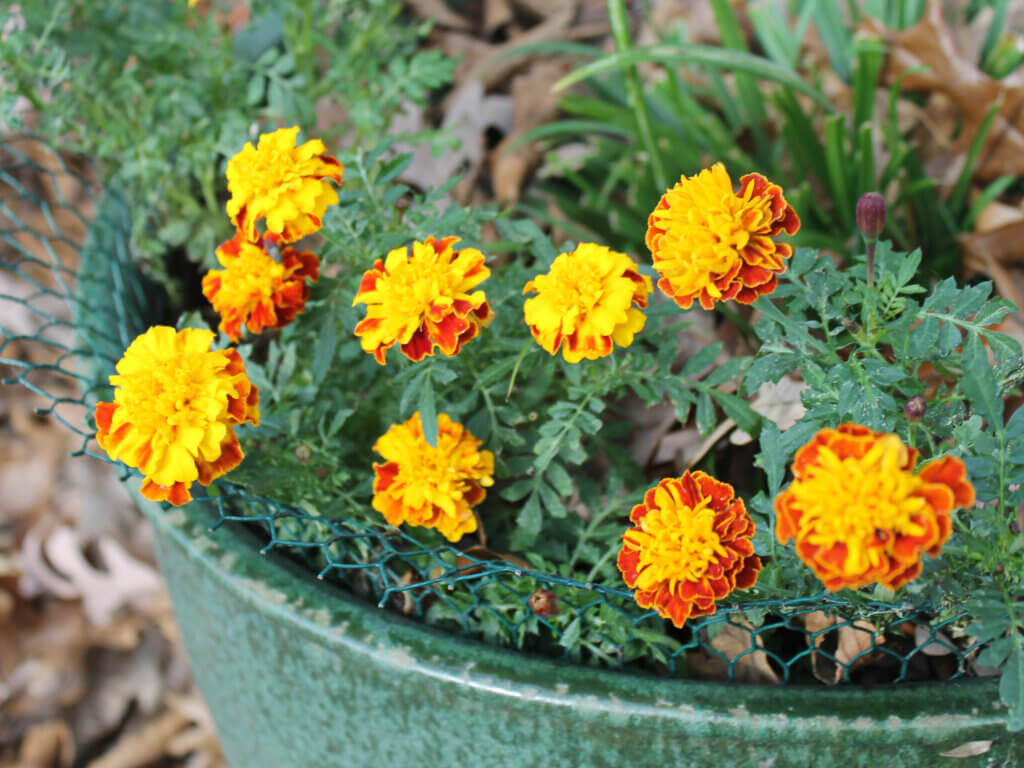
- Marigolds, onions (Alliums spp.) and scented herbal plants interspersed with other plants help repel rodents. Pinching off spent flowers of these plants and sprinkling their fresh seeds over the soil surface also add to the repellence.
- Aluminum foil or other bright metal “decoys” help scare away chipmunks, squirrels and other rodents. While they can seem unsightly, these decoys can be tucked under container edges or among plants and then removed after plants have filled in over time.
While most of these techniques are helpful, combining them as strategies can make a big difference in keeping rodents out of pots and minimizing damage.
Applied “critter ridder” solutions, animal repellents and spicy peppers can help, too, but they have to be reapplied frequently and after heavy rains. However, combined with other methods listed here—particularly at the start and end of the growing season when digging behavior seems greatest—they can help keep foraging rodents out of your pots.
There are many more methods that work in various conditions. What are some techniques you’ve found to be effective?
Beth Stetenfeld is an organic gardener, native-plant enthusiast and garden blogger and writer. She’s also a master naturalist volunteer and instructor.


I surround new plantings with plastic forks, tines up. This is about 90% effective and if you use clear plastic, they hardly show. Once the plant is established (a few weeks) I pull them out. This also works for new in-ground plantings.
Bloodmeal is a great deterrant. Most small animals are freightened by the smell of blood. Buy pelleted bloodmeal if you can find it, pelleted lasts much longer than granular bloodmeal. As a bonus, bloodmeal adds nitrogen to your soil.