

Great Native Plants for Cut Arrangements
Beyond their value in the garden and the larger ecosystem, many native plants make excellent additions to cut floral arrangements. And many have vase lives that match those of greenhouse-grown cuttings.

During a recent quick walk through my garden, for instance, I grabbed a few examples: false sunflower (Heliopsis helianthoides), bugbane (Actea racemosa), purple coneflower (Echinacea purpurea), black-eyed susan (Rudbeckia hirta) and fiddlehead fern (Matteuccia struthiopteris).
Note: Bugbane is an example of a plant that looks great but has a strong scent many would consider unpleasant. For this reason, I tend to use it for outdoor arrangements, or I wait until it forms seedheads and use them for indoor displays.
When you’re working with fresh bouquets, it helps to know which flowers have staying power in a vase.
The Lady Bird Johnson Wildflower Center offers specific recommendations for Minnesota native species recommended for cut arrangements. Using this resource, you can narrow your search to match your growing conditions and requirements, or expand it to include surrounding states with similar conditions. Treehugger takes it a step further and recommends the “Twenty Best Native Flowers for a Cut Garden.”
Of course, floral arranging and gardening are somewhat subjective, so your choices might vary. And time and experimentation will reveal your favorite plants and best options for this purpose.
Every season has elements to offer—even winter, when dried seedheads, berries and evergreen elements can be incorporated. In addition to the plants I mentioned earlier, just a few of my go-to native choices for vases include:
- Wild columbine (Aquilegia canadensis): blooms in late spring/early summer and is a great focal point for a delicate display;
- Daisy fleabane (Erigeron annuus): white, Aster family flowers that bloom through the summer and are great fillers;
- Staghorn sumac (Rhys typhina): blooms in mid-summer; seedheads can be used year-round;
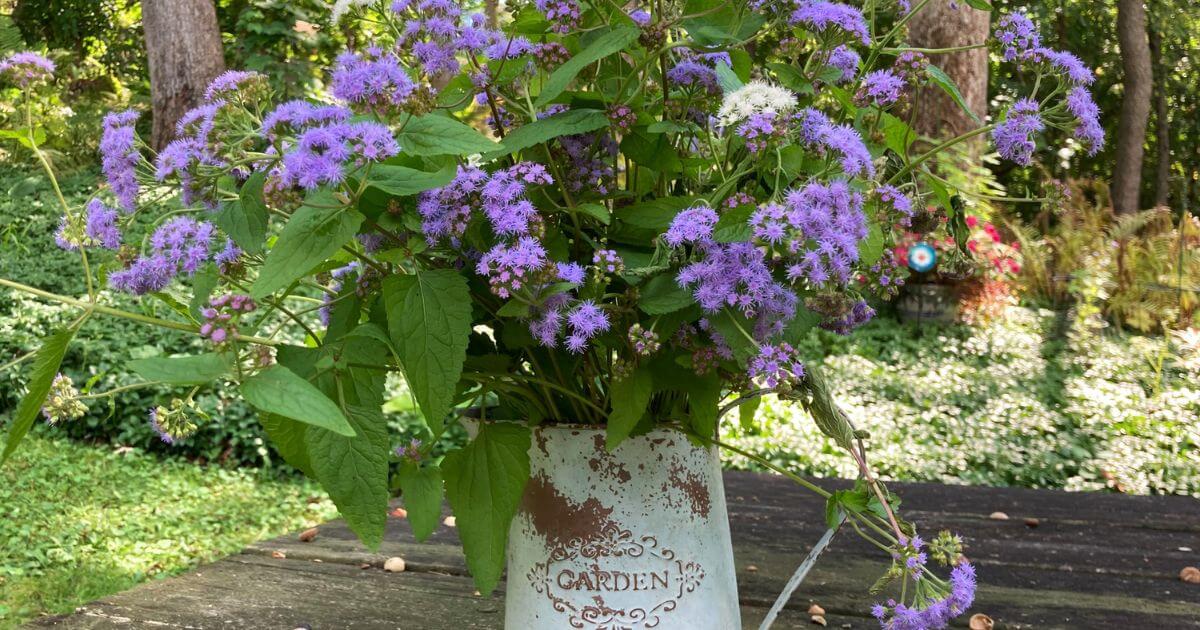
- Blue mistflower (Conoclinium coelestinum): blooms in late summer/early autumn and offers plentiful clusters of beautiful, fluffy, purplish-blue flowers; and
- Northern sea oats (Chasmanthium latifolium): can be used from mid-summer, when seedheads form, through winter using dried seedheads.
These are just a few—there are so many options! The same principles apply for floral arranging, no matter what plants you use—native, non-native, garden-grown or from a florist. Using a combination of native plants and other elements can yield beautiful bouquets, too.

Take a walk around your garden and pick a few native plants for display. Experiment with combinations, and consider planting more natives you like and that you’d like to include in your bouquets. In addition to accessing great cut flowers, you’ll be helping pollinators and your local ecosystem, too. Good luck!
Beth Stetenfeld is an organic gardener, native-plant enthusiast and garden blogger and writer. She’s also a master naturalist volunteer and instructor.
You may be interested in:
Plant These Annuals for Great Cut Flowers
Whether your goal is petite nosegays or elaborate arrangements, many blooming annuals offer a great supply of cut flowers throughout the growing season. Here are…
4 Cut Flower Garden Designs
Garden #1: Cut Flower Garden with Annuals I’ve always grown flowers for the value they add to our green landscape. I love the way a…
Plant Profile: Sunflowers
Nothing says August in the garden quite like sunflowers. Whether the annual sunflowers (Helianthus annuus) that dot cutting gardens or the perennial sunflowers that stand…