


Top Tips for Blue Ribbon Veggies
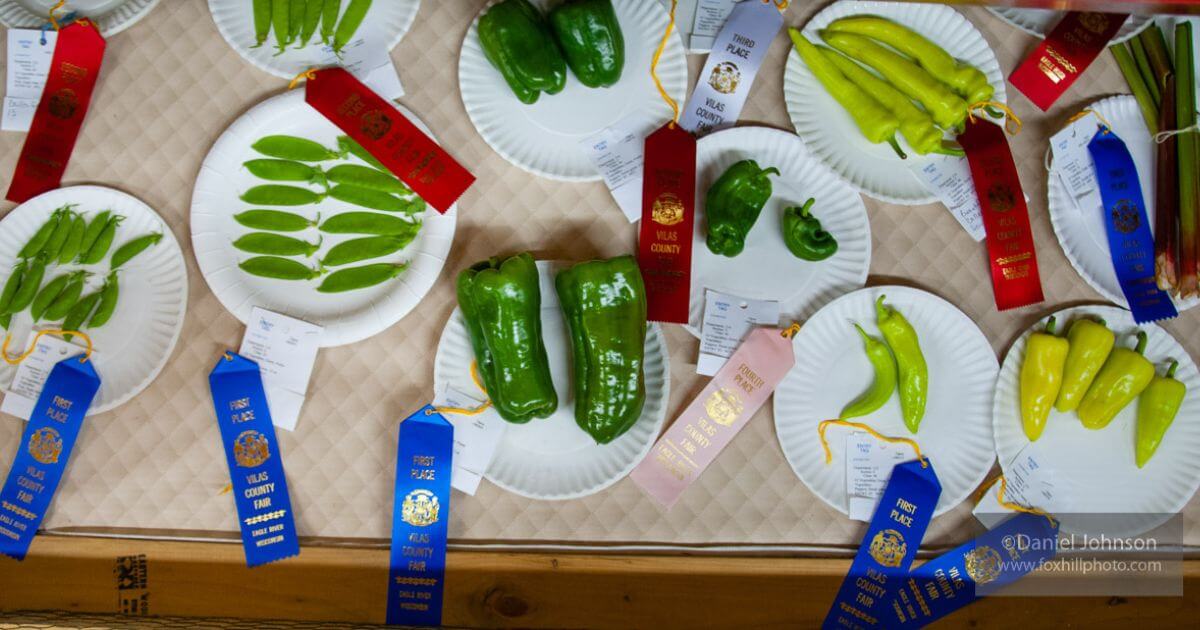
‘Tis the season for county fairs and all the delights that go with them: cotton candy, Ferris wheels and (hopefully) lots of blue ribbons. If you’re hoping to exhibit some of your homegrown vegetables this season, here are some tips for giving yourself the best chance of earning a blue ribbon.
Follow the rules
We’ll discuss this first, because you don’t want to get disqualified on a technicality. (Well, you don’t want to get disqualified at all, but especially not on a technicality.) Familiarize yourself with the rules and guidelines for the categories you’re planning to enter, and be sure to follow the specifications to the letter. Some categories will specify the number of items to enter (six radishes, four carrots, one eggplant, five stems of basil) and you’ll need to include that number exactly. Similarly, watch for other specifications like whether the peas should be shelled or not, whether corn should be husked, and whether there are separate categories for different colors of zucchini.
Choose the best
The quality of your produce is paramount. You’ll need to choose specimens that free of blemishes, are of a “marketable size” and are of the appropriate shape and color. Maturity is important, as is cleanliness. Basically, if you want to have a chance at the top spot in the class and that blue ribbon, you’ll need to put your best foot forward.
Uniformity matters
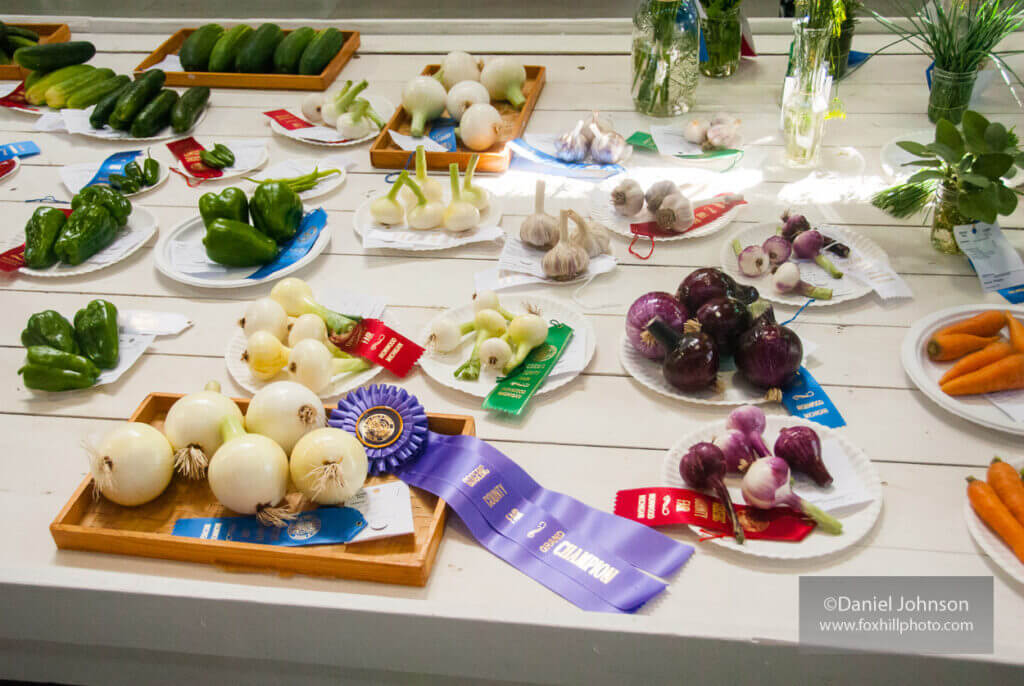
Here’s a special call-out to uniformity, because it matters more than you might think in vegetable judging. So let’s say you’re entering the “Four Tomatoes, Golden” category and you have one tomato that’s huge and gorgeous and six medium-sized yellow tomatoes. Even though the huge one is beautiful, you’ll want to choose four of the medium-sized tomatoes that are uniform in size. The uniformity is more important than showcasing the size of the one large tomato, because that one will just look out of place.
Another example: let’s say you planned to enter twelve purple-podded beans at the fair. On entry day, you discover the squirrels (or the bugs, or the rabbits, or whatever pest happens to plague your garden) have been chowing down on your beautiful beans. After salvaging what you can, you take stock: You have six lovely, market-size beans, two that are past maturity with bulging seeds, three that are small and not quite full-size, and ten with bite marks. There isn’t really a way to turn that into a uniform entry and thus you may want to skip that category rather than enter sub-par produce.
Be a savvy exhibitor
Some categories will have lots of entries and other categories will have fewer. At my local fair, the category for “Beans, Green” will have many entries, but I know from experience that the category for “Beans, Any Other” won’t. That’s one reason I sometimes grow beans like Dragon’s Tongue—because they’re perfect for entering in “Any Other” and I’m still happy to get a blue ribbon even if I’m the only one in the class!
And most of all, have fun!
That’s kind of the whole point, right? Best wishes with your exhibits and enjoy the experience!
Samantha Johnson is the author of several books, including Vegetable Gardening for Beginners: Learn to Grow Anything No Matter Where You Live (New Shoe Press, 2023). She writes frequently about pets, gardening and farm life. Visit her online portfolio at http://samanthajohnson.contently.com.
You may be interested in:
Tips for Growing Tomatoes, Part 2
Updated June 2025 Now that you’ve got your tomato planted, there are other things to keep in mind, like how to minimize its upkeep. One…
Top 10 Garden Tips from 2019 Northern Gardener
With each new issue of Northern Gardener, my garden knowledge increases — and I hope it does for our readers as well. This year, there…
Top 5 Plant Sale Shopping Tips
Early May is the typical start of plant sale season across our cold-climate states, each one typically sponsored by garden clubs, Master Gardener groups or…