


Ask a Master Gardener: Insects on Fruits
Happy Summer! Is it ever not a challenging growing season? In classic upper midwest fashion, we’ve swung from one extreme to the other. I’ve got a different variety of weeds this year—bigger! Faster-growing! I’ve also noticed an abundance of bugs, birds, and bunnies in my yard. I suspect all of these things are connected and the circle of life is just very rich right now.

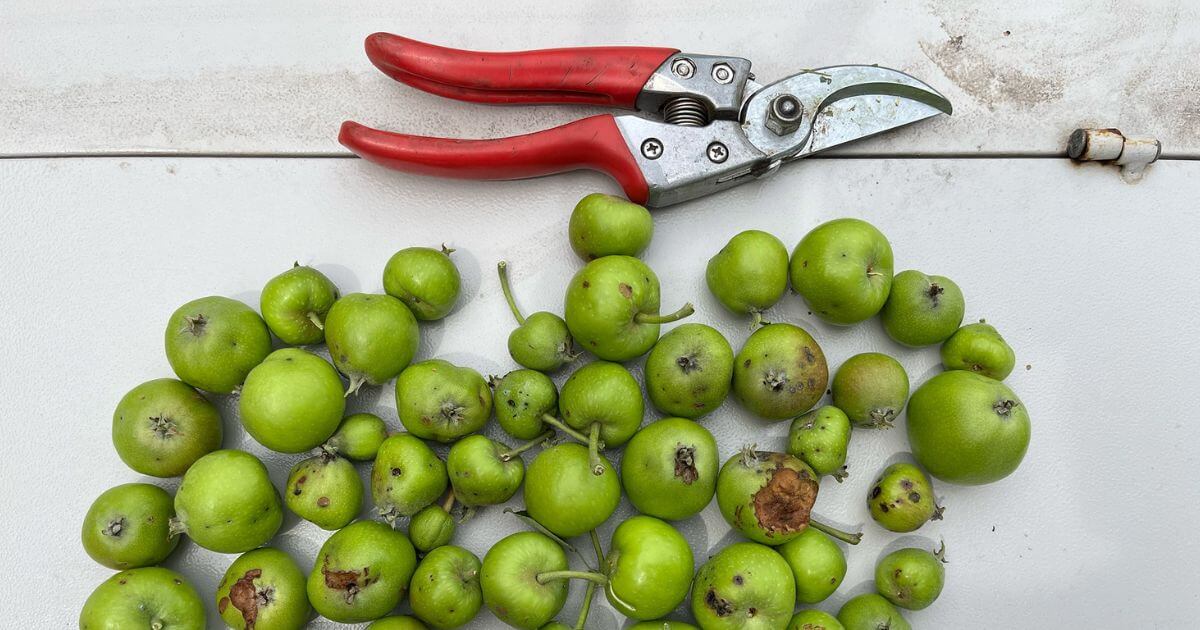
Unfortunately, that means extras of bugs we really don’t like, such as cherry fruit flies and spotted wing drosophila. My cherries and raspberries went from perfect to rotten in 2 days flat—and the culprits could be found wiggling inside the fruit. Even my honeycrisp apples started to look damaged weeks before apple maggot flies usually emerge. Gross.
Question: Is it me or are there way more bugs this year? Why?
Answer:
I suspected that there were two reasons why we are having this perfect storm of pests this year: the mild winter plus the wet spring. I reached out to Minneapolis entomologist Jessica Miller to ask if my hunch was correct. She said “Yep! Many insects will have higher numbers in their populations this year.”
But this is also good news, because insects are such a vital part of the food web. “Higher populations of insects means more food resources for so many animals. Bird chicks’ survival rates should increase with a rich abundant protein source of insects,” she added.
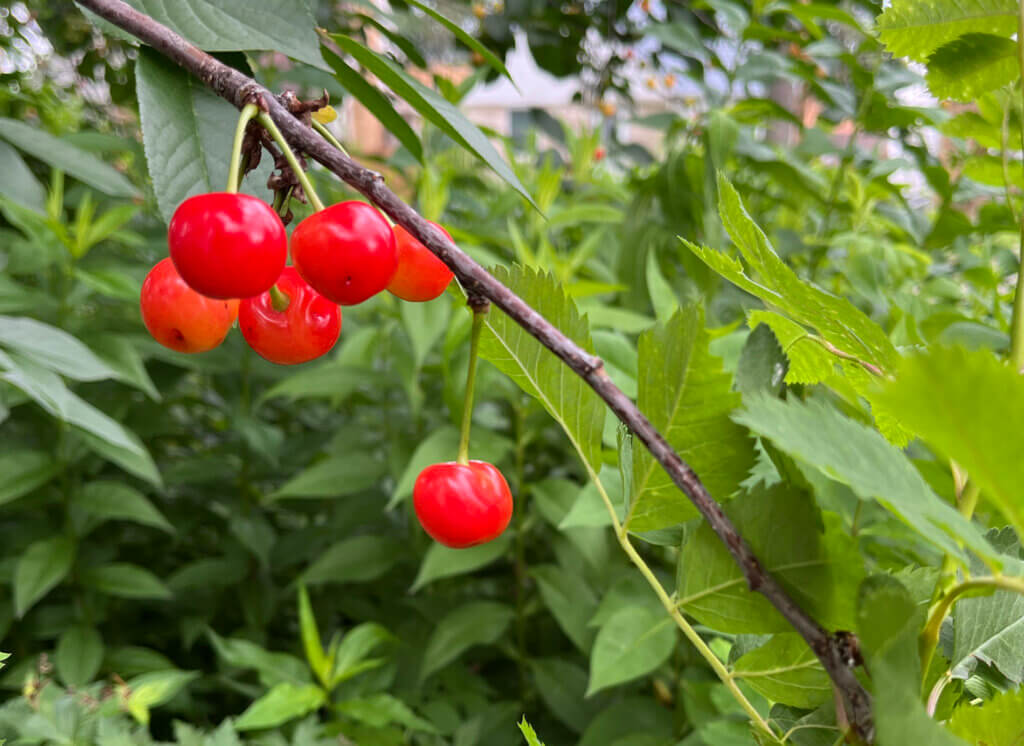
Although commercial growers can’t sell fruit with worms in it, as a home grower you can absolutely still use your fruit, if you can get past the ick factor. These pests pose no danger to humans, even if consumed. With cherries, the worms can be removed when you are pitting them, although this is tedious. With raspberries, the drosophila worms are so tiny that they’re really difficult to see. I’ve been making my infested raspberries into raspberry syrup and jelly—straining out seeds and worms alike. But it depends on your tolerance for this sort of thing.
Long term pest control starts with keeping your orchard clean—pick up fallen fruit and dispose of it. Floating row covers can also work for raspberries, and small cherry trees can also be covered in insect nets. Apples can be bagged in mid-June before maggot flies emerge. Another strategy? Plant fall-bearing raspberries and avoid drosophila altogether.
Sometimes, the best defense is to maintain a good offense by putting up a welcome sign to a variety of “predator” insects. More from Jessica: “Sometimes predator insect populations will lag behind the pest insect population increase but, given time, should bring those pests back to manageable thresholds. Chemical use to manage pest issues will usually kill your predators and the ecosystem will likely stay out of balance and give those pests more room to populate.”
Translation: if you kill off the pesty bugs, the beneficial bugs will never arrive. Waiting for them to arrive requires patience and tolerance of plant damage, but nature will sort things out for many pests.

Mild winter / wet spring
In addition to bugs—both good and bad—our mild winter and wet spring also helped various blights, viruses, and mildew survive at record rates. My cucumbers have already had to be pulled out due to downy mildew.
What’s a gardener to do? If your plant only has a few affected leaves, remove those leaves and move on. If more than 65% of the plant is affected, remove the whole plant. Place diseased plants in the garbage. Fill the open spot with an annual and dream about that oh-so-elusive perfect growing season—maybe 2025 will be our year!
Questions for you, reader: first, how is your garden doing? Second, have you seen more or fewer Japanese beetles this year? They should be out in more or less full force by now, but I have not seen a single one. Could the winsome flies be working their magic at last?
Resources from U of MN Extension:
Basics on growing fruit for northern gardeners
Other gardening questions? Ask a Master Gardener via our online form, or call the yard and garden line at (612) 301-7590.
Other helpful resources:
The Master Gardener Volunteer program
Jennifer Rensenbrink is a University of Minnesota Extension Master Gardener Volunteer for Hennepin County. She somehow has two mini-prairies on her tiny south Minneapolis property.
Photo credit: Jennifer Rensenbrink.
You may be interested in:
Got Garden Pests? Try These Organic Methods to Diminish Their Damage
Dealing with plant-wrecking pests can be frustrating and difficult, especially when trying to garden organically. Balancing desires to support the local ecosystem and beneficial insects…
Ask a Master Gardener: Invasive Insect Update
My gardens are still not quite put to bed yet for the year—I’m still harvesting collard greens, kale, walking onions and a variety of herbs….
Chemical-Free Pest Control
Katharine D. Widin was the plant health columnist for Minnesota Horticulturist and Northern Gardener for 32 years, covering every bug and disease known to haunt…