


Extend the Season in Your Vegetable Garden, Part 2
By carefully choosing which crops and varieties you grow in your vegetable garden, it’s possible to extend the growing season several weeks in the North. But frost is frost, and eventually all but kale and parsnips will fall to its power. For determined season extenders, the next step is to add layers of warmth to the garden through covers, hoop houses and cold frames.

In her article called “Cheat the Season,” in the September/October 2012 issue of Northern Gardener, Colleen Vanderlinden offered 10 ideas for extending the growing season. She noted that Maine-based author Eliot Coleman reports that for every layer of cover you add to a vegetable garden, you gain one zone in warmth. So, adding one layer of cover moves your garden from Minneapolis to Des Moines; add a second layer of cover and you’re in St. Louis.
Start with Homemade Supplies
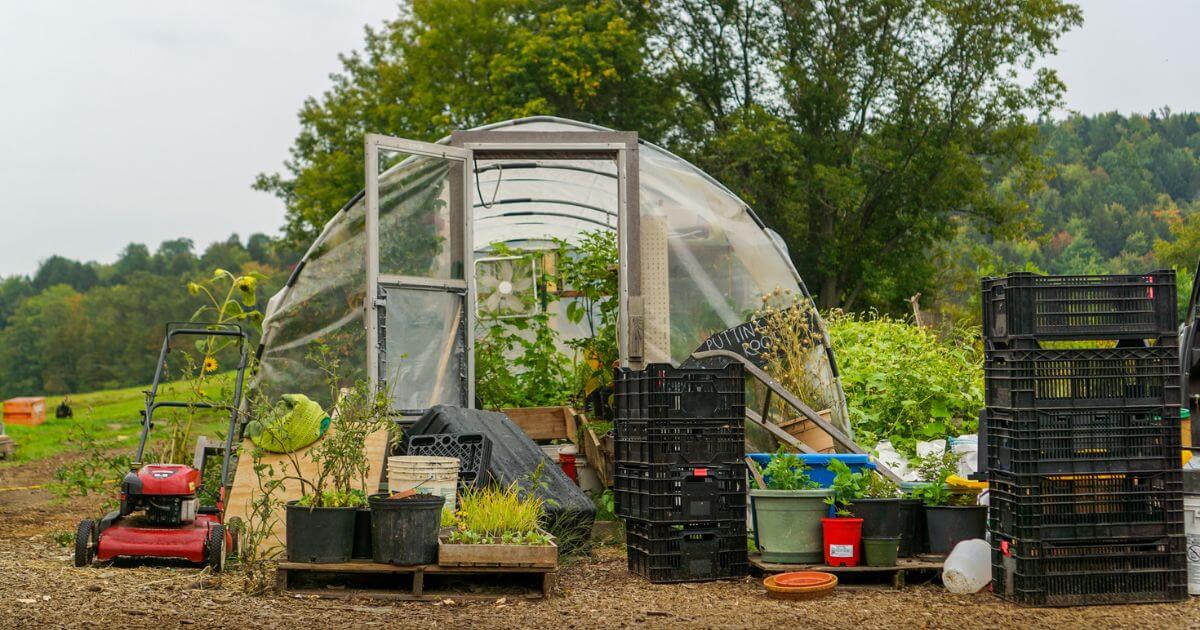
The simplest layer of cover is to add something to protect one or a few plants from early frost. This may mean a sheet, a fancy cloche, a plastic milk jug with the bottom cut out or a row cover. But many season extenders want to be able to harvest into November or even December, and for that you need something like a greenhouse. The difference between a hoop house, low tunnel, high tunnel and a full-on greenhouse isn’t strictly a matter of semantics; generally a greenhouse is a more permanent structure whereas a hoop house or low or high tunnel is temporary.

What most home vegetable gardeners are seeking is a low tunnel or hoop house, which can be made out of PVC pipe or electrical conduits that are bent around a raised bed to make a frame. The frame is then covered with plastic of some kind (Colleen recommends simple painting drop clothes for small low tunnels). You can find several videos on YouTube on how to build a hoop house on the cheap.
Planning for Added Challenges
Most of these are made by home gardeners and offer creative ideas on how to construct a simple tunnel. In making your hoop house, it’s important that you be able to move the plastic covering off or on the frame easily. Our weather is erratic (even more than usual in recent years) and fall days can go from 20 degrees to 60 in a snap.
Another consideration is wind—battening down homemade coverings against the gale-force winds can be a challenge. The best thing you can do is remove them completely if you’re at home and notice the winds are picking up. Your plants may take some damage, though not as much as if they were smothered or razed by a renegade plastic sheet.
A low tunnel is great for giving plants the extra days or weeks they need to finish growing. Also, if you start some spinach, lettuce or other greens in late August, you should be able to leave them in a low tunnel or hoop house and harvest well into the fall.
How do you extend your gardening season?

Mary Lahr Schier is a Minnesota gardener, writer and editor and author of The Northern Gardener, From Apples to Zinnias, 150 Years of Garden Wisdom (Minnesota Historical Society Press, 2017), winner of the Silver Award of Merit from GardenComm in 2018. For 18 years, she edited Northern Gardener magazine, the publication of the Minnesota Horticultural Society and the only magazine dedicated to gardening in USDA Zones 3, 4 and 5.
You may be interested in:
Extend the Season in Your Vegetable Garden
Get more out of your vegetable garden by extending the season, both in the spring and in the fall. Below are some ways to extend…
Book Review: The Four Season Farm Gardener’s Cookbook
Each year, publishers release dozens of gardening books, many of which are useful or beautiful. At the same time, hundreds of cookbooks are published, and…
July Garden Checklist for Northern Gardeners
Updated July 2025 With heat, humidity and occasional rains, many gardens will be exploding by early July. Fortunately, we gardeners can enjoy them with a…