

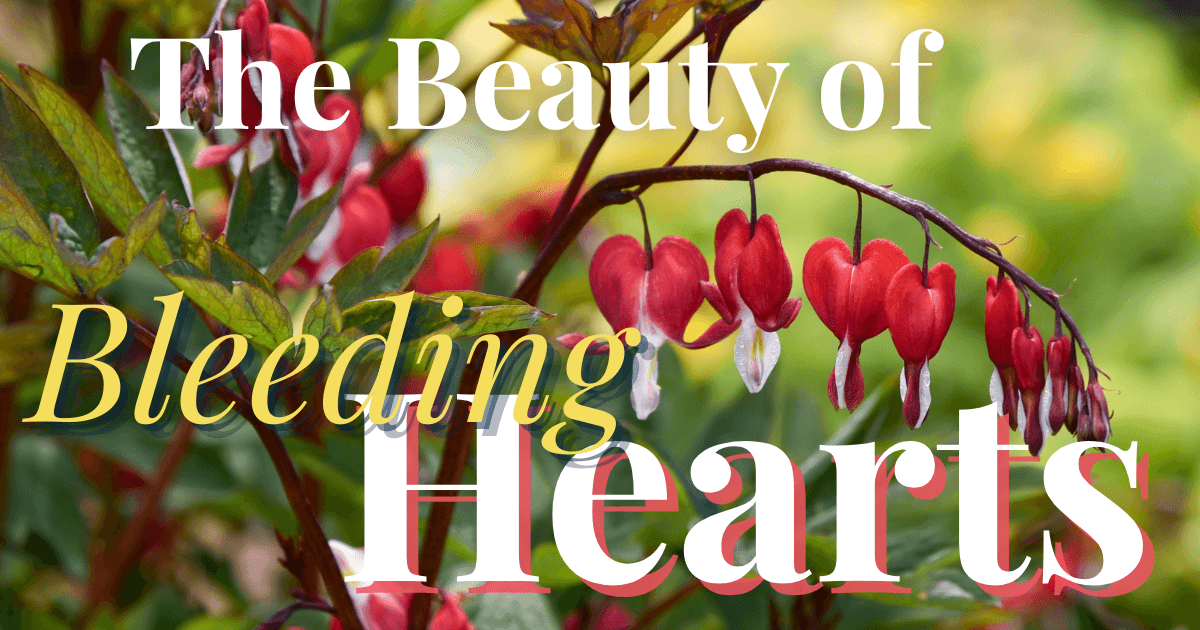
The Beauty of Bleeding Hearts
After years of growing hostas in the shady, challenging conditions at my grandparents’ cabin in Wisconsin—and watching deer munch them down—I reconsidered bleeding hearts. Are they a tad old-fashioned? Yes. Were they perfect for my conditions? Absolutely.
Beloved by northern gardeners for ages, these durable plants produce stunning blooms while requiring little maintenance. You probably know the common bleeding heart (Lamprocapnos
spectabilis), but there are other species worth considering. Common bleeding heart is native to Asia, but among the dozen or more other species are several North American natives.
Which to Choose?
The common bleeding heart features dark green clumps of foliage, growing up to 4 feet tall and wide. It blooms early, with heart-shaped flowers along an arching stem. The plants gradually go dormant in summer, though you may see the foliage last for months in cooler climates. Cultivars of common bleeding heart offer other colors.
Recommended Cultivars of Bleeding Heart
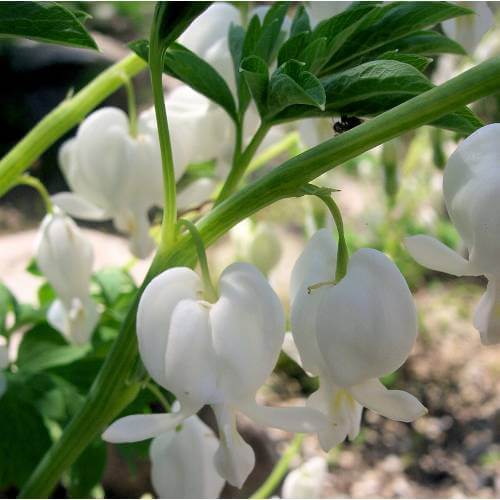
‘Alba’- Its flowers are white. The plant is similar to the species but less vigorous.
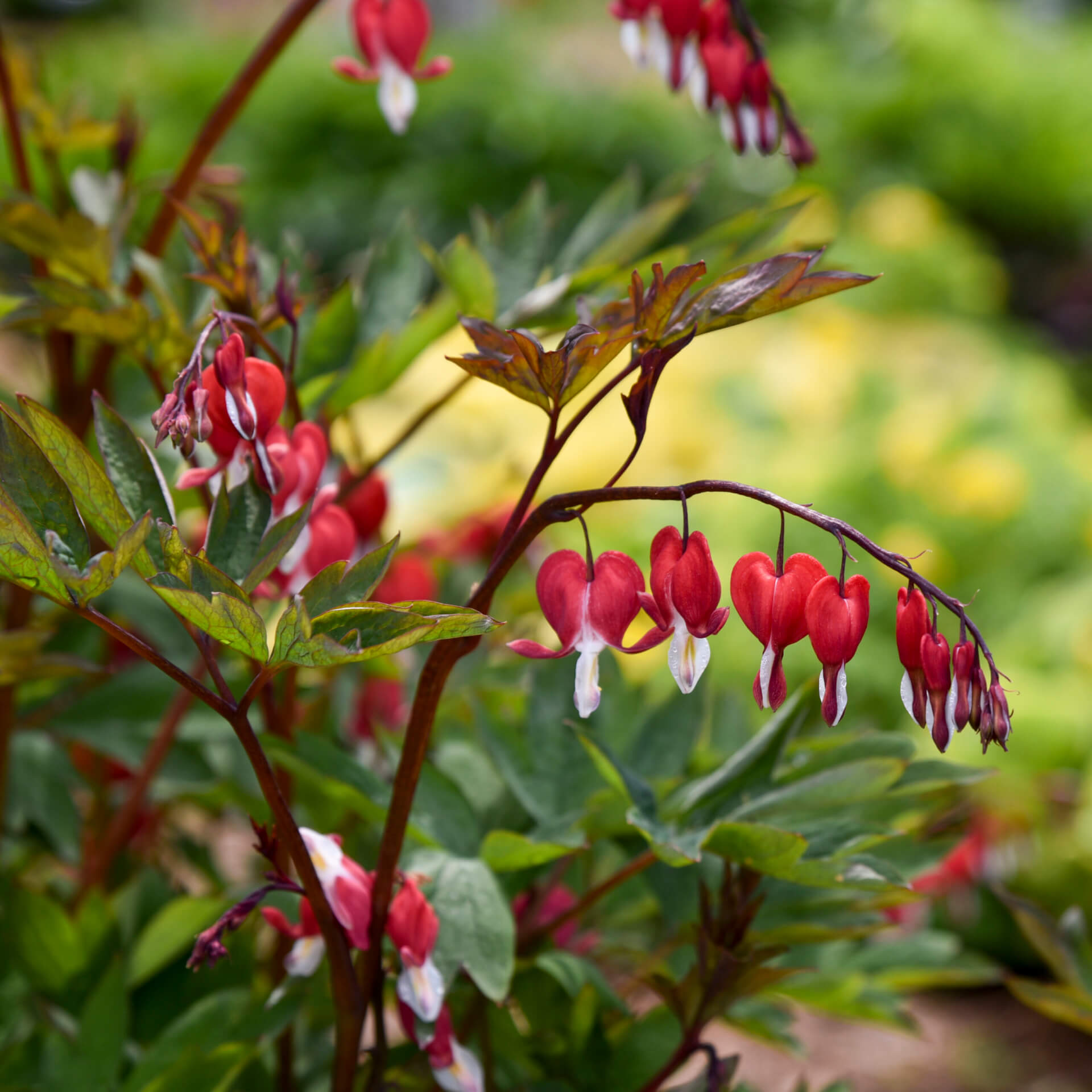
Valentine®- Similar to the species, but
has deep red flowers.
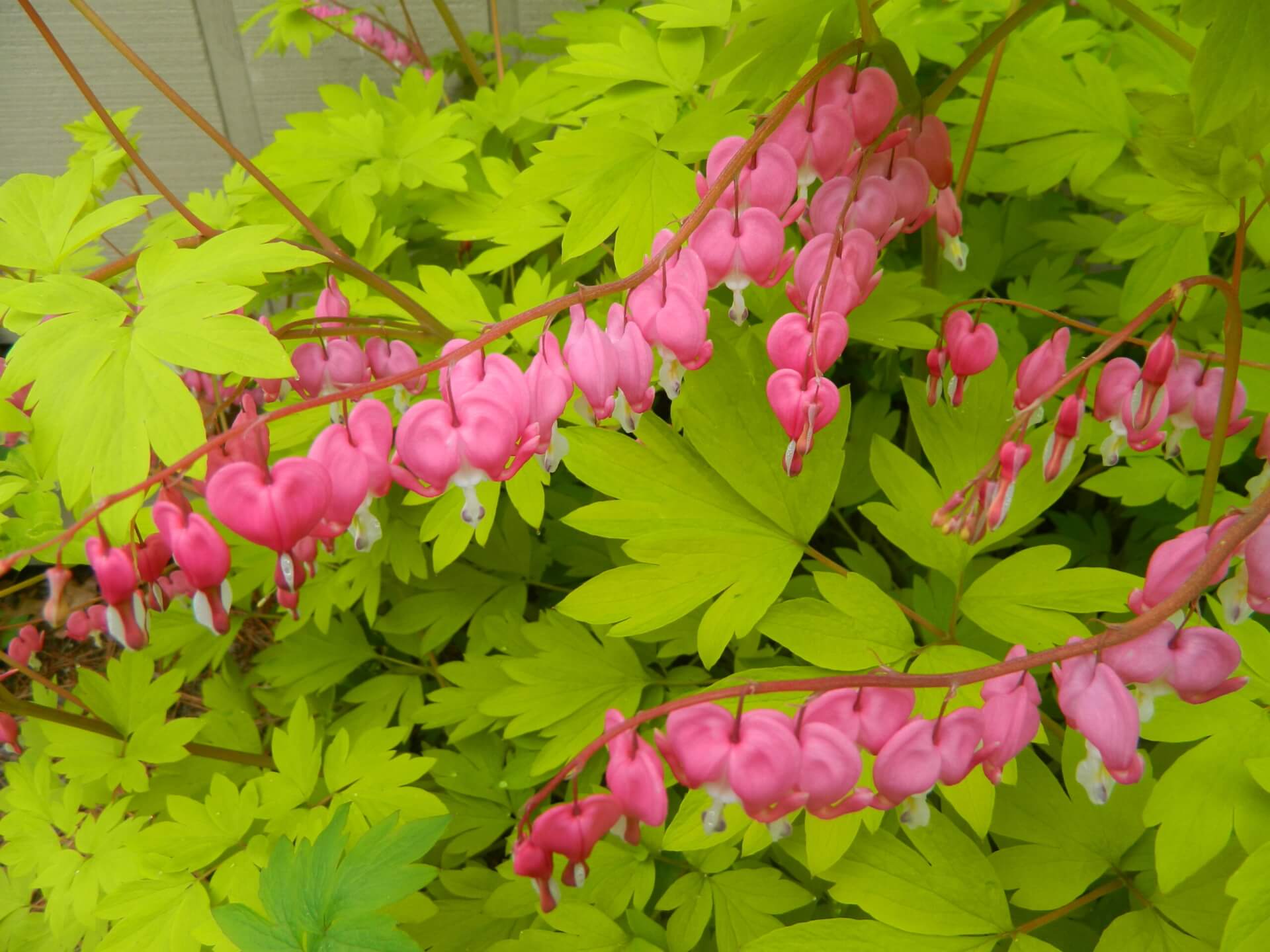
‘Gold Heart’- Chartreuse foliage and
pink flowers make this cultivar hard
to miss. It’s elegant and the leaves go
dormant later than the species.
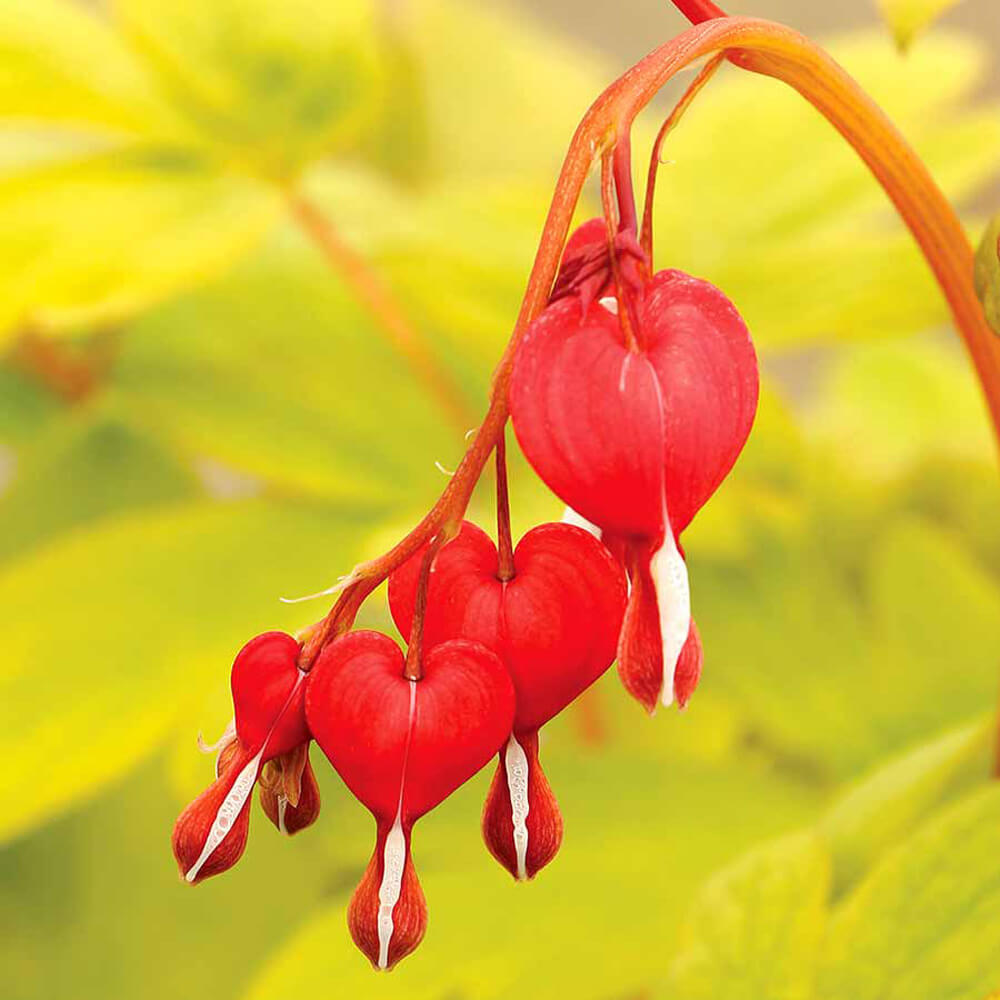
‘Ruby Gold’ (PPAF) – Released in
2022, ‘Ruby Gold’ looks like ‘Gold
Heart’, but with red flowers with a
touch of orange.
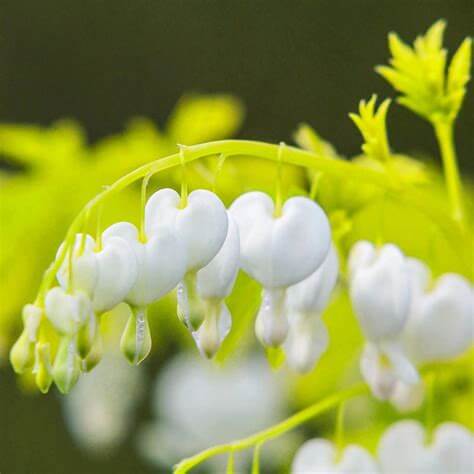
‘White Gold’ (PP27638)- Another
chartreuse variety, this one has
white flowers.
Other Options
Dicentra eximia, also known as the fringed bleeding heart, is native to the Appalachian region of the United States, where it grows in woodlands and rock ledges. Fringed bleeding hearts stay compact, growing up to 18 inches tall and wide. With fernlike foliage, this species blooms when the common bleeding heart blooms, creating excellent contrast when they are grown together.
Another benefit: fringed bleeding hearts rebloom sporadically until fall as long as they have adequate moisture. In ideal conditions, this plant will spread by seed but not aggressively. Over the years, I’ve planted several of these at our cabin, and they have naturalized to form a dense groundcover. I’ve also found them to be attractive to bees and hummingbirds.
Fringed Bleeding Heart Cultivars for your Northern Garden
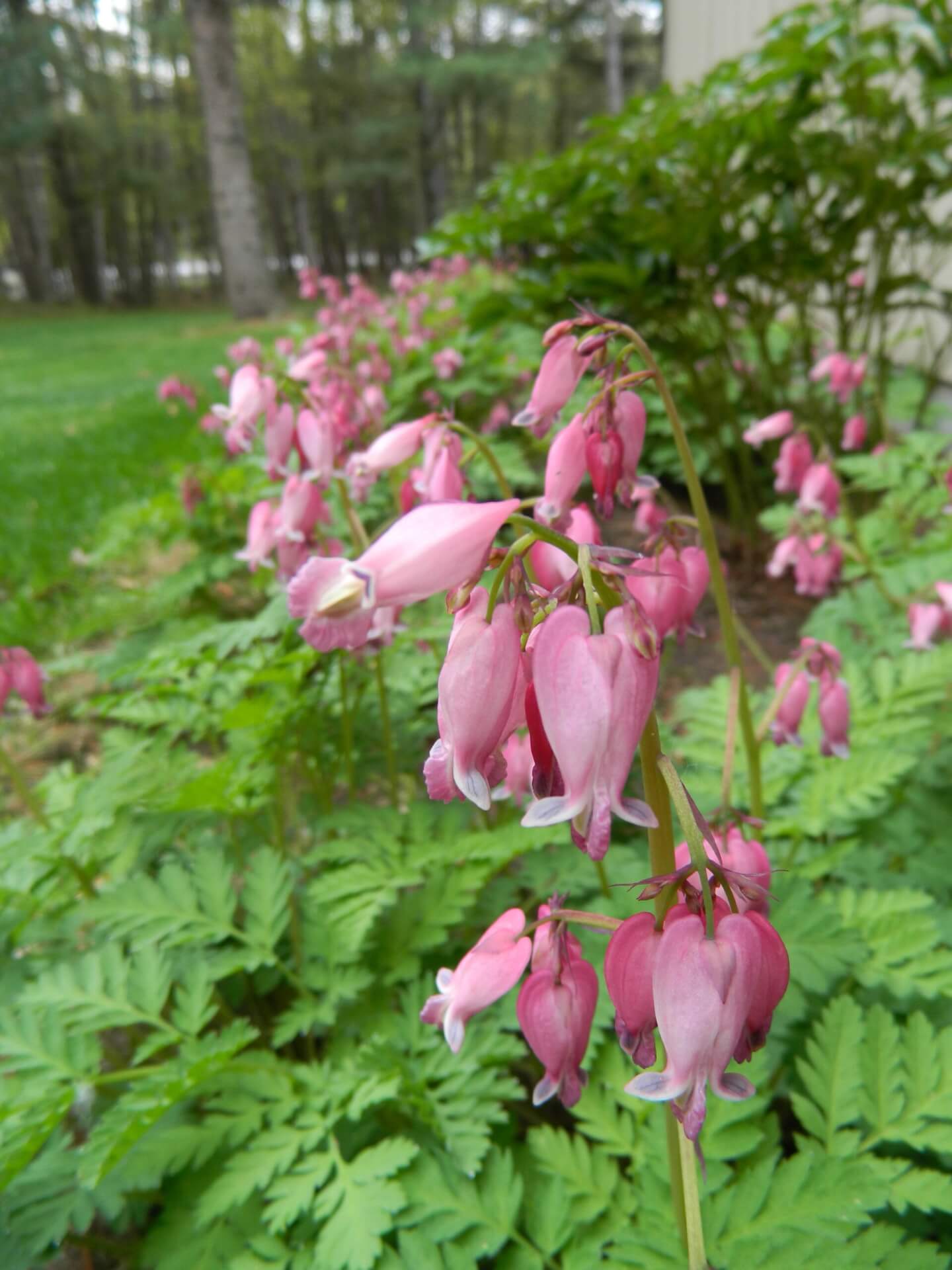
‘Luxuriant’ – These compact plants feature blue-green foliage and cherry pink blooms. It tolerates heat better than the species and blooms longer. I’ve seen this blooming until mid-October northern Wisconsin.
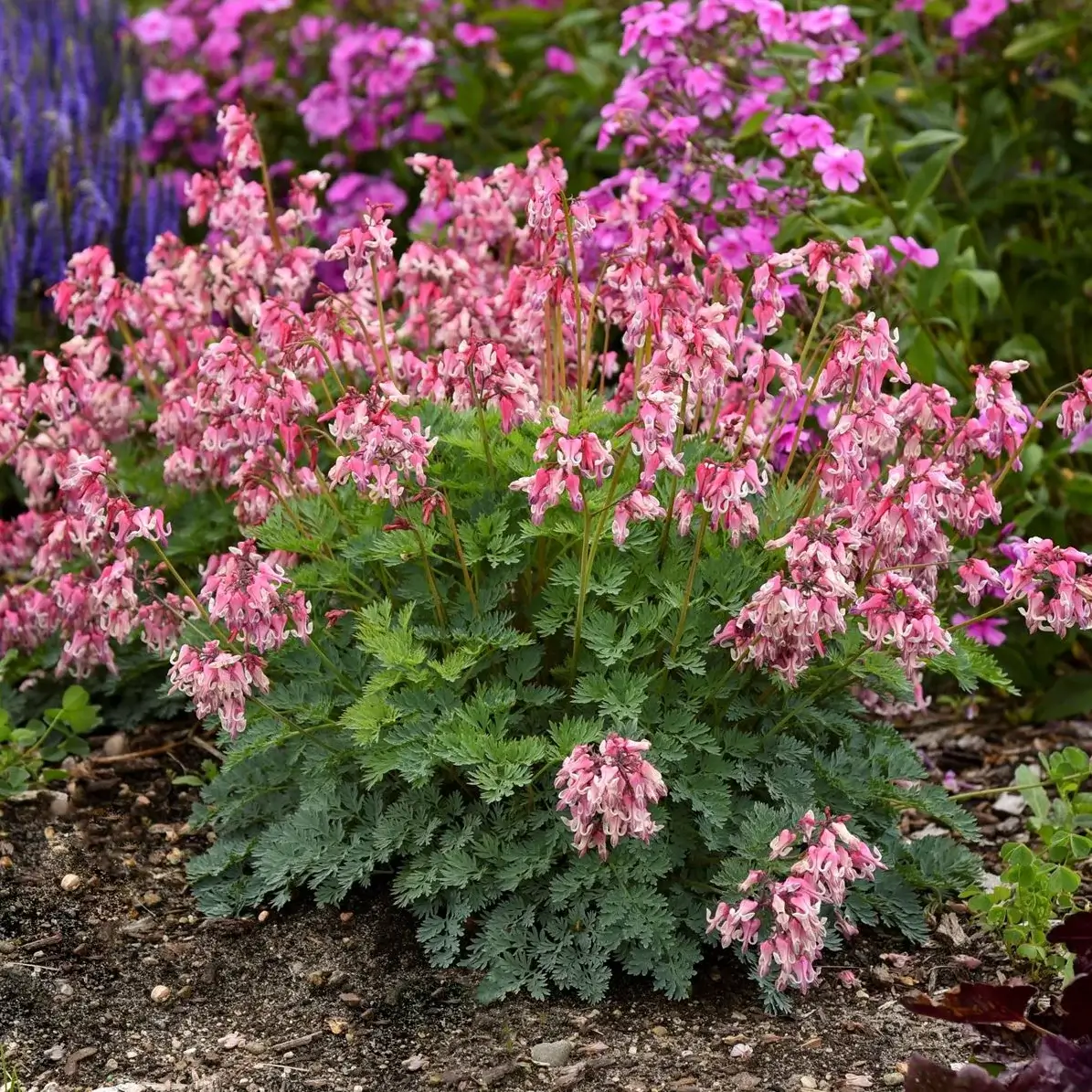
Dicentra eximia – ‘Pink Diamonds’ This newer hybrid prefers full sun and is an alpine plant. It grows best in areas with cooler summers. It looks similar to ‘Luxuriant’ but is shorter and has smaller, dissected leaves.
Dicentra cucullaria is native to the Midwest and you probably know it as Dutchman’s breeches, a spring ephemeral. Like other ephemerals, it emerges in spring to absorb energy from the sun before going dormant in summer. Depending on the weather and location, you can find them blooming in late April or May.
Dicentra canadensis – “Squirrel corn” is the common name for this native bleeding heart. It grows mainly in the southeast corner of Minnesota, in rocky outcrops and ravines. The leaves are nearly identical to Dutchman’s breeches, but the flowers are shaped like a heart and bloom earlier than
Dutchman’s breeches.
How to Grow Bleeding Heart
Bleeding hearts thrive in woodland gardens, where they add a pop of color in spring. They are excellent companion plants for shade perennials, including ferns, hostas and hardy geraniums. A favorite companion plant of mine is Japanese spikenard (Aralia cordata ‘Sun King’), which looks stunning alongside fringed bleeding hearts.
In the North, bleeding hearts can be grown in full sun if given adequate moisture. However, they will likely go dormant earlier in full sun, so consider adding annuals or perennials in front to cover up the dying foliage. In shady areas of the garden, the foliage can last throughout the summer but will require consistent moisture to look good.
Plant in spring and fall in areas with moist (but not soggy), rich soil. If you have sandy soil, consider adding organic matter to retain moisture and nutrients. Plants will self-seed, but chartreuse-leaved plants may revert to green. Bleeding hearts have become a staple of the landscape at our cabin, where they can showcase their durability and beauty.
Have you found a place for them yet?
Note from the editor: Name Change!
As genetics are used to identify more plants, some botanical names are changing, including that of the common bleeding heart. Long called Dicentra, it is now officially known as
Lamprocapnos.
This article originally appeared in the Spring 2023 edition of Northern Gardener® magazine

Matthew Olson is a professional horticulturist and garden writer based in Wisconsin.
mattolsonhorticulture.com
You may be interested in:
What's Blooming on the Last Day of May?
We’ve gotten to the end of the month of May — and it’s been strange. Snow, heat, rain, cold — we’ve had it all. But…
Rabbit Resistant Plants
Illustrations by Taylor Tinkham Pro Picks! See below for some top rabbit-resistant plant recommendations from garden center pros and experienced northern gardeners: Expert 1: Heidi…
30 Great Plants for Northern Gardens: The Complete List
One of our MSHS Facebook fans requested that we put up a list of the 30 great plants for northern gardens that we profiled in…