



Pest Update: Brown Marmorated Stink Bugs
While North America is home to several species of native stink bugs, those getting the most attention recently hail from Asia—the brown marmorated stink bug (Halyomorpha halys). First reported in the United States in the 1990s, they have become a major agricultural pest in the eastern U.S.
Brown marmorated stink bugs were first spotted in Minnesota in 2010. They cannot survive winter outdoors here, so most seek shelter in houses, garages and barns. Even when they have been discovered on plants, they tend to be near outbuildings or houses. They are not a significant pest yet, but since they feed on 300 different plants, there is concern. Fruit crops are a particular favorite. They tend to be found on trees and other taller plants, according to the Minnesota Department of Agriculture.
This is the time of year when homeowners are most likely to see brown marmorated stink bugs. As nights and days cool, they begin looking for shelter, so you may find them hanging on the screens of porches or poking around doorways and other entrance points.
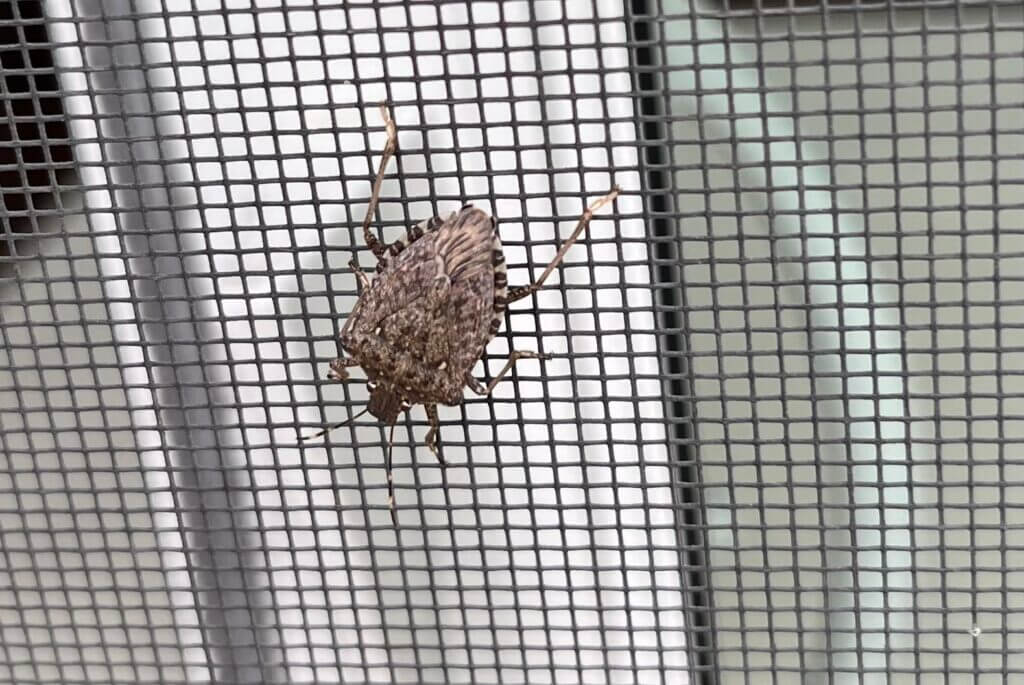
How to Identify Them
The invasive stink bugs look a lot like native stink bugs, with a couple of differences. The brown marmorated stink bugs have banded antennae and legs and greenish gold flecks on their undersides. They have alternating light and dark marks along the side. Native stink bugs (Euschistus spp.) have sharp points on the sides of their face and points along the shoulder—but truth be told, it is hard to tell them apart. Both species are about ½ inch long and have a shieldlike back. They do stink, too, emitting an odor as protection against predators.
Other insects that are sometimes mistaken for stink bugs include squash bugs (Anasa tristis), and the box elder bugs (Boisea trivittata).
Lifecycle
Adults emerge in early spring and females lay eggs in clusters. The nymphs have red and orange markings and feed throughout the summer. In fall, adults seek shelter and essentially hibernate through winter. In Minnesota, brown marmorated stink bugs can only produce one generation a year.
What to do?
Both the University of Minnesota and Minnesota Department of Agriculture are monitoring stink bug numbers. Generally, the bugs are seen first in homes and gardens, then become agricultural pests. Citizens can report sightings of stink bugs through the Arrest the Pest line.
For more information on garden pests, check out our Northern Gardener™ Resource Hub.
Mary Lahr Schier is a long-time Minnesota garden writer. Follow her on Instagram at @mynortherngarden_mary.
You may be interested in:
4 Common Insect Pests in the Vegetable Garden
Before we even start talking about pests, let’s be clear: Most bugs are good bugs, and trying to keep your vegetable garden bug-free is not…
Update on Jumping Worms in Minnesota
A recent article about jumping worms in the Star Tribune by regular Northern Gardener contributor Gail Hudson has brought more attention to this new invasive…
Three Bad Bugs in Northern Gardens
At the recent Upper Midwest Master Gardener conference at the Minnesota Landscape Arboretum, entomologist Jeff Hahn led a session called “Watch Out for These Insects.”…