


Tips for Growing Tomatoes, Part 2
Updated June 2025
Now that you’ve got your tomato planted, there are other things to keep in mind, like how to minimize its upkeep. One way is by spreading mulch, such as a layer of compost, straw, or grass clippings, around—but not quite up to—the base of the plant. Mulch functions as a weed barrier, and helps to preserve moisture in the soil. Some people plant their tomatoes through a hole cut in landscape fabric to achieve the ultimate weed control.
An additional step that some gardeners take at this point is to place a container—like a section of milk carton or a plastic yogurt tub with the bottom removed from it around the base of the plant, and buried a little way under the soil. Doing this has the double benefit of helping to collect moisture right at the plant’s base, and also protects against cutworms, which move along the soil surface looking for plants to eat. If they encounter a barrier of any kind they’ll keep going.
Adding Support to Vining Tomatoes
Next step is to consider how the growing tomatoes will be supported. If it’s a compact bush-type plant, perhaps nothing else is needed, but if it’s an indeterminate variety, its vines will need support so they don’t trail all over the ground. Now’s the time to put a cage, stake, or trellis of some kind in place, while the plant is still small, so that you can train the vines on it as it grows. Don’t put this part off; once the plant gets up to its mature size it’s not easy to thread the stems through a cage, or tie up all of the sprawling vines.
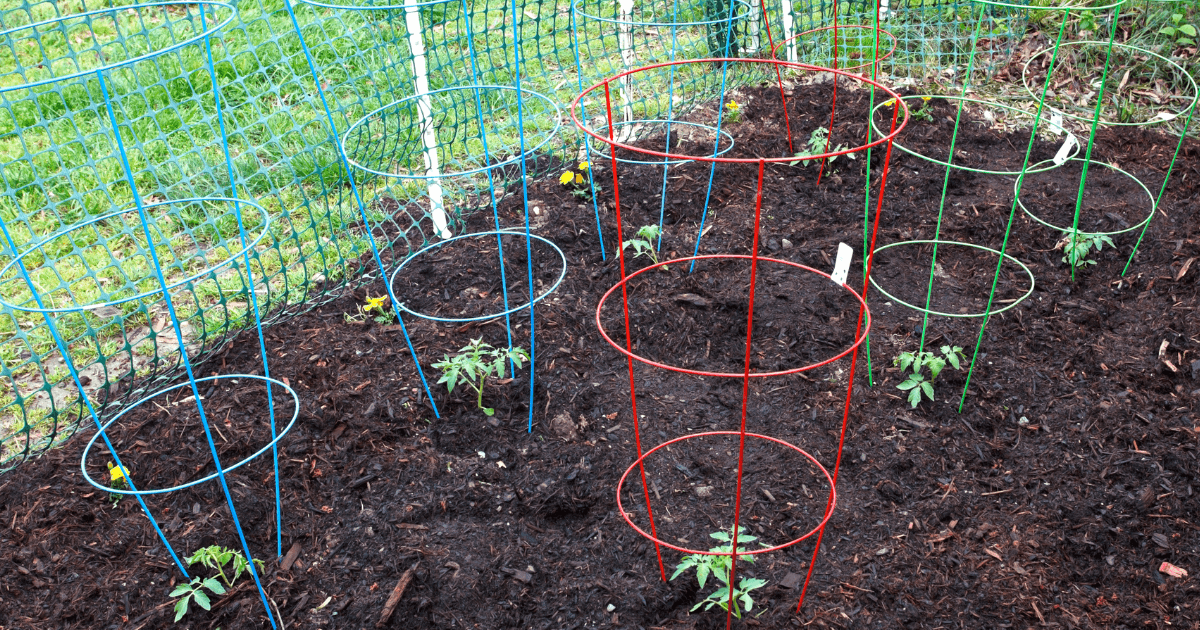
Use the largest, most heavy-duty support you can find. The bargain tomato cages may seem like a good deal, but their flimsy construction isn’t really up to the task of supporting a robust plant. Likewise with stakes, it’s better to go with something thick enough that it won’t bend over under the weight of the vines and fruit. I pound heavy gauge fence posts into the ground.
If you’re planting multiple tomato plants, give them enough room between them for air to circulate, at least two feet, or more if you can. Not only will it help to ward off fungus-type disease and encourage growth, but it will also make it much easier to harvest your tomatoes.
Water Tomato Plants Evenly and Consistently
From here on, even watering is the most important requirement for growing tomatoes well; plants should have a consistent amount of moisture, about 1 inch per week, and the soil should not be allowed to dry out. If it does, plants stop absorbing calcium—an essential nutrient—and the result is a disease called blossom end rot, in which the blossom end of the tomato develops a brown patch that eventually destroys the entire fruit.
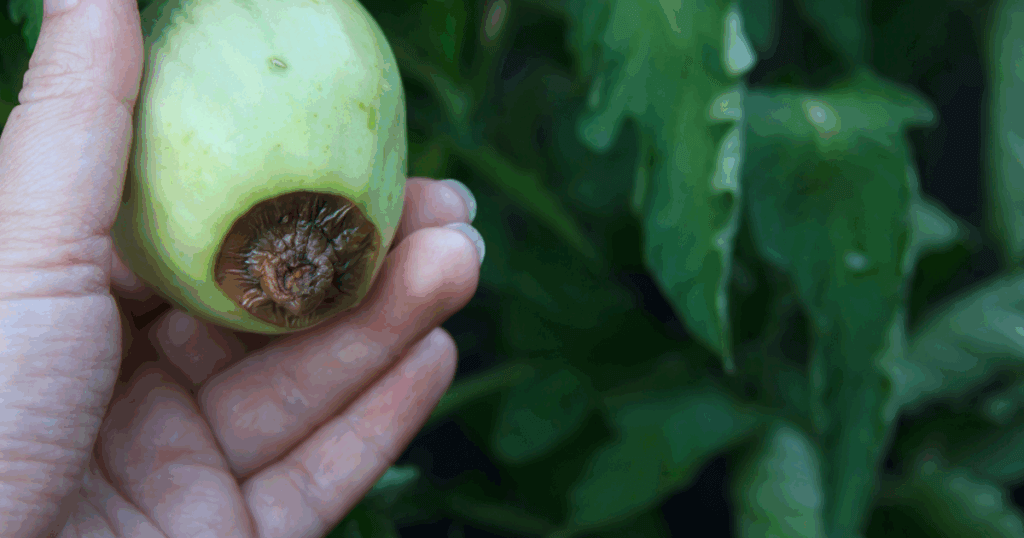
Some gardeners use special calcium soil amendments, bone meal, egg shells, and even Tums antacids to try to prevent this, but the only real prevention is to maintain even moisture. Using mulch helps a lot. This is one distinct advantage that growing in the ground has over planting in containers, which dry out much more quickly, particularly if there’s a hot wind. That’s something to consider if you plan to be away from your garden for more than a day or two during hot summer weather.
Also, plants in containers are at risk of overwatering. You don’t need to drown the pots everyday. When you do that you quickly wash all the nutrients out, and which is why tomatoes grown in containers benefit from periodic doses of fertilizer. Finally, water your plants near their base, not from above. Wet foliage can lead to blight and other fungal diseases. Don’t turn the lawn sprinkler on them.
To Prune Tomatoes, or Not to Prune?
As the plants grow, some gardeners believe pinching, or pruning off unnecessary growth is the key to plant health and a bumper crop of tomatoes. Pruning also concentrates the plant’s growth energy on the main part of the plant, which results in fewer, but larger, fruit. If you remove the suckers or side shoots that grow from the central stem, particularly near the base, it allows more air to circulate near the ground, which helps prevent disease.
Exceptionally wet weather over an extended period can cause fungal diseases such as late blight, anthracnose, others. Removing branches nearer the ground that catch fungus spores splashed up during heavy rainfall, and can help, up to a point. For severe problems with fungus, treating the plants with copper fungicide is another option.
Once all of your tomatoes are planted, and you’re making sure they’re getting even moisture, and weeds are being kept under control, most of the hard work is done. Now it’s a matter of waiting for the harvest—the rest is up to Mother Nature.
—Tom McKusick
You may be interested in:
Tips for Growing Tomatoes, Part 1
Updated June 2025 People are understandably disappointed when the plants they’ve carefully tended and nurtured fail to produce the bountiful crop they dreamed about all…
Advanced Tips for Growing Tomatoes
Post updated May 2025. If you’ve had a chance to attend the Gardening Expo in Madison, Wisconsin, you may have run across the hugely popular…
All About Tomatoes
Note: This piece was originally part of a series on historical articles from Northern Gardener and Minnesota Horticulturist. Everything about tomatoes speaks of summer—their tart…