



Ask a Master Gardener: Is This Plant a Weed?
Full disclosure: today’s question is more of a rhetorical one, but it’s one Master Gardeners are commonly asked.
Is this plant a weed?
The answer, always, is it depends.
I’m going to try not to get too existential here, but a weed truly does depend on your perspective. Milkweed? I grow it as a garden plant and love it. Garlic mustard? Brought to the Americas by colonists who wanted a dependable perennial vegetable. But the latter is definitely, beyond the shadow of a doubt, a weed.

Many people use apps to identify plants and potential weeds in their yard, but I’ve had mixed results with them. My favorite method of identifying a plant—because you must identify it before you decide if it’s a weed—is actually this little book: Common Backyard Weeds of the Upper Midwest by Teresa Marrone.
I love this book because it not only identifies common weeds, but it also helps the gardener decide how aggressively to address them and what they might be used for—because many weeds have interesting medicinal or simple food uses.
Here’s a sample page:
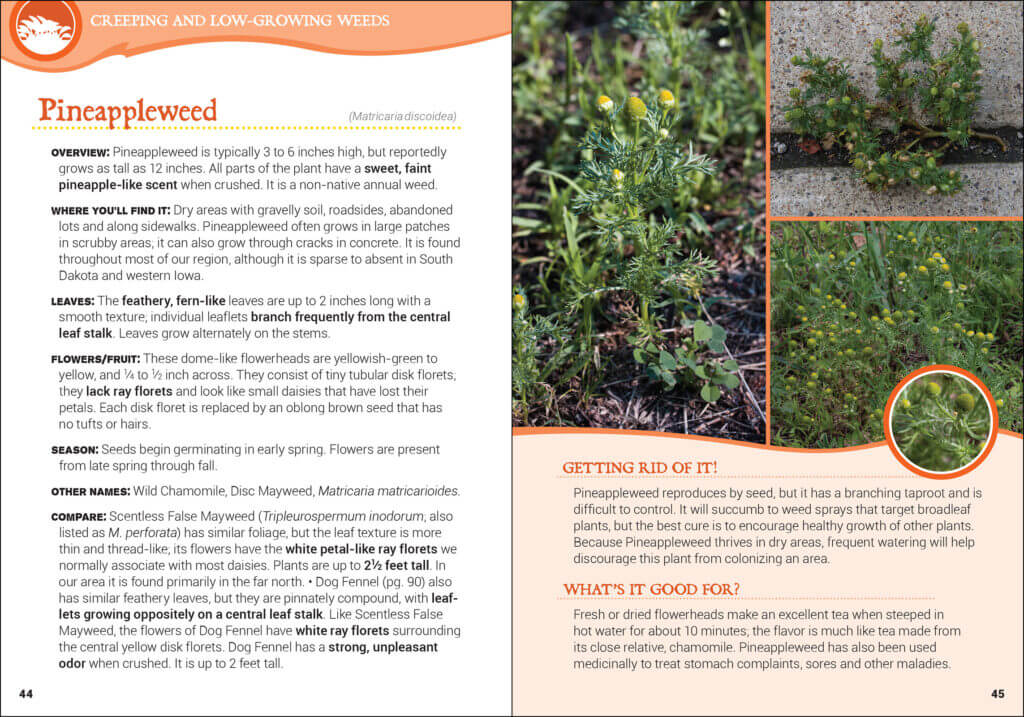
Another option: University of MN Extension has a handy website with a workflow that identifies common backyard weeds. It guides you through a series of questions to help you narrow down what type of plant it is and get you closer to an answer.
One thing I like about the Extension tool is that it helps us learn about plant families. Square stems? Mint family. Flowers that are shaped sorta like dill flowers? Umbellifer family, like umbrella! Recognizing the characteristics of certain families makes it much easier to identify plants and decide how you feel about them.
Now, certain plants that invade our gardens are actually noxious weeds, and there’s really no debate about whether to live and let live. The MN Department of Agriculture publishes a list of noxious weeds with detailed information and photos to help with identification. The list includes some truly nasty plants like wild parsnip and buckthorn. You might also be surprised about some plants on the list, such as Japanese barberry, which is still sold in nurseries.
Yet, to me, the MN Dept of Ag’s list is not quite complete, because it doesn’t include the bane of my existence, creeping bellflower. What’s a gardener to do?
The best defense is education. Once you start learning about the weeds in your garden, you’ll realize that you usually get the same ones every year. Here are three weeds that are abundant in my yard this year.
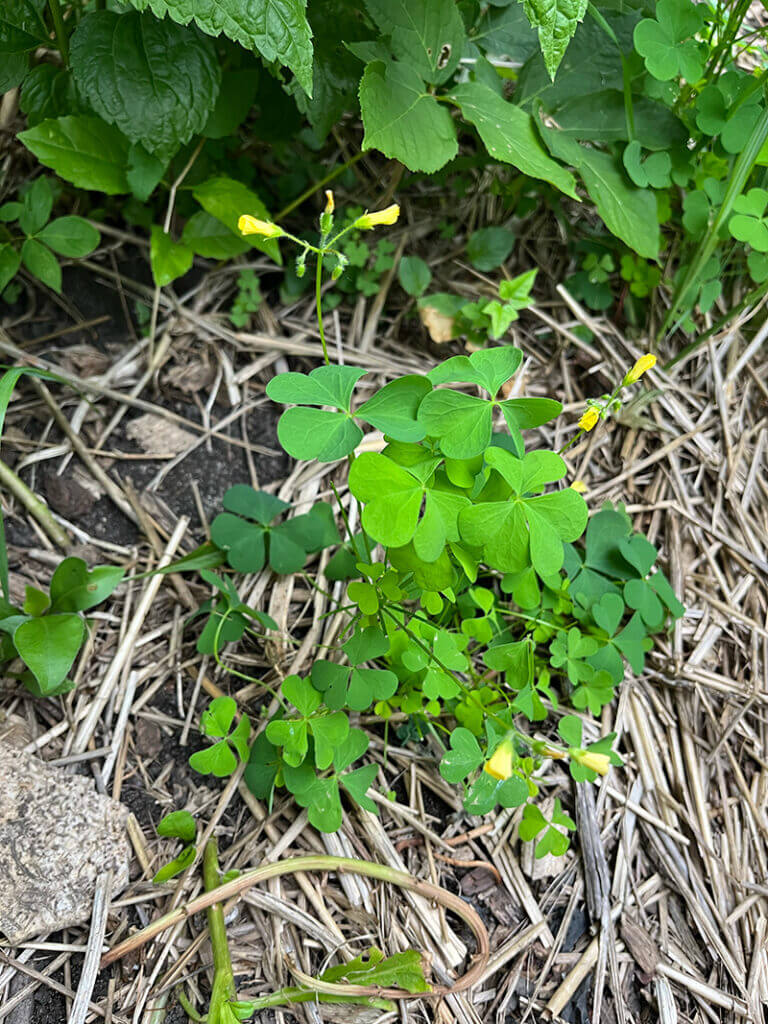
Wood sorrel
I used to call it clover because the leaves really do look like clover leaves. But the flower looks very different. It’s edible! The seeds, when immature, taste like a tiny, sour pickle. The leaves are also tasty. But WOW, do I have a lot of it. I might eat some, but for the most part I compost it.
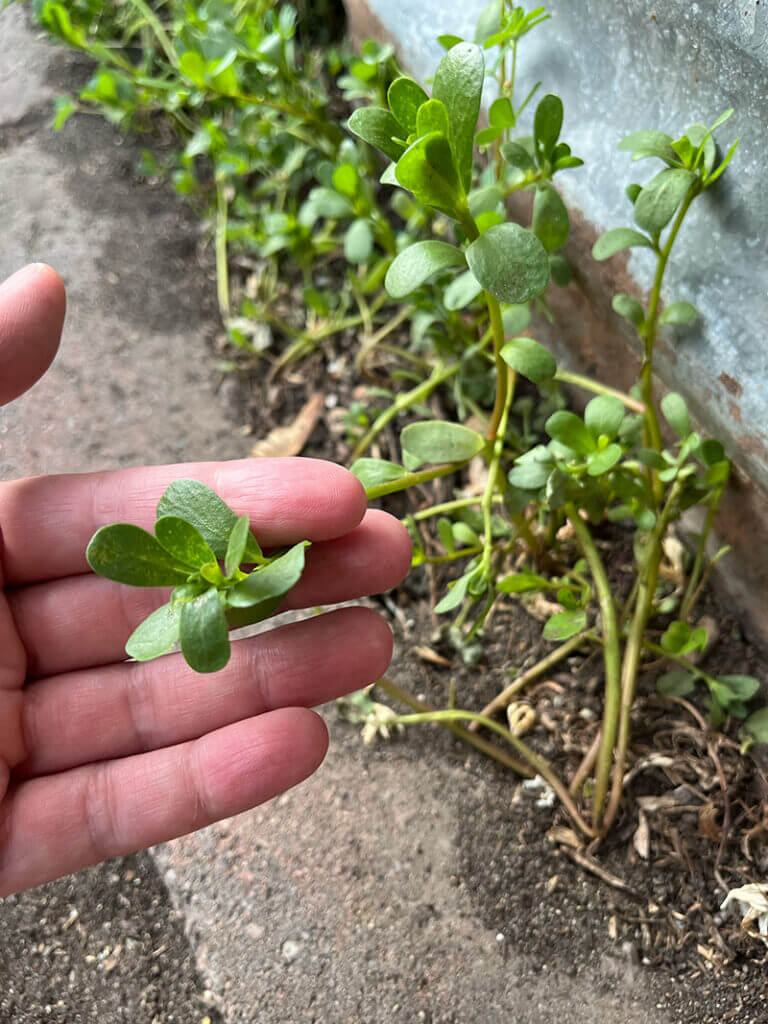
Purslane
Okay, I tricked you with this one because I actually like purslane, although it is certainly abundant during drought years like this one. I let it ramble along the edge of one of my brick paths, and it looks nice. I only pull it when it spreads beyond that area. It’s also edible—it can be used as a lemony, sour garnish. It also happens to be highly nutritious.
Ragweed
I saved the worst for last: many people have not been mowing their lawns this year due to the drought, and unfortunately these green ferny-leaved plants are taking over. They will develop green, unremarkable flowers in a couple weeks and become the bane of my and other allergy sufferers’ existence.
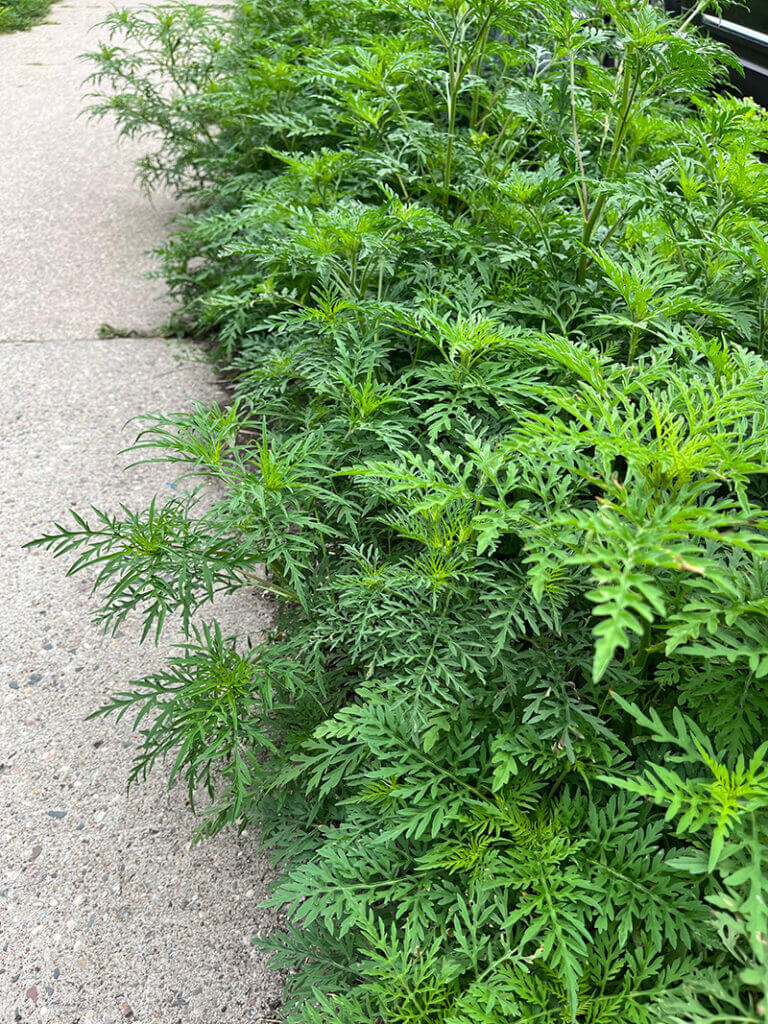
So, is this plant a weed? Well, in some ways you have to decide that for yourself (unless you’re talking about ragweed or creeping bellflower). What weeds are abundant in your garden this year?
Remember, anytime you have gardening questions, you can Ask a Master Gardener online or call the Yard & Garden Line at (612) 301-7590.
Other helpful resources:
The Master Gardener Volunteer program
Jennifer Rensenbrink is a University of Minnesota Extension Master Gardener for Hennepin County and regular contributor to Northern Gardener® magazine. She grows native plants, vegetables and fruit in her south Minneapolis yard. You can follow her gardening adventures on Instagram.
You may be interested in:
Ask a Master Gardener: Pesticide Drift
This question came via Facebook, and I sadly have personal experience with it. You’re trying to grow native plants and support pollinators however you can,…
Diagnose Plant Problems with Anoka County Master Gardeners
This article by Brenda Harvieux originally appeared in the March/April 2019 issue of Northern Gardener. Master gardeners in Anoka County offer plant and insect diagnostic…
Ask a Master Gardener: Prairie Garden Planning
It must be garden planning season because two different people recently asked me variations of this question. Let’s dig in. Question: I’d really like to…