


Ask a Master Gardener: Creeping Bellflower
That was the craziest May in recent memory. I could finally get outside and into my garden and the to-do list was anxiety-inducing—especially since I lost several shrubs and small trees to a combination of last year’s drought and rabbits over the winter.
The hort society has been getting quite a few questions lately about creeping bellflower.
Question: How do you remove creeping bellflower? Why is there so much of it this spring?
Answer:
Let’s start with a brief history of creeping bellflower, Campanula rapunculoides, a native plant of Asia that was sold for many years in the U.S. as a garden plant. I can imagine the description nurseries must have added: “Unkillable! Sun or shade! Thrives on drought, neglect and negativity!”
Unfortunately, even though the vast majority of nurseries no longer sell it, because of the aforementioned hardiness, it thrives in vacant lots and unkempt yards of clueless homeowners all over our fair state.
Identifying creeping bellflower
How do you know if you have it? I’ll admit, even to my trained eyes, creeping bellflower sometimes hides in plain sight this time of year when it’s not yet flowering. Here’s a patch of it at a house that is way too close to mine:
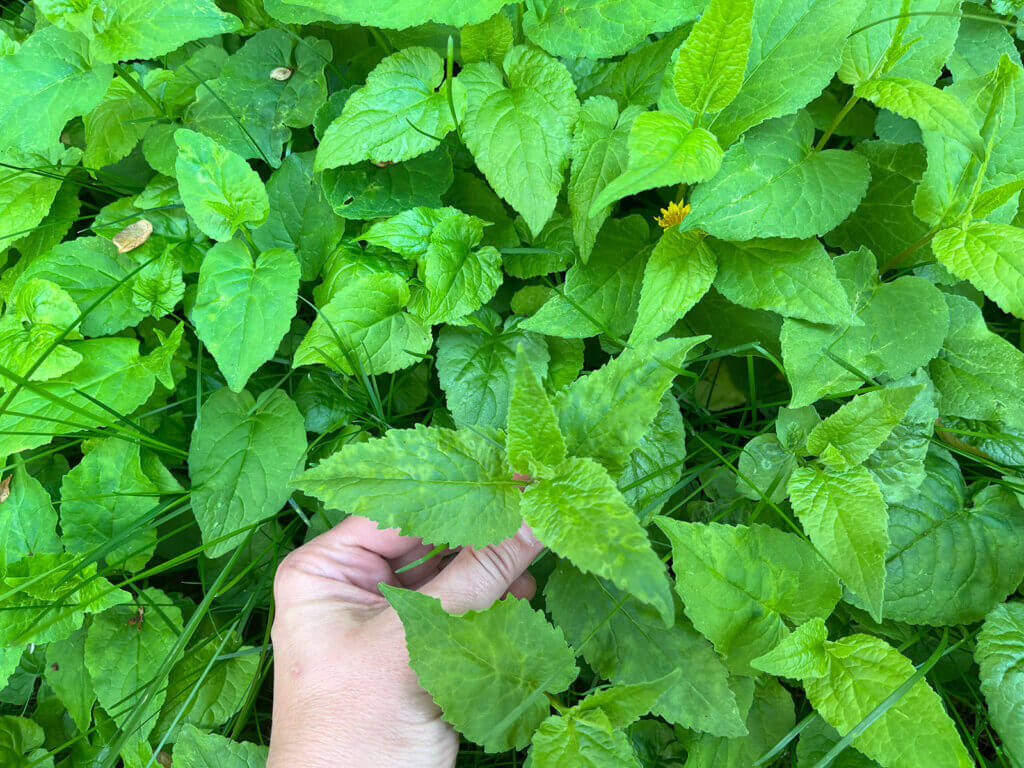
If in doubt, you could wait until it flowers. The plant had admittedly pretty, purple bell-shaped flowers. But whatever you do, commit to removing it before the flowers turn to seeds—each plant is capable of producing more than 10,000 seeds. This plant is the literal worst.

The fact of the matter is, if you have creeping bellflower, you will probably always have it to some degree. The best thing to do is learn how to identify it in the spring so you can dig it out while the ground is soft and your other perennials are still actively growing—I often pop an extra of something else in the spot where I dug up the bellflower.
Why is creeping bellflower so tough?
What makes creeping bellflower hard to eradicate can be illustrated with a picture:

I dug this bunch up recently and washed off the roots to make them easier to see. If you try to simply pull creeping bellflower, the slender roots near the surface of the soil will break off, as seen on the far left of the photo. Unfortunately, the tuberous rhizomes that make up the critical part of the root system will still be underground, and they will come back almost overnight.
The other “great” thing about these tubers? They make creeping bellflowers practically drought-proof. I suspect that’s why so many of us are dealing with such a scourge of them in dry years: they thrive where other plants bite the (literal) dust.
Digging out creeping bellflower
The best way to get rid of them is to dig them out with a shovel, and be thorough; carefully remove ALL roots from the loosened soil.
I’ve seen various bits of advice about how deep a person must dig, ranging from six inches to two feet. But sometimes it really depends! It can be really tricky when their tubers are all mixed up in tree roots. Whenever possible, I use my shovel and dig down a good 8-12 inches.
Glyphosate is effective at killing creeping bellflower, but it must be applied multiple times to as the roots continue to resprout. I’d rather use elbow grease and get it out in one shot with my shovel. This probably goes without saying, but do not compost creeping bellflower in your own pile—city compost or garbage only, or you could end up worsening your issue.
Comparing creeping bellflower to native bellflowers
Creeping bellflower is a member of the Campanula family, and we actually have some very beautiful native Campanulas, including Campanula americana, American Bellflower, which looks somewhat similar but is not invasive. You are fairly unlikely to have American Bellflower in your yard if you didn’t actively plant it, but it’s still worth noting, and admiring if you see it in the wild. Its flowers are a more bluish purple, and have a slightly fringed-edge compared to the creeping bellflower.

To the creeping bellflower fighters, I see you. Solidarity.
Have indoor or outdoor gardening questions? Ask them in the comments below. If we don’t get to yours, you can Ask a Master Gardener online or call the Yard & Garden Line at (612) 301-7590.
Other helpful resources:
The Master Gardener Volunteer program
Jennifer Rensenbrink is a University of Minnesota Extension Master Gardener Volunteer for Hennepin County. She somehow has two mini-prairies on her tiny south Minneapolis property.


I’m very surprised that you say it’s okay to send this to the city compost. There is no guarantee it won’t survive and spread to any place the city compost is then used. Unless your city compost reaches the temperature of the interior of the sun, I believe the bellflower would survive.
In general, any industrial-scale composting process is going to get hot enough to kill weed seeds, but perhaps “interior of the sun” is truly the fate that creeping bellflower seeds deserve.
When the plants are pulled before flowering like this, there’s no reason city compost can’t handle those roots and foliage. I guess perhaps we could amend this to say that if the plant has gone to seed, burn them with fire!
The article actually stated that it was NOT OK to compost it in your own compost pile or the city’s compost pile!!!
Good Material. Thank you.
I’m not sure why a person would want to get rid of creeping bellflowers. From the article it seems to be an attractive plant. Why not let it grow in areas that are not lawn, gardens, or rock? And in those areas yes, remove them. But the lawn mower will keep them down, in gardens its just another annoying plant to pull up, in rock areas Roundup does the job. I’ve got an area in my backyard where creeping bellflowers would be a nice add. Would choke out my ugly weeds and replace them with a more attractive “weed”. Why not let it grow in areas that are not lawn, gardens, or rock?
The main reason that you should not choose to plant this or any invasive non-native plant is that it can “escape” your yard and establish itself in wild areas and outcompete native plants, destroying critical habitat that supports wildlife. Another well-known example of this phenomenon is buckthorn.
I might wish to weigh in on this particular plant discussion and say that it chokes out all other plants often winding its way around and through other plant roots.
Because each plant makes thousands of seeds and they will eventually end up in gardens, either yours or your neighbors’. And then they are not “just another annoying plant to pull up”, because they will continue to spread by seed AND underground, coming up in the middle of other plants, and since the only way to eradicate CB is to completely dig up every trace of the root system, you wouldn’t be able to do that without destroying whatever other plants it has mingled with. Also, after their brief bloom period, they quickly become ugly and covered with burs which will stick to your clothing if you go anywhere near them. You may find the bloom attractive but take it from people who have actual experience with this plant: It’s not worth it. Dealing with weeds is an unavoidable aspect of gardening which we all can accept, but this weed is much worse than most.
Because it’s completely choked out my Phlox, salvia and is headed for my hydrangeas.
Liz Nichols, Bemidji. I agree with you Vince. I do have creeping Bellflower.
56 years ago, Dr. Ruth Brune Mangelsdorff, a professor it BSU, generously shared many plants from her gardens with me. Gardens were designed and planted by horticulturists. I treasure a few of the purple lady bells. Keep them to a minimum! Don’t be lazy! work your gardens!
yeah go for it!!!! see how you like that “pretty plant” in a few years. actually never mind because you will have already have sold your property and found refuge elsewhere….
its not pretty… its horrifying. and it will eventually creep into your lawn. just takes one tiny tendril of root 12 inches below soil. and it won’t be killed by roundup. and it will send thousands of seeds everywhere. and creep into your gorgeous flower beds and grow insidiously into your most beloved plants until they are choked to death…. and you will be constantly a little anxious, waiting to find it living in grandma’s heritage irises, and you will Dig up the whole damn clump and clean it out but you will never get all the roots out because the roots are like silk threads and every one left behind will spout in ten directions, and it will make you feel powerless and suck the fun out of gardening. and when this plant finally crushes your will to fight back, you will be finally bow down to campanula, at last forced to accept the fact that us mere humans really don’t have any control over anything at all, not our lives, lawns, not even over our flowerbeds, and question why you even bothered to cultivate the earth in the first place, when your last dying breath will be spent cursing the name of this god awful plant. do you really want to live always having one eye open, worrying, checking.. it can be on mars.. but no fucking closer.
choose your fate wisely.
Oh my! I can so relate to your comment. You have captured my experience with creeping bellflower brilliantly. Thank you!
I have it in my lawn !!! The more you cut it with a lawn mower the more it spreads!!!!!!!!! To each there own. I personally don’t like invasive plants .
Because it literally takes over everything around it. My lawn for example. Then my neighbours lawn because I didn’t know what it was. And there is no controlling or eradicating it. I’ve tried digging it up and discarding a lot of the soil and going through it foot by foot removing all the hair like roots and tubers. It is a hellflower. ?
Thank you for solidarity with other creeping bellflower veterans!
I believe UM says CB is resistant to glyphosate. They say Triclopyr-something.
Personally, I dig and smother, but it’s of little long-term use except to push it back a bit. This year, I may resort to Triclopyr at the edges and sink a deep barrier…I hate to give it to neighbors.
I am not seeing any articles about it being resistant to glyphosate, but it’s definitely possible—and glyphosate only works after repeated applications every time those roots resprout. It’s tricky because it’s always coming up mixed in with plants that you want! That’s why I really prefer digging it out in the spring or fall when transplanting other plants will be less stressful for them.
It’s known to be resistant to 2,4-D. Perhaps that is what you are thinking of?
I’ve visited about a dozen state and master gardener sites in the past day and all include glyphosate as one of several herbicide options. All options take persistent effort over a 2-3 years. I’m going with glyphosate as it is non-volatile and will not persist in soil or compost.
Well, I used to be rather cavalier about applying glyphosate (back about 2016), but not anymore, as I now have concerns about its persistence, particularly in surface water and ground water. And possible drift, if spraying. When it is advised to wear a mask and shut the windows and turn off the AC, digging is safer from my perspective.
Thank you so much for this article. I found it thru a link in our NextDoor email (Minnetonka). The photos were very helpful. I’m afraid I may be one of those clueless people who had creeping bell flower last year but did nothing about it. It has come on incredibly thick this year in a pine/rock garden I have near the street, nearly stifling the other plants struggling to grow there. I’ve started digging it up, starting with the plants that are beginning to encroach on the lawn. I’ll then move on to those in the confines of the rock garden. Appreciate your thorough article and I hope we can get a head of this stuff!!!
We have been digging this out for some 40 years! It is tenacious and pops up in new places regularly. I am successful at keeping it under control with diligence and good humor. I gave up glyphosate years ago.
I got it by accident with a gift flower. Now, 40 years and two gardens later it is the gift that keeps on giving. I didn’t know about the tubers. Thanks for that information.
Hi all. Thanks very much for this posting! I have been dealing with creeping bellflower for just a couple of years now in my backyard, which was left to spread and grow by a previous owner. I have taken the same approach: to dig up any and all roots. But there seem to be a few barriers. The roots are very thick and very long; perhaps 3 times the size or more of the largest roots in the picture shown here. So they go down extremely deep: 1.5, perhaps even 2 feet or more. Also, the soil is very heavy clay soil. Wonderful in nutrients, but compaction is quite significant the further down one gets. I live in southern Manitoba.
So, I dig and I dig and I dig… My neighbours wonder if I’m digging for an underground bunker. Ha! Sigh; not quite. But it is a spectacle! I can spend a couple of hours on one root system, and still, no matter how determined I am, not be able to get either my spade or trowel in deep enough, to be able to unearth and loosen the root without it breaking off when I pull it.
It seems I need another option for those roots at the bottom that I just can’t get. Would love to hear some ideas! Thanks!
I also have spots where I just can’t get to all the roots – especially along the fence line. I’ve never managed to totally eradicate it, but yanking out the leaves every time I see them come up and getting some dense plantings to shade them out a bit does keep them from spreading too quickly.
Even when I manage to get rid of all of it, it just blows in from a neighbor’s yard. It’s by far the worst weed I’ve ever dealt with, and this year is really one of the worst years for it that I can remember.
This weed is the bane of my existence. Seriously. I’m going on a near 20 year battle with this weed. I’ve managed to keep it MOSTLY out if my flower beds by being diligent. I pull before flowering where it’s not easy to dig and where I can dig, I do. I’ve gotten quite adept at digging “gently” to follow the fragile roots from the leaves to the main root. I’ve fantasized about injecting the thicker stems with something, anything that may travel back to the root and kill it. Sure that sounds crazy but digging it up all summer gets old.
I suspect this is sometimes sold as the garden plant Adenophora. They’re hard to tell apart. Also, Campanuala rapunculoides is grown by some Asian cultures as a plant to eat.
I agree with some of the comments. It’s a very pretty plant and useful to bees. I’d be open to seeing it grow in areas of our property that don’t have grass. Then contain it when it does appear?
Hi Dave,
I think you’d end up filing this under “REGRETS” if you chose to go that route. “Containing it when it does appear”–could mean hours of work digging up roots every spring. There are so many options that are easier to grow than grass, but are not invasive and will not harm wildlife by displacing the plants they depend on. Creeping bellflower didn’t evolve here so though it might occasionally be visited by pollinators, it is not a primary source of food for them or their caterpillars.
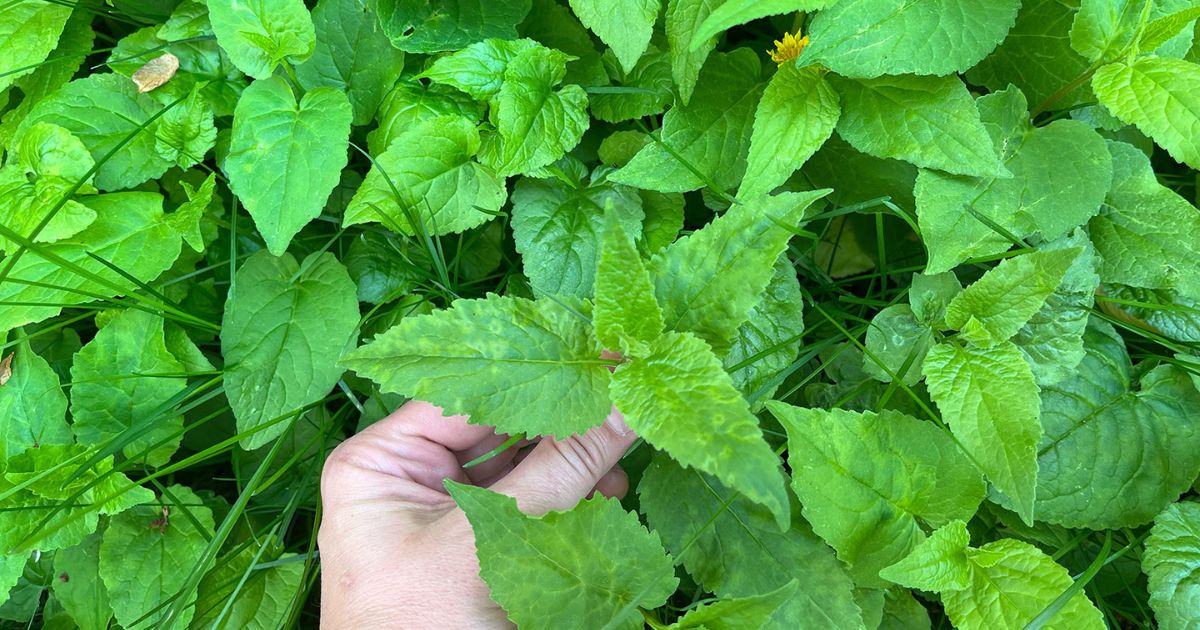
If you’re looking for a shade and drought friendly plant, try Giant Solomon’s Seal, or any of our native sedges (like Pennsylvania sedge), or even wild geranium if you’d like something with pretty flowers. See also our native American Bellflower pictured above—it’s gorgeous!
I join others in the decades-long fight with this invasive plant. Creeping bellflower, along with snow-on-the-mountain, have kept my garden gloves and trowel busy for 30 years in our yard. I agree with the person who commented that humor is an essential part of the ‘eradication journey’ with these clever plants!
I join others in the decades-long fight with this invasive plant. Creeping bellflower, along with snow-on-the-mountain, have kept my garden gloves and trowel busy for 30 years in our yard. I agree with the person who commented that humor is an essential part of the ‘eradication journey’ with these clever plants!
“clever plants”haha . yes it’s a journey indeed. thx for the laugh, this weed sucks!
I have to tackle one garden bed in the front of my home that CB is taking over. I will remove the few small shrubs and perennials and wash their roots clean before replanting elsewhere. My plan is to spray with glyphosate and then cover with black landscape cloth and let it “cook” for the rest of the year. Will that kill off the remaining roots so I’ll be able to replant in the spring of 2024? Or, should I wait another whole growing season and replant in 2025?
I think that sounds like a solid plan!
Nancy, I think your plan is good, except it will almost certainly take more than one year to kill the below ground roots. Their tubers are extremely resilient. I was advised by a member of the UMN extension staff that it would take multiple applications of glyphosate to kill them, and that this chemical control would have the most impact late in season, when the plant is transferring food to its roots to survive dormancy. Even with that advice I’ve had little success. In my experience, completely removing other plants and digging deep will probably be more effective than the glyphosate or covering. The only area of my yard where I succeeded in removing it without reappearance the following year is an area where I was removing a shrub and was able to dig down and remove roots nearly three feet deep.
I feel the same about wild four ‘o clock.
I just wanted to hop into these comments again, because I made it seem like digging up the tubers is the only option. I want to stress that if you don’t have time, or it’s really dry and you don’t want to disturb other plants, pulling out the flowering stalks is still definitely better than nothing! I’ve still got it popping up all over my flower and vegetable beds the last couple weeks but right now (hot, dry, other things around it in full bloom) would not be the best time for digging. So I just pull, try to note locations, and then plan to do more digging of the roots next spring. At least you’re not letting it go to seed this way.
Me again, I just can’t leave this alone. HA! I found an excellent discussion of the use of vinegar for controlling CBF and other weeds from Ohio State University’s Extension Office. Summary: it doesn’t work very well.
https://fairfield.osu.edu/news/vinegar-it-%E2%80%9Csafer%E2%80%9D-herbicide
I used to take this combative stance way way back before I connected and I mean really connected with nature elementally speaking. But how much time and money have most most here collectively came to the conclusion. That more or less, this beautiful fighter, yes that is how you decide, not nature as true or not because nature has already made no personal decision of that kind of matter. Nature already sees its beauty. Invasive is already more or less established as dominant, but not native then, but now native in reality. ie Law of nature survival of fittest as a country now becomes another descendant of different peoples throughout history no different in natures reality view, it simply survives and changes accordingly. I understand the ecosystem unbalance initially and management efforts with frustration. But as to what end cost is it going to take, to out wit and out manage, yet again natures choice of allowing the unnatural to occur in the first place (Nature says yes and you say no, now a Beatles song is in my head). Only deemed by humans to see fit within its natural now say so, new habitat. It comes down to a different perspective as to what is and what is not viewed as a value, and that does not just include human preferences but natures selective choice and change. This is an edible food source in case you get real hungry while trying to kill it off, it will feed you sustenance for those burned up calories and mental stresses you have while gardening while you also struggle and stress over removing the other fronts of natures choices, called the dandelions, wild violets, purple dead nettles, henbit’s etc of which are all other sources of food and herbal medicines as well, not just for humans I refer (Value overlooked). But go drop some chemical bombs on them too while your at it, of which 6 times out of 10 for most average gardeners and home owners will experience as a non winning battle as well. Now many are not only stressed more so but now a little more poor from being so. But these collective efforts will damage the ecosystem far worse than this little purple bell beauty trying to become native will ever do on it’s own. When you calculate yard after yard of chemical bombings, bleeding over from one yard to the next via some form of transport of one kind or another, year after year. That also contributes to perpetuating bird and insect imbalances as well. Along with the insect specific chemical bombings creating a stagnant environment and insect kill off ratios to perpetuate other imbalances such as the invasive Japanese beetles. Increasing a propagation of the grubs to feed the moles who can destroy your garden yardscapes almost overnight in some cases. Point being not precise, but you get the picture of the typical human habit of not looking at overall value, not being natural and being invasive themselves, and not embracing what is already wanting to grow in the said environment for the most part as value. Narrow focusing is causing a much larger ill affect upon nature and the overall ecosystems! Such as the narrow perspective of the almost valueless yardscapes of the grass blade itself. With humans frantically and obsessively establishing invasiveness efforts themselves, acres after acres of fields and clearings. Destroying far more ecosystems and forests than any invasive plant species could ever do. Maybe this is nature paying us back by implementing what is not seen as natural, but as unnatural invasion to us, but mirrored back upon us as unnatural invasion against us, for doing the same to it by that narrow focus of unnatural implementation of grass upon the native environments ourselves as the invasive species. Grass clearings or scapes are not native for the most part, and when they are, they are not that much of an overall benefit comparatively speaking. Invasion of the overall ecosystem by mans hand itself, which is unnatural and invasive to even a higher degree, than the little purple bell beauty could ever hope to be.
I had a very difficult year last year with out of state family health issues. I was gone from my home the entire spring and summer. I stopped in just before winter and saw that the creeping bell flowers had taken over my yard. I hired some guys to help me dig them out the best we could but this year, they are everywhere (even though I covered most my property with black plastic). I’m assuming the ones that found their way to the sun are feeding the ones trying to come up under the plastic. The work I have in front of me is horrific. I hope that I can get them all up before they flower or seed. The one bright spot is that I am able to eat the early leaves and the rhizomes (which are as large as small carrots. They have the consistency of a carrot as well, and they are filled with vitamin C. I’m going to need that energy!)
Can smothering be used as a technique?
This comment leaves nothing unsaid. I have spent days working to mitigate this tyrant bellflower year after year! My daughter is at her whit’s end with it, too.
Is there any type of lawn/yard sign that I could put out to get info out to the larger community so they can learn/know creeping bellflower is an invasive? Does it exist in MN or elsewhere? Thanks.
OMG….this spring…2024 I don’t know how I got thousands of them everywhere….those creeping blue bells have choked and KILL all my perennials! I have a mess of them….if you dig them up while they are little you will think you have all their roots…WRONG! it doesn’t stop their…they are NOT DEAD! dig down a few feet you will find the rest of their roots….thick white roots that look like parsnips….they are grouped and they will continue to choke every root from your lovely flowers…I have just a few perennials that may make it ….maybe? those roots will stop your lovely flowers from living…those creeping blue bells have a two tier root system….and they will dry out every root from other plants….KILLING THEM! it seems they aren’t damaging many of my bushes…but I have lost most of all my lovely prized flowers….I seriously recommend to dig…dig….dig and bag those roots right away in a good large steel pot….my advise is to start digging them all up as soon as you can in the spring….good luck…I was told it will take a very long time to get rid of them….the big roots that cause more damage to every plant in your garden are down about 12″…14″ deep and easy to find… this spring I planted many of my new flowers in their own plastic plant pots and into the garden soil… this way it will be easy to remove and making sure there are no creeping blue bells roots choking them try…. for marigolds and cosmos I have used large tomato cans….with a few slits along the edge for drainage…. COPY THIS! you’ll need it again…
I’m also dealing with this invasive. It came with my current home from previous homeowners. I’m trying to burn with a weed dragon, but it has come back. I also don’t let it bloom and seed out and burn all plant material in the fire pit. This spring it’s spread into the lawn. Ugh. Hoping someone has some ideas that I haven’t tried. I’m staring to consider a broadleaf killer for the lawn. I have a relatively “wild” lawn full of dandelions clover and grass. I hate to think I’ll kill all of the broadleaves. Any ideas?
Dear Jennifer,
I spent some time researching published studies on creeping bellflower and learned that though it is pretty resistant to residential preparations of glyphosate-RoundUp III, it is definitely killed by applications of triclopyr, which is a synthetic auxin-plant hormone. This spring, 2024, I bought a (BLUE PLASTIC) one-gallon jug of “BioAdvanced Brush Killer Plus”, which is a ready to use concentrate of 0.8% triclopyr, the one with the little manual trigger sprayer (~$16), and I carefully applied mere droplets onto the leaves of our invading CB, and it has eradicated them, no matter the size of the plants. The plants stop growing and can look yellow-green and a little dried-out after a couple days, and stay that way until they curl up dead in about 2-4 weeks. I have about 3/4 of the jug left over and I am using it to help my neighbors out with their CB. It takes very little of this stuff to knock down a big patch. For safety, wear gloves and eye protection and apply only on a totally windless day so you do not get it in your eyes. Use the spray setting that forms large droplets and a light trigger touch will get it right onto those leaves. Hope this helps everyone. Hi from South Dakota
Dear Carrothead—please let us know how many applications of the triclopyr are needed… I am very intrigued by your report! I still feel like these plants are zombies and will come back in 2-3 weeks but please keep us posted.
Hi Jennifer,
May 31, 2024
I am reporting that my invading bellflower patches have been eradicated by applying triclopyr, at 0.8% solution- using the product i described in the earlier comment above, with one or maybe two- if you are bored of waiting- very casual applications, maybe spaced apart by 2 weeks. I left the plants in place for the duration, no digging up or cutting down, to see what happened. You may spray it on one leaf or all the leaves. I had bellflowers invading over several years along a residential backyard fenceline mixed into flowerbeds and also into the grass in our lawn in several low mowed over patches. I started the triclopyr treatment at the beginning of May and have not had any “zombie” plants re-emerge. The patches which were out in the lawn for years are now completely gone, and no grass was harmed by triclopyr. I even had a bellflower coming up through the middle of a group of irises and I was able to kill it without harming any of them. I am guessing that the auxin action has depleted the rhizomes of carbohydrate leading to overall plant death. Please give it a try.
I have a depressingly large patch of CBF in my yard where it has choked out my perennial native rudbeckia seemingly overnight. I am in the process of trying to dig up the CBF root system but doubt I will be able to get it all without killing everything else in my garden (and even then I think the CBF will persist). You mention planting something else when you dig out a patch of CBF. What would you recommend? Is there a hardy native perennial that could at least give the CBF a run for its money?
Oh I wish I had seen an article like this about 10 years ago. Creeping bellflowers were growing in a couple places in my yard 32 years ago. Thinking they were so pretty, I saved seeds and spread them in 2 flower beds. I’ve been digging ever since. Don’t let the beauty fool you!
Jennifer – I greatly appreciate your article, stories and great picture of the tubers.
I included your article in my list of resources. I provided a table of contents with different subjects about dealing with CBF, a key with great articles like yours and much more! Want as many people to know. Please email me directly first. You can do whatever you would like with the info. I am a MG in Ramsey Co.
I am using both triclopyr (LESCO triclopyr 4 Ester post emergent liquid) and round up (closest to trees) that a neighbor gave me in my boulevard and alley gardens. For the triclopyr, staff suggested 1 tsp per 2 cups water. Initially I spray pumped. Have been painting on leaves most recently. Did not see % age on bottle. Helpful, repeating- treatments because I cannot keep up with the CBF.
Digging and digging inside big lawn. May try a smothering 1st year for 6-12 mths (only 1/3 of area around trees was recommended at a time to be kind to roots), 2nd yr more digging which should be easier – maybe plant annuals, and more steps.
One year my father and I spent hours digging and digging up creeping bellflower. We sifted through the dirt, attempting to get out every little piece of root. I felt good and was hopeful it wouldn’t come back; however, it came back more energized than ever! I’ve sprayed it with some seriously industrial strength stuff, dug it up numerous times, mowed it, and no matter what, it just keeps coming back and spreading. Has anyone dug it up and then put sod down the following year to attempt to smother it?
I found the most effective way to eradicate it in areas that it has already managed to get established is to harass it to death – but you have to be more tenacious than it. I tried digging up the roots but it just kept coming back and, in the process, I damaged too many plants I was trying to grow. I figured that a plant without leaves will eventually die, so I just started constantly pulling and hoeing the parts above ground. You can even just use a strong glove and rub the above ground parts off and leave them to decompose. You have to keep up with it, but I was able to completely free a large part of my garden from it over the course of a couple of years whereas digging was getting me nowhere. I’m now working on the rest of the garden.
To those who think this is pretty and wonder why not to grow this in their garden, or any garden – I did not plant this. This came to my garden from elsewhere without my permission. I didn’t know what it was and thought it was pretty as well, so I let it grow. Biggest garden mistake I have ever made. Creeping Charlie has nothing on this plant. It will choke out nearly anything it gets near. It survives mowing, herbicides, drought, and even burning. Don’t do this to your neighbors. No matter how diligent you think you are, you will unleash this horror on someone.
Upside – this is edible. The leaves don’t have much taste, but the roots are nutty and sweet.
Thanks Eric — I worked for the USEPA for 36 years — no herbicide is “safe.” I pull the plants when they flower, and having a lot and a half, can’t imagine digging. Some of my favorite perennials seems to be doing OK even with the bellflower popping up nearby…I don’t want to argue with the diggers or sprayers; just my opinion.
Just following up on the few comments that mentioned the herbicide triclopyr with this read from Purdue University. The upshot? Use triclopyr with extreme caution:
https://www.purduelandscapereport.org/article/the-summer-of-triclopyr-mounting-evidence-for-off-target-damage/
Creeping Bellflower can be a persistent garden invader, but with the right techniques, you can manage its spread. Master Gardeners offer great advice on keeping this tenacious plant in check!
Hi Jennifer,
I am gonna update my comments from last summer, since it is now early-mid May of 2025 and everyone’s creeping bellflowers are growing. I used triclopyr on a group of 200+ plants along the backyard fence last spring (April-May 2024) and now this year it looks like maybe there were ~24 plants that had sprouted in the same area. I sprayed them a little and am seeing the same action i reported last year, leaves turning brown and plants drying up dead. The amount I used was very small, not enough to spill off a leaf. I would still use the word “eradicated”.
However, last summer in the heat of June, in a different, mature patch elsewhere, I noticed that Triclopyr was not very effective at all. Those fully grown plants just kind of stared back and did nothing after repeated getting sprayed. After several weeks of watching this (4-5) I pulled them out. I noticed that these stems wee hollow. I later sprayed some small zombies that sprouted from the roots as they were growing along the edge of a concrete slab, and saw little effect- not a lot of growing, but also not a lot of drying up. Nothing like what happened if they are sprayed in May. I also did some mid-summer careful digging and pulling of plants close to flowers to see what the old roots looked like, some very deep (+6″), and this spring I noticed a LOT of returning bellflowers in these areas.
In summary, I am guessing that if bellflower plants were sprayed in May while they are still growing, they curl up and die and don’t come back all year, including the next year (well 10% maybe returned by my count, but I don’t know if these could be from seeds or roots). In spots that were dug up, there were A LOT of new bunches of new growth plants the next year, like toadstool-patches density. I would maybe refrain from digging and try spraying triclopyr in May, if I could offer any advice. I would even say you could try an eyedropper or q-tip, brush, etc. if they are in places with other flowers you don’t want to risk damaging.
I found this thread today. So, I bought a house in 2003 here in laramie, wyoming. It had creeping bellflower everywhere. I mean everywhere. There was more of it than there was grass. The house was a fixer upper for a really great price .I was in my forties and I have always loved gardening so I decided to take it on…For ten plus years, I wore myself out trying to get rid of that creeping bellflower and in the end it did not work. If you leave a tiny thread of a root of it in the soil, it will come back to haunt you. As I grew in age (I am 69 now) I came up with a plan to, well, learn to live with it. What I did was plant other flowers that could compete with it. There are many of them. Clustered bell flower, Golden rod, Hollyhocks, Yarrow, Spurge, Korea Mint, Snow on the mountain, Golden Marguerites, Catmint, Bouncing Betty, Scabiosas, and more… In
shady beds, False Solomon Seal and Lily of the valley will take it on. And there are plenty of plants that once established, won’t let creeping bellflower into their spot. Hostas in the shade, Big Salvias in the sun. My numerous lovely red, and well established Maltese Cross plants won’t give in to it. The laramie garden club came to tour my garden last year and I gave them a list of over three dozen perennial plants that will compete with creeping bell flower and a list of over 2 dozen ones that will keep it at bay. A few people didn’t like what I was saying but most of the members, especially ones that have Creeping Bellflower in their yards and can never get rid of it, liked the idea of planting things that will take it on. If you are elderly like me, then you just have to referee now and then, rather than wearing out your knees and back and wrists, trying to completely be free of it. In some of my beds where there was nothing but creeping bellflower when I moved in, now I would say it is less than ten percent of the plants in those areas. I mix things up so that there is something blooming all year long and I go around each spring and find a few spots and dig everything up and throw in annuals for some bright splashes of color. I’m not saying what I’ve done is right for everyone but honestly, I was going to wear myself out physically, mentally, and spiritually by trying to 100% get rid of creeping bellflower. It just wasn’t working. I hope this information is helpful to someone.
Will roundup kill the plant as well as roots?
Thank you for this exceptionally clear and realistic guide to dealing with Creeping Bellflower (Campanula rapunculoides). I especially appreciate how you combine identification advice, real‑garden struggle stories, and actionable steps in one piece.
This is a timely article, Jennifer! Like many others, I’ve noticed creeping bellflower is especially abundant this spring. The information about its extensive root system really highlights why it’s so difficult to eradicate, even with diligent weeding.
I thought it was a pretty flower and grew in places where not much else wouldn’t, so I let it go. It’s all over my yard and in my just resuscitated Poppy garden. I sprayed Roundup last week and only after three days a few of the plants had spots on them. Now, a week later, they’re all still alive. I think they’re immune. I don’t really have a solution for the ones in my Poppy garden all crowded together. I have 100 poppy plants and 100 Bellflower plants all tangled in. I dug in as much as I could trying to protect the poppies which are rather sensitive, and I can see that the wildflowers are coming back quickly just in a week. I sprayed some bell flowers outside the poppy garden and was very careful but it looks like the spray landing on some of them and turned some poppy leaves yellow. Real plants are so much more susceptible to round up than weeds. In fact the invasive garlic mustard plants didn’t die either. And they certainly have no effect on the oriental bittersweet. I have discovered that there are way more invasive plants than I ever knew of in my garden. The ones with pretty flowers are the worst because you appreciate them and then they start spreading all over your yard. It’s also a problem if you have neighbors that have invasive plants they travel everywhere.
Never dig – FORK. Use a garden fork – looks like a pitchfork, but with thicker tines. Forking is far better bc it won’t break up the roots as much. Again, NEVER DIG, FORK it out. You’ll wonder how you ever lived without that wondrous tool. Easier on the body too.