



Scarlet Lily Beetle Infestations Grow
The usual summer suspects are showing up in northern gardens: Japanese beetles, squash vine borers, tomato hornworms, magnolia scale, brown marmorated stink bugs and, maybe later this summer, the dreaded jumping worm. It’s a rogue’s gallery. But a new kid—or at least, new to me—is among the most complained about garden pests in 2023: the scarlet lily beetle (Lilioceris lilii).
Also called the lily leaf beetle, these destructive beetles were seen in Minnesota for the first time in 2020. A native to both Asia and Europe, the lily beetle has only been spotted in the United States since 1992. These beetles can fly so they spread easily and are now a big problem in the northeastern U.S. They have also been seen in gardens in Iowa and Wisconsin, as well as Minnesota.
What Damage Looks Like
As the name implies, lily beetles go after true lilies—members of the genus Lilium. They also damage Fritillaria, and sometimes damage hostas, hollyhocks, Solomon’s seal and lilies of the valley, according to the Minnesota Department of Agriculture. They tend to ignore daylilies (Hemerocallis). Most reports of the beetle have been along a line from St. Cloud to Lake City. Initial sightings of the beetle were in Hennepin, Ramsey, Anoka and Goodhue counties.
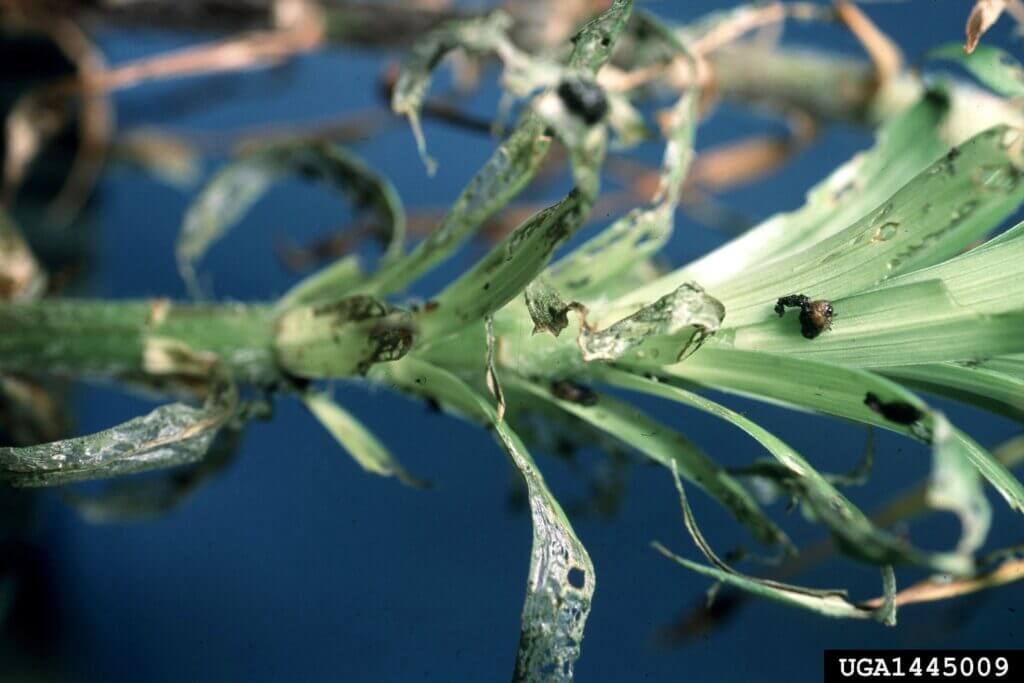
As both larva and adults, the beetles chew holes primarily in lily leaves, but they can also damage stems and flower buds. In a severe infestation, the plant can be defoliated and die.
Spotting the Beetle
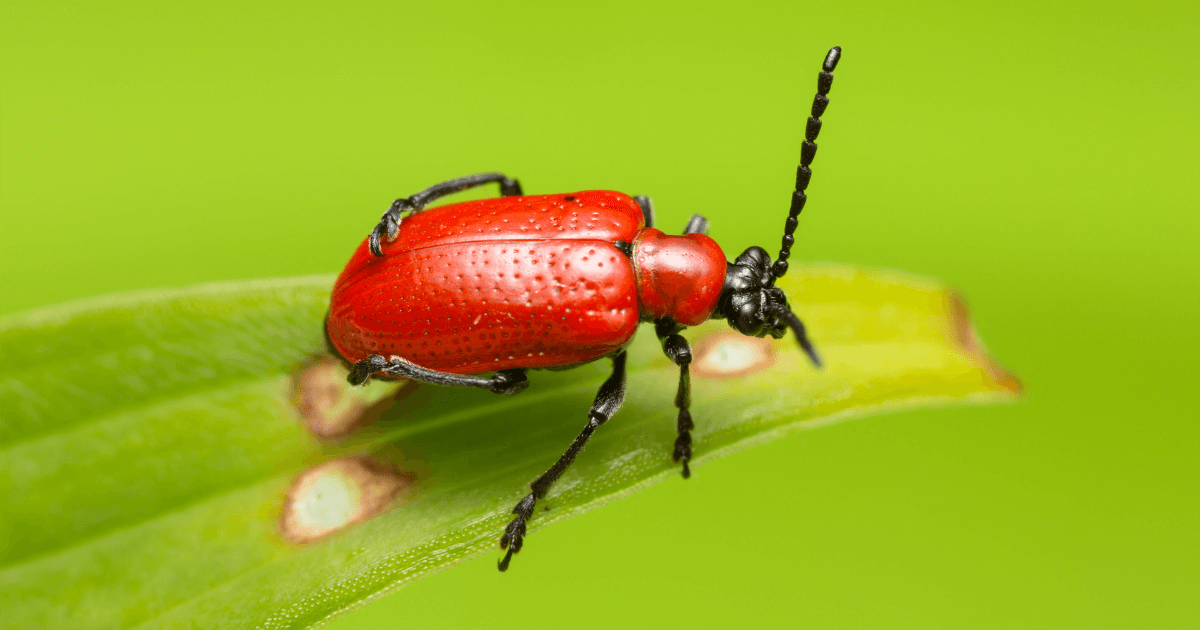
Their bright red color make adult beetles easy to find. They are a quarter to a half inch long, with a bright scarlet body and a black head. As larva, the beetles are noted for putting their excrement on their back in order to hide themselves, according to the University of Minnesota Extension.

The beetles overwinter as adults in the garden—in plant debris or soil. The emerge in spring, mate and each female will lay up to 450 red eggs on the undersides of leaves. While the beetles may feed on other plants, lilies and fritillaria are the only places they lay eggs. After 10 days, the larva hatch and feed on foliage for two to three weeks. In Minnesota, they are most noticeable in May and early June. They then pupate in the soil, before emerging as adults in another two to three weeks. They feed for the rest of the summer, then go underground during the winter.
Dealing with Lily Beetles
If numbers are small, you can hand-pick lily beetles as you would Japanese beetles, dropping them into a bucket of soapy water mixed with a little vegetable oil. You can also hand-pick the larva, but their excrement shields makes this an unpleasant task. The Missouri Botanical Garden also suggests putting a light colored fabric under the areas where you spot the beetles. When adults drop to the ground, you will notice them and can remove them before they overwinter. As with any pest, practice good sanitation by cleaning up debris and inspecting plants for signs of the beetles before putting them in the garden.
Neem oil and other insecticides can be used in severe cases, but please be aware that systemic insecticides will harm beneficial insects as well. Because the scarlet lily beetle is a new pest to Minnesota, the state ag department requests gardeners report sightings by contacting the Arrest-the-Pest website.
Mary Lahr Schier is a long-time Minnesota garden writer. Follow her on Instagram at @mynortherngarden_mary.
I am wondering about the use of milky support. I used it in my Saint Paul yard against Japanese beetles on my fruit trees. Seemed to work. Would it also work on these beetles?
I’m also wondering if this would cause trouble for beneficial insects and other small ground creatures.
That should have been, Milky Spore.