


What is a Cold Frame?
While northern gardeners often use various protection methods to give seedlings a jump start in spring, adding a more permanent solution to your garden can be helpful in extending the seasons even further. Positioned to catch the sun and keep vegetables warm, a cold frame can add weeks to your harvest season for greens, root crops and more.
So, what is it? And how easy is it to install one?
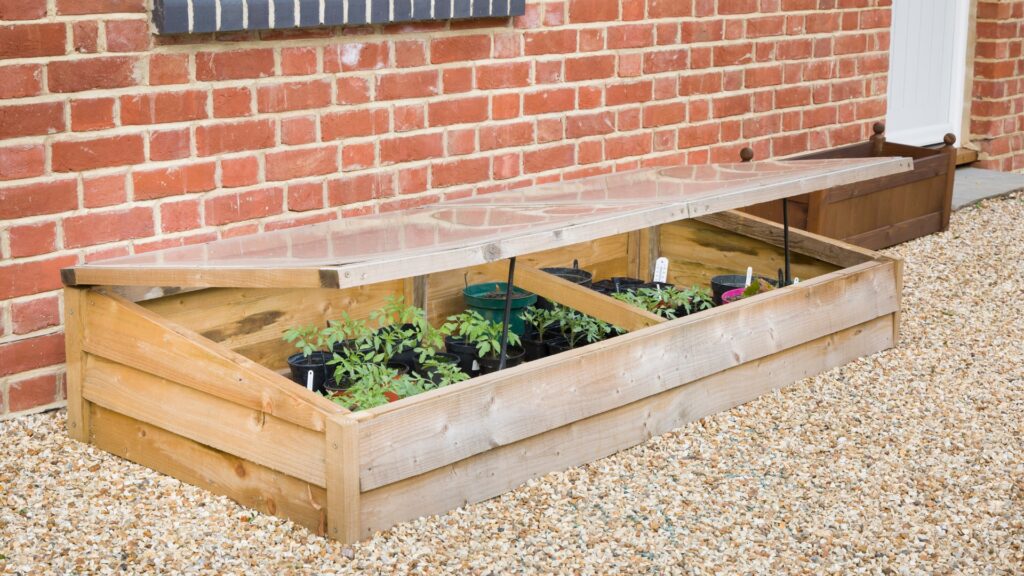
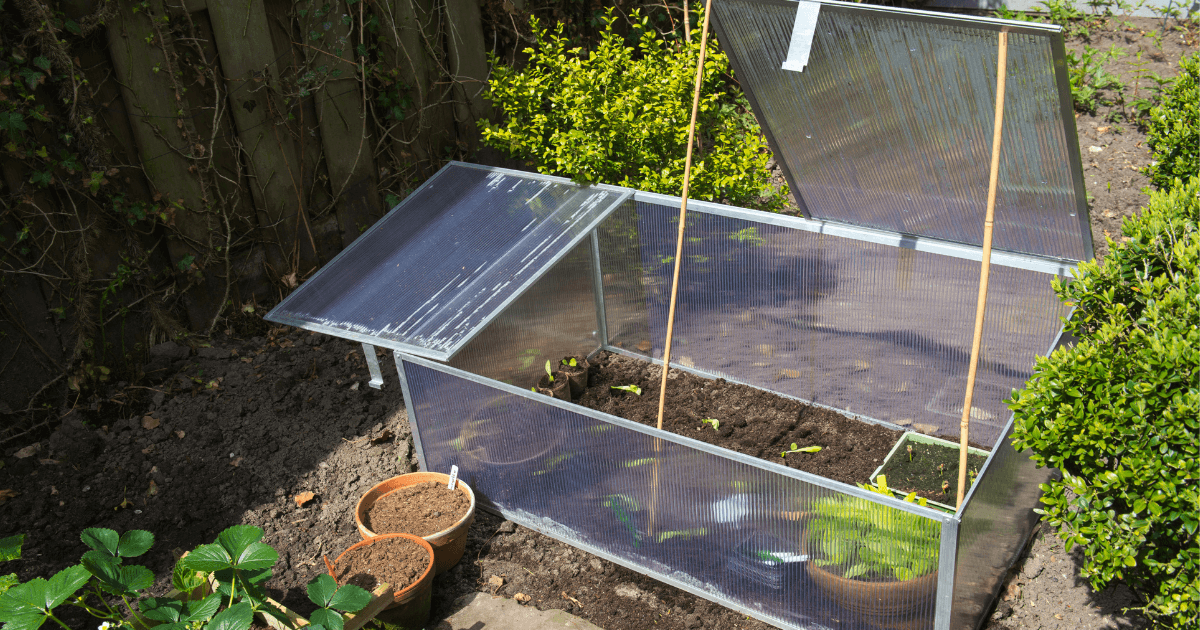
Cold frames are a vintage season extender and many garden books from 100 or more years ago talk about how to build them using a simple window pane and boards. The most common build is a 6 foot by 3 foot box with the window pane angled slightly over the top. These materials are meant to both heat up the garden, like a greenhouse, while also providing wind and frost protection at night.
Check out the image below from an early 20th century issue of Northern Gardener!
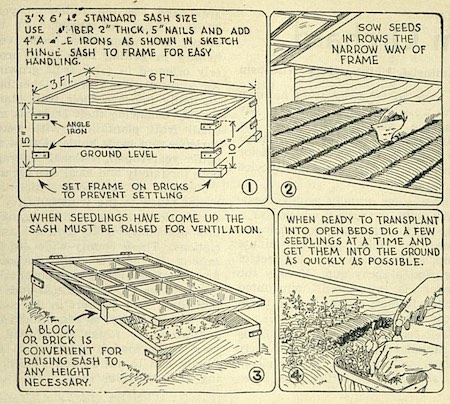
How to Build a Cold Frame
The frames are open-bottom boxes, usually made of wood, with a shorter board running length-wise on the front and a taller one at the rear. A window or other clear covering rests on angled side boards between the back and front, creating a relatively tight seal. Hinges that attach the clear cover allow you to open and close the box, depending on the weather. You can place them on top of an existing garden bed, a raised bed or up against your house, garage or shed for a bit more heat. Setting the frame on bricks will help the wood last longer by preventing rot.
Cold frames can also be built out of straw bales, bricks, cement blocks or any other weather-resistant material you have on hand. (A cold frame is a great project to build using materials you already have—this is not the place to break the bank for your garden.)
What Grows in the Cold Frame
Quick-growing, cold-tolerant crops are the best ones to grow in a cold frame in fall. Greens, such as lettuce, mizuna or arugula, grow well. You could also finish off starts of plants such as cabbage, kale or other brassicas, beets, carrots or other roots, even scallions. Herbs, such as parsley or sage, could last for weeks with this protection.
Cold frames do require monitoring. On sunny, warm days in fall—even in November—you’ll want to pop the lid of your cold frame during the warmest part of the day. If the clouds roll in and the temperatures drop, you may want to throw a blanket over the top of your cold frame for extra heat.
Eliot Coleman, author of Four Season Harvest, who grows vegetables year-round in Maine, recommends layering on protection in the garden. Each layer of cover—cold frame, polytunnel, hoop house, blanket—is the equivalent of one USDA Hardiness Zone in warmth. Author Niki Jabbour, who is based in Halifax, Nova Scotia, is able to harvest from her garden 11 months of the year, using a polytunnel, cold frames and more.
What are your favorite ways to extend the season?

Mary Lahr Schier is a Minnesota gardener, writer and editor and author of The Northern Gardener, From Apples to Zinnias, 150 Years of Garden Wisdom (Minnesota Historical Society Press, 2017), winner of the Silver Award of Merit from GardenComm in 2018. For 18 years, she edited Northern Gardener magazine, the publication of the Minnesota Horticultural Society and the only magazine dedicated to gardening in USDA Zones 3, 4 and 5..

Some may think this is cheating, but I have an electric roof ice melting cord that I put in my cold frame. We get most of our electricity from a solar farm near St. Cloud and excess from Xcel’s Windsource program, so I justify it that way. The cord has a thermostat that turns on the heat only when it’s below 40 degrees. With heat from the sun and a good cover it only comes on when it’s below 20 or so outside the cold frame. We often have lettuce till the middle of December.