


Squash Vine Borers: What to Know
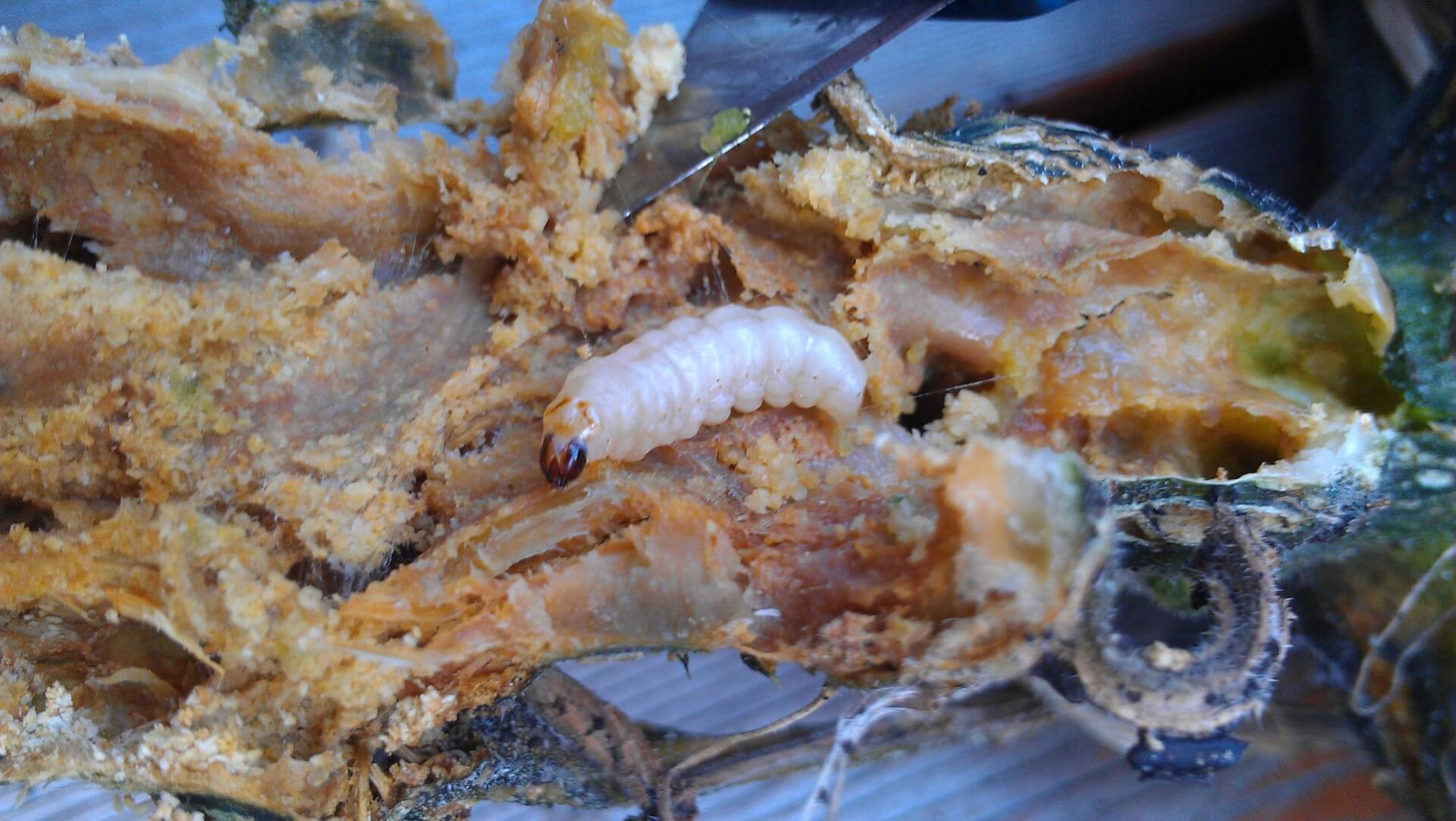
For vegetable gardeners, the first sign of an infestation of squash vine borers may be that their plants seem to be wilting. They may find holes in the plants, filled with a squishy orange substance. They may even find the distinctive white caterpillar that is causing all the damage.
Squash vine borers are the larvae of a type of clearwing moth, and a large infestation can cause significant damage to summer and winter squash, pumpkins and sometimes even cucumbers and melons. The pests are active only a few weeks and there are ways gardeners can prevent or halt and infestation of squash vine borers.
Lifecycle of the squash vine borer
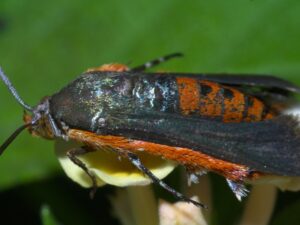
The adult borers (Melittia curcurbitae) emerge from the ground in mid-June. At this point, they resemble box elder bugs or milkweed bugs with an orange and black body. They are about a half inch long.
They have two sets of wings; one green, one clear. The adults lay eggs at the base of susceptible plants. After the eggs hatch, the larvae burrow into the stems and vines of the plant, basically eating their way through the vine, blocking flow of water and killing the plant from the inside. They are in the larva stage for four to six weeks, growing into a fat, 1-inch long white to cream-colored caterpillar. Once they are done feeding, they drop into the ground, make a cocoon and stay there until the next summer.
Squash vine borer prevention
Because they overwinter in the ground, once you have squash vine borers, you’ll probably have them again. The University of Minnesota recommends a variety of strategies for dealing with the issue. One option is to plant vine crops that the borers don’t like as much, such as butternut squash, cucumbers and melon.
Another option is to use row covers over your plants if you see the adults flying around. You will want to remove the covers when the plants have flowered to give bees access to the plant for pollination. A third option is to wait until mid-July to plant out squash. Start the seeds indoors or undercover and then move them into the garden in July when the borers have retired for the year. Depending on the variety, you likely will still get a crop.
Prevention for next year’s squash vine borers
If you have an infestation of borers, remove the affected plants as soon as possible to prevent more borers from getting into your soil. Also, practice crop rotation. Plant a vegetable that is not in the squash family (Curcurbit), such as tomatoes, peppers, green beans or lettuce in that area of the garden.
Other garden pests? Check out this post.
You may be interested in:
4 Common Insect Pests in the Vegetable Garden
Before we even start talking about pests, let’s be clear: Most bugs are good bugs, and trying to keep your vegetable garden bug-free is not…
July Garden Checklist for Northern Gardeners
Updated July 2025 With heat, humidity and occasional rains, many gardens will be exploding by early July. Fortunately, we gardeners can enjoy them with a…
Scarlet Lily Beetle Infestations Grow
The usual summer suspects are showing up in northern gardens: Japanese beetles, squash vine borers, tomato hornworms, magnolia scale, brown marmorated stink bugs and, maybe…