



Silver Plants: An Elegant Garden Addition
Are you a silver person or gold? That question can apply to gardens as well as jewelry. Silver plants are an elegant garden accessory, adding contrast and complementing almost any flower color. The silver hue reflects light, brightening up spaces and drawing the eye to that section of the garden. And, many plants with silver foliage also offer interesting texture—fuzzy, hairy or pointy.

Why Are the Leaves Silver?
Silver leaves are an adaptation, and most naturally silver plants come from desert regions—areas where the growing season is hot and dry and tough on plants. The silver color reflects or scatters light, protecting the plant from sun damage. Many plants with silver or gray leaves also have a fuzzy texture or hairs on their leaves. These hairs prevent moisture loss, another adaptation to help the plant survive.
Not surprisingly, most plants with silver foliage grow best in sunny, dry locations. But some silver-toned plants work in shade as well.
Designing with Silver Plants
Like white, silver is a unifying color in the garden. (Some plants called white actually read more as silver.) It blends well with both hot reds and oranges as well as cooler purples and pastels. It looks really good with dark-leaved coralbells and the newer coralbell (Heuchera ‘Silver Gumdrop’) has a rich silver color on the top of its leaves and purple underneath.
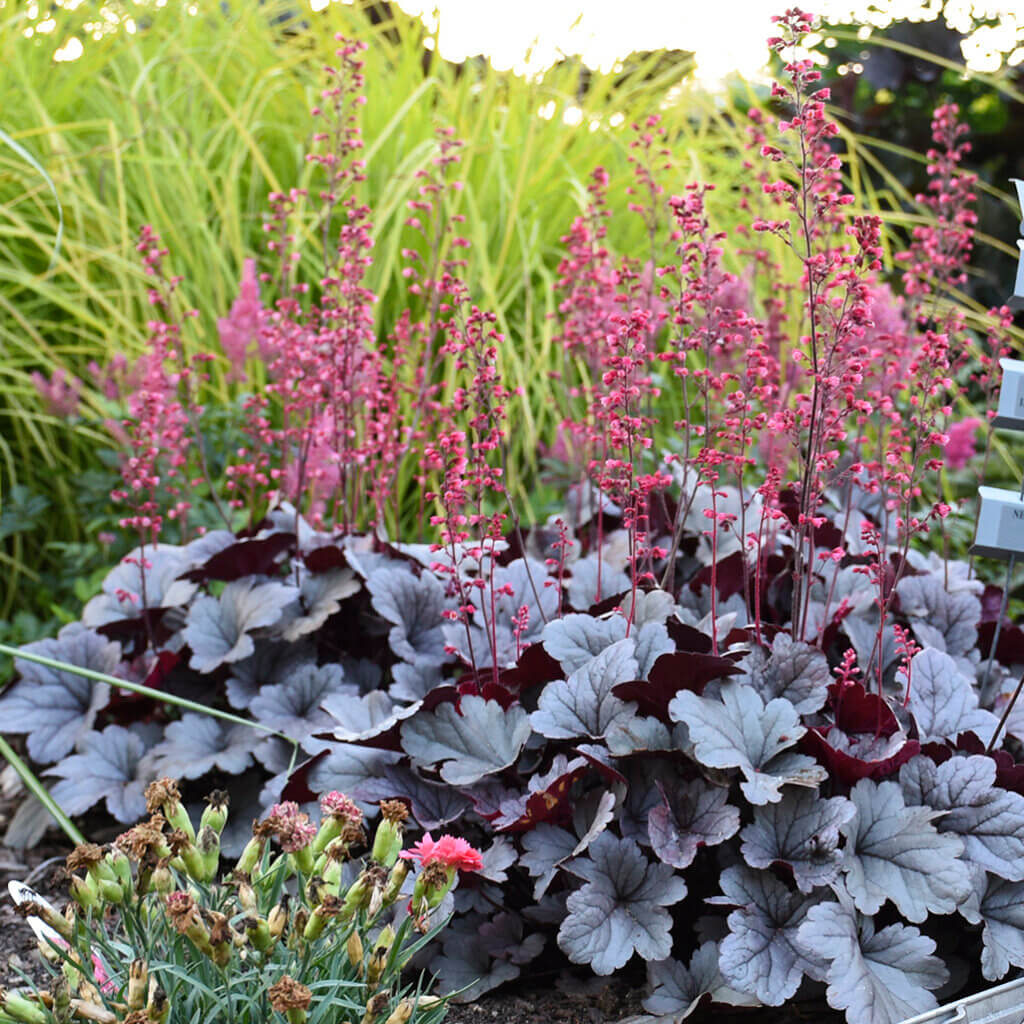
Silver plants illuminate areas of the garden, so a splash of silver can draw attention to a special garden feature. Silver foliaged plants are also great in gardens seen more often at dusk – the color shines with minimal light and adds an air of romance to the garden.
They are also easy to design around. As a backdrop to other perennials or annuals, consider using a row of Iceberg Alley sageleaf willow, a silvery shrub, at the rear of a sunny border. Or, they can be an edge plant, such as the many kinds of Artemesia. ‘Silvermound’ (Artemisia schmidtiana) is an older variety and requires almost zero care. It creates a fluffy, silvery edge to a perennial border. Some grasses also offer a silver hue and a swordlike form. Blue fescue sometimes appears more silver than blue, especially the cultivar ‘Elijah Blue’.

Finally, consider using silver foliage in your containers. There are many rex begonias with silver edges or splotches that make great filler plants (and houseplants!) or add that old favorite, dusty miller, to your containers. Annuals can add a silvery drape to containers, such as eucalyptus or Dichondra ‘Silver Falls’.
More Silver Plant Choices
Here are a few silver choices to consider for different garden situations:
Short and silver: For edge plants, consider dianthus (‘Silver Star’ or ‘Silver Strike’) or lamium (especially ‘White Nancy’ or ‘Beacon Silver’).

Silver in shade: Japanese painted ferns often have silver tones (try ‘Ghost’ or ‘Brandford Beauty’). Or seek out Brunnera ‘Sterling Silver’—it’s a stunner in part shade and hardy to USDA Zone 3. Lungwort (Pulmonaria) is another plant with silverish foliage that does well in shade. The cultivar ‘Moonshine’ is as bright as its namesake.
Funky foliage: Sometimes you want to add some foliage that’s a little bit weird. Silver plants can help. Try growing sea holly (Eryngium giganteum) with its spiky leaves and fascinating flower shape. Or, plant cardoon around the edge of your vegetable garden. It’s spiny, spiky leaves have a silver glow and the points on the leaves may keep the critters away.
Mary Lahr Schier is the author of The Northern Gardener: From Apples to Zinnias and a long-time Minnesota garden writer and speaker.
Featured image: Sea holly plant, courtesy of Creative Commons. All photos courtesy of Mary Lahr Schier unless otherwise specified.
You may be interested in:
When to Plant Your Vegetable Garden
Updated May 2025 Planting a vegetable garden isn’t just a one-day affair. It’s often done over several weeks, depending on the weather and other factors….
Attracting Birds to Your Garden- Audubon Native Plants Database
Enter your 5-digit zip code to use Audubon’s native plants database and explore the best plants for birds in your area, as well as local resources and links to more information.
Climate Resilient Pollinator Plants for Minnesota
This is a short list of pollinator-friendly and climate-adaptive plants, compiled by the experts at the University of Minnesota Bee Lab, that provide food and shelter for Minnesota pollinators.