



Plant Profile: Phlox
Phlox are among the most adaptable perennials for northern gardens. Garden phlox stand tall while creeping phlox spreads along the ground. Some bloom pink or near blue, while others are bright white. One type of phlox is a sign of spring, while others hold out until summer to bloom.
Most phlox are native to North America. Phlox paniculata (sometimes called garden phlox or fall phlox) grows 3 to 4 feet tall and is native in Minnesota and most of the North. It comes in a large number of cultivars, though the most famous is probably the white-blooming phlox ‘David’.
This plant blooms in July, August and September and can be a real bright spot in the garden. One issue with tall phlox, however, is its tendency to get powdery mildew on the lower leaves. The typical advice is to plant something short and showy in front of the phlox to camouflage its unsightly limbs. Hybridizers are developing newer varieties that resist powdery mildew.
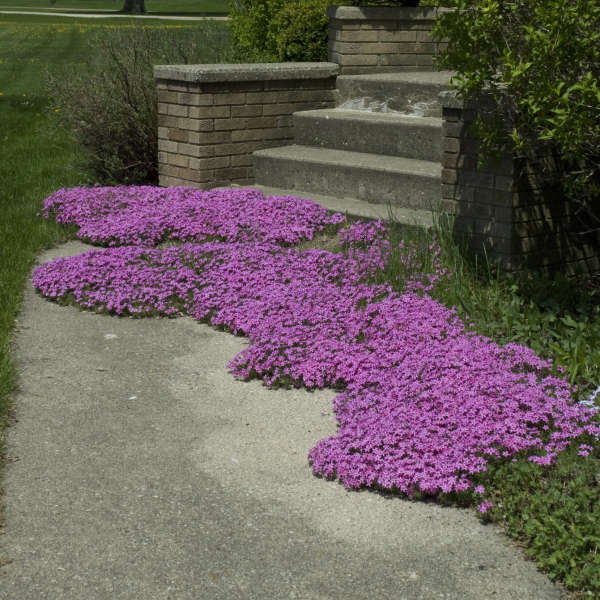
The other common phlox in northern gardens is Phlox subulata or creeping phlox. It’s also called moss phlox and this species does enjoy a moist, but sunny environment. It blooms in spring and can be a real highlight of rock gardens or garden walls during the early parts of the season. Creeping phlox tumbles over stones and walls and spreads prettily. Most creeping phlox veers toward purple in color but it can also be found in pink and white cultivars. After blooming, creeping phlox stays green and is a soft groundcover in the garden.
You may be interested in:
Plant Profile: Zigzag Goldenrod
Zigzag goldenrod (solidago flexicaulis) is one of the few goldenrods that thrives in partial to full shade. Most sources agree that it will grow well…
Plant Profile: Eastern Red Columbine
When you happen upon eastern red columbine in the wild—with angled sun glinting on the bright red and yellow of its bell-shaped blossoms—it can be…
Planting Annuals and Containers
As the weather warms up, it’s impossible for northern gardeners not to be excited for color, color and more color. That usually means planting annuals…