


Plant Profile: Cardinal Flower
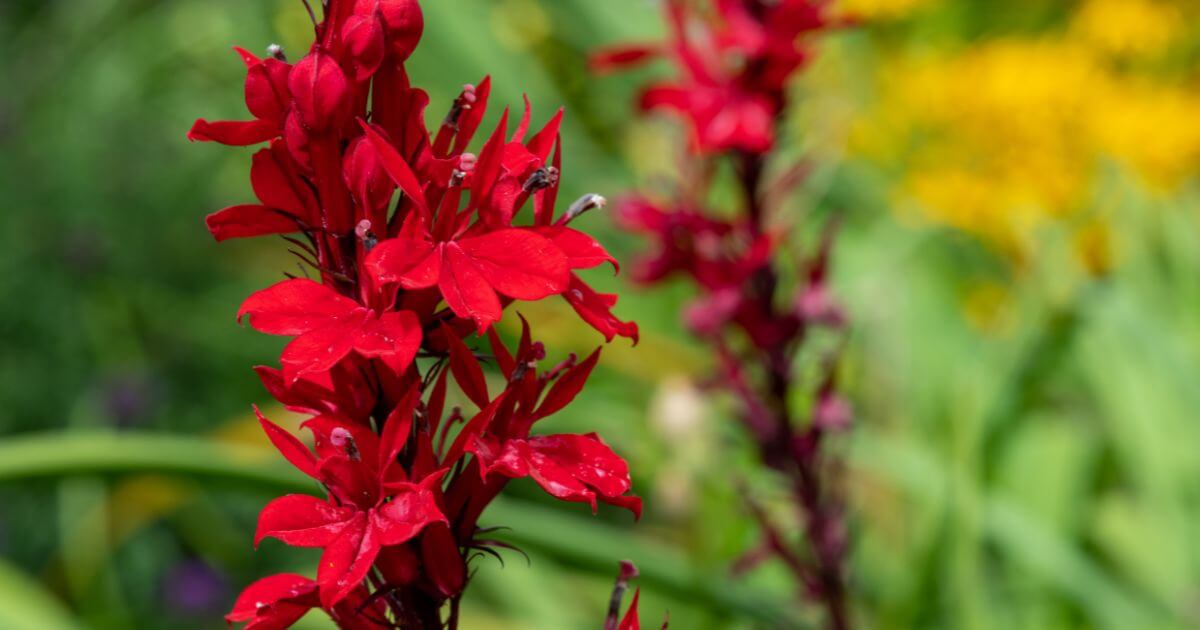
Cardinal flower (Lobelia cardinalis) gets its name from the brilliant red flowers that grow in an elongated cluster atop the stems, midsummer through early fall. The tubular flowers are two-lipped, with the three lobes of the lower lip appearing more prominent than the two lobes of the upper lip. White- and rose-colored forms can be found. The finely toothed, dark green to purple, lance-shaped leaves get about 4 inches long. It is a somewhat short-lived, clump-forming perennial.
Cardinal flower depends on hummingbirds, which feed on the nectar, for pollination. Bees may also visit. Butterflies, especially swallowtails, like it, but not cardinals.
Cardinal flower is one of the few native plants with true red flowers and they are a welcome addition to late-summer landscapes. Plant it in groups of five to seven in a moist area of perennial borders or semi-shaded areas of the landscape. It thrives in rain gardens, at the edges of water gardens, and in bogs.
Cardinal flower will naturalize when conditions are right. It definitely takes a bit of coddling, but the cardinal red color in late summer and the hummingbirds it attracts make it worth a little extra effort. Good companions are autumn sneezeweed (Helenium autumnale), goldenrods (Solidago spp.) and white turtlehead (Chelone glabra). A backdrop of ferns will help set off the red flowers.
This native is short-lived, so add seedlings every couple of years or plan to nurse along the offsets that appear in fall. Winter mulch is helpful in cold areas. It will self-seed prolifically in optimum growing conditions. It has no serious insect or disease issues, and deer and rabbits usually avoid it.
This article by Lynn Steiner first appeared September/October 2019 issue of Northern Gardener.
One Comment
-
Pingback: 23 Cardinal Secrets That Turn Any Yard Into a Red Bird Paradise - Complete Gardening
Back to BlogYou may be interested in:
30 Great Plants for Northern Gardens: The Complete List
One of our MSHS Facebook fans requested that we put up a list of the 30 great plants for northern gardens that we profiled in…
Plant Profile: Compass Plant
Seeing a prairie or a meadow full of blooming compass plant (Silphium laciniatum) in mid-to-late summer is an optimistic sight. Among the three species of…
Great Plants for Northern Gardens: Day 19 — Cardinal Flower
Last summer, I was visiting a friend whose backyard garden slopes down to meet the reedy shore of a small lake. Not far from the…