


Which Perennial Salvia is Best for Your Garden?
Dozens of salvia varieties grow beautifully in containers or in the ground as annuals. But come frost, they’re done. Some salvias, however, will overwinter in the North, and as hybridizers have worked to breed more cultivars of these perennial salvia, the options for northern gardeners are growing exponentially.
Which salvia grow here?

Most perennial salvias for our climate are cultivars of the species Salvia nemorosa, also called woodland sage. It is hardy to USDA Zone 3, and is a member of the mint family—though these plants do not spread like some mint relatives. Some hardy salvias are from the species S. pratensis and others are crosses of more than one species.
Perennial salvias are easy to care for and rarely need dividing. Plant them where they will get six or more hours of sun in soil rich in organic matter. Fertilize them annually with a balanced, slow-release fertilizer for best growth. Once established, they tolerate dry weather well and are attacked by few pests or diseases. Two other pluses of perennial salvia: pollinators love them and deer tend to stay away.
These salvias will bloom more than once during the season, if you cut them back by about one-third after the first flush of blooms have faded. (You can do the same thing to catmint (Nepeta) and should!)

Great Choices: Old and New
Back in the 1990s, when I was planting my first big garden, May Night salvia was the Perennial Plant of the Year, and I loved its long-lasting blooms and all the bees it brought to the garden, though it did sometimes flop over. Later, ‘Caradonna’ salvia (S. sylvestris ‘Caradonna’) came on the scene. Hardy to zone 4, its blooms last for weeks and bees absolutely swarm it. Both of these stalwart varieties are still available and well worth planting. But you have more options!
Here are five to consider and why you might plant each one.
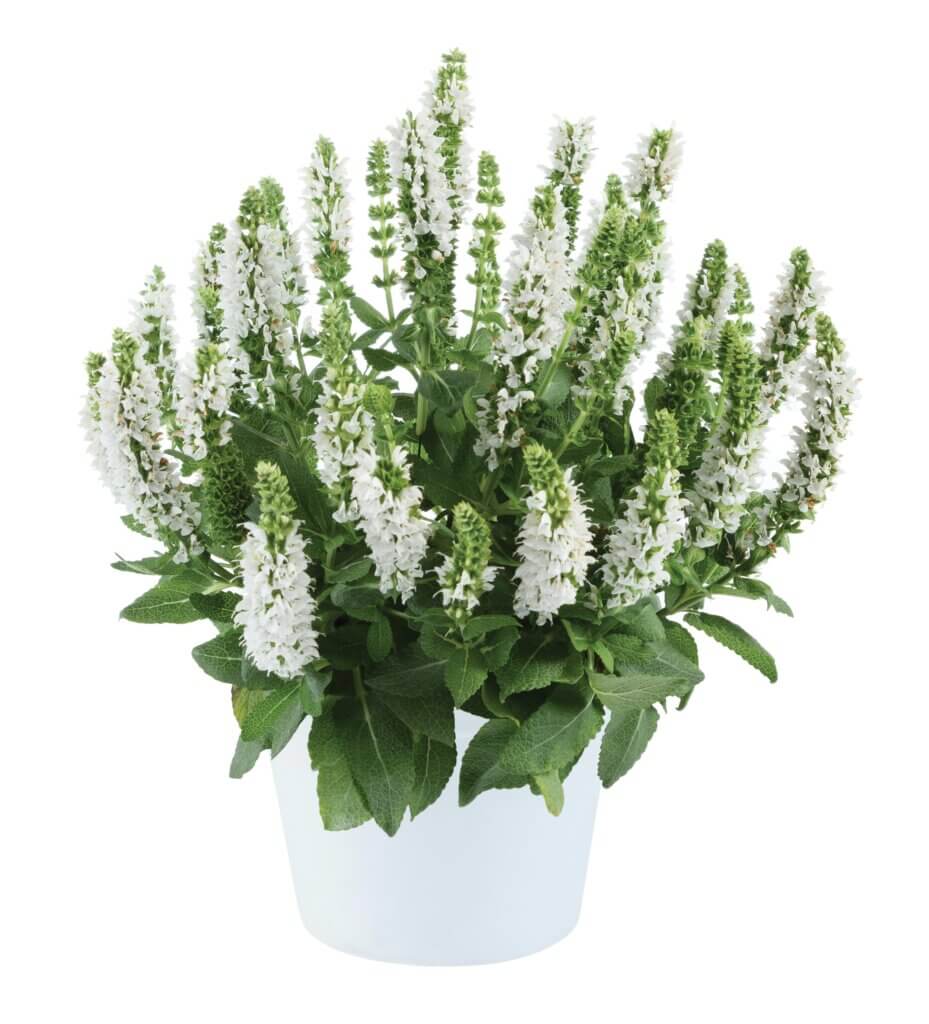
You like lots of rebloom. The Apex series of salvia are known for their quick reblooming. With some luck and judicious deadheading, you should have blooms most of the summer. The series comes in blue, white and pink flowers. It forms tighter clumps than some other salvias and gets about 18 inches tall. Another great choice for rebloom are the Profusion series salvias, which come in pink and violet.
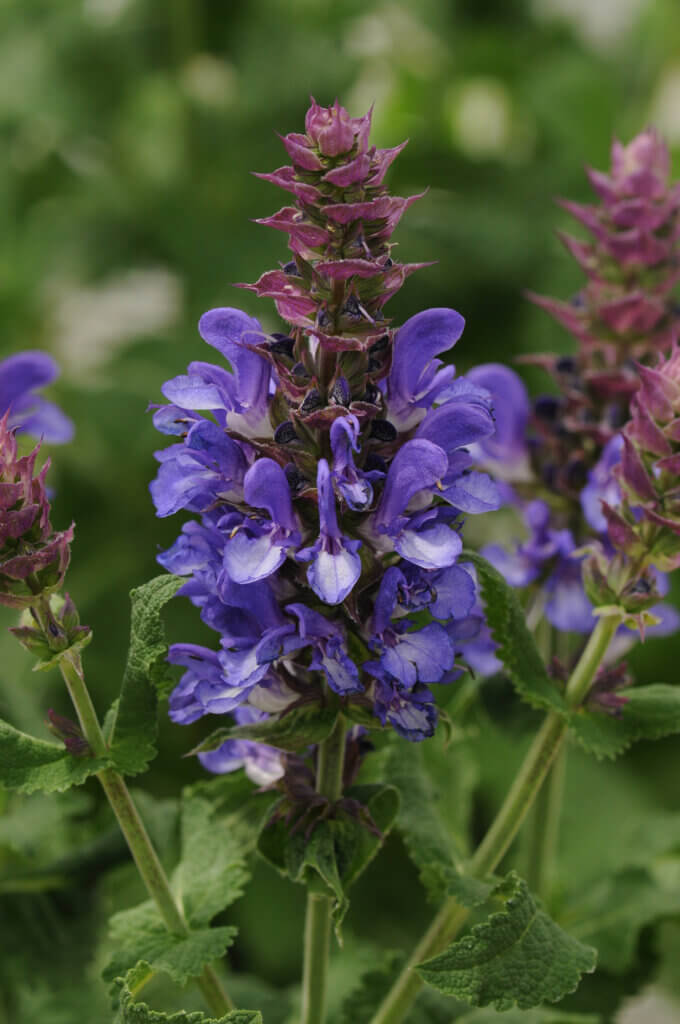
You really like purple. ‘Dark Matter’ salvia was introduced two years ago and has intensely dark purple blooms. The blooms are long and stand above neat green foliage. This salvia starts blooming fairly early and will rebloom later in the season. Zone 4 hardy.
Credit: Ball Horticulture

Credit: Ball Horticulture
You like big blooms. If you like larger flowers on your salvia, consider the Marvel series. These are hardy to zone 4 and have large blooms on relatively compact, 14-16-inch-tall plants. The color is intense, too; this perennial salvia comes in blue, pink and sky-blue.
You want early bloom. I’m not sure this salvia will really bloom in April in our climate, but Sallyrosa™ April Night salvia blooms earlier than other salvias. It’s a short plant—less than 14 inches tall—and has shapely purple blooms. Because it blooms earlier than other salvias, it provides an early food source for pollinators. Zone 4 hardy.

Credit: Bluestone Perennials
Credit: Ball Horticulture
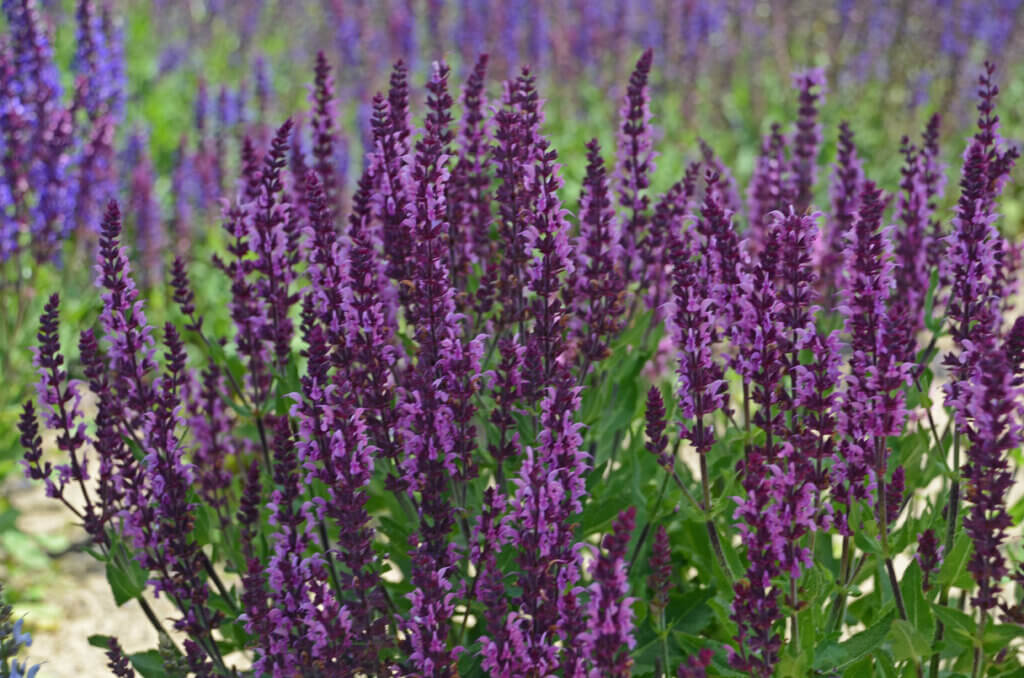
You’re all about the pollinators. While any salvia will attract bees, butterflies and hummingbirds, the Bumble series of salvia were named for their ability to bring in the bumblebees. These are shorter salvias that are great for the front of the border and they have intense colors, which are attractive to humans as well as insects. The series comes in deep purple (‘Bumbleblue’), fuschia (‘Bumbleberry’), white (‘Bumblesnow’) and pale violet (‘Bumblesky’). Zone 4 hardy.
Are you ready to start your own collection of salvia? Check out this free MSHS webinar on salvia before heading to the nursery.
Mary Lahr Schier is the author of The Northern Gardener: From Apples to Zinnias and a long-time Minnesota garden writer and speaker.
Featured image: Salvia species ‘Nemorosa Caradonna Pink’. All photos courtesy of Walters Gardens unless otherwise specified.
You may be interested in:
Great Plants for Northern Gardens: Day 24 — Asiatic and Oriental Lilies
There are nine classes of lilies, according to the North American Lily Society, and all of them are lovely. But, for northern gardeners, the two…
Growing Sage in Minnesota Gardens
Culinary sage (Salvia officinalis) is one of the hardiest herbs. Though not 100 percent reliable as a perennial in Minnesota, growing sage is relatively easy…
Fall Planting: How Late Can You Go?
Fall is a great time for planting. As we get past mid-October, though, the question is how late in the season can you plant? Many…