


Showy in the Shade: Astilbe and Ligularia
Astilbe has long been a staple in my shade garden. They are so striking when they bloom, with their tall plume-like flowers in delicious shades of pink, red and white. Their feathery tops contrast strikingly against broad leaved shade garden classics like hosta, bergenia, ligularia, and Solomon’s seal. Before and after blooming, their fern-like foliage is a pleasing texture in the garden tapestry. They are a true “pop” of fabulousness in the shade garden.
Astilbe prefer a partially shaded location. A few hours of sun or a consistently bright location with no direct sun is great. From my experience, full, deep shade results in smaller plants and less showy blooms. I’ve also seen them thrive in quite a bit of sun if they have reprieve from the hot, hot mid-day rays and get plenty of water.
Aim for consistently moist, well-drained soil. Hot, dry spells can be hard on them; be mindful to water when Mother Nature isn’t supplying it.
Astilbe thrives in soil that is rich in organic matter. Amend the soil with compost if it is clay-ish or sandy. Astilbe benefits from regular applications of fertilizer. Use a 10-10-10 fertilizer in the spring when new growth appears and again in mid-summer. You can also incorporate compost around the plants.
Astilbe is readily available in the garden centers and can also be grown successfully from bare roots. When planting bare roots, dig a 12 to 24-inch hole with a mound at the center. Fan the roots out and down, sitting then on the mound, and place the eyes or growing points no more than an inch below soil level. Fill the hole with soil, pat down, and water well.
Mulching around astilbe plants will help retain the moisture they love. Apply a layer of organic mulch around the plants, but a few inches away from the plant stems. Plant one or many! You can’t go wrong with astilbe in your landscape.
Ligularia
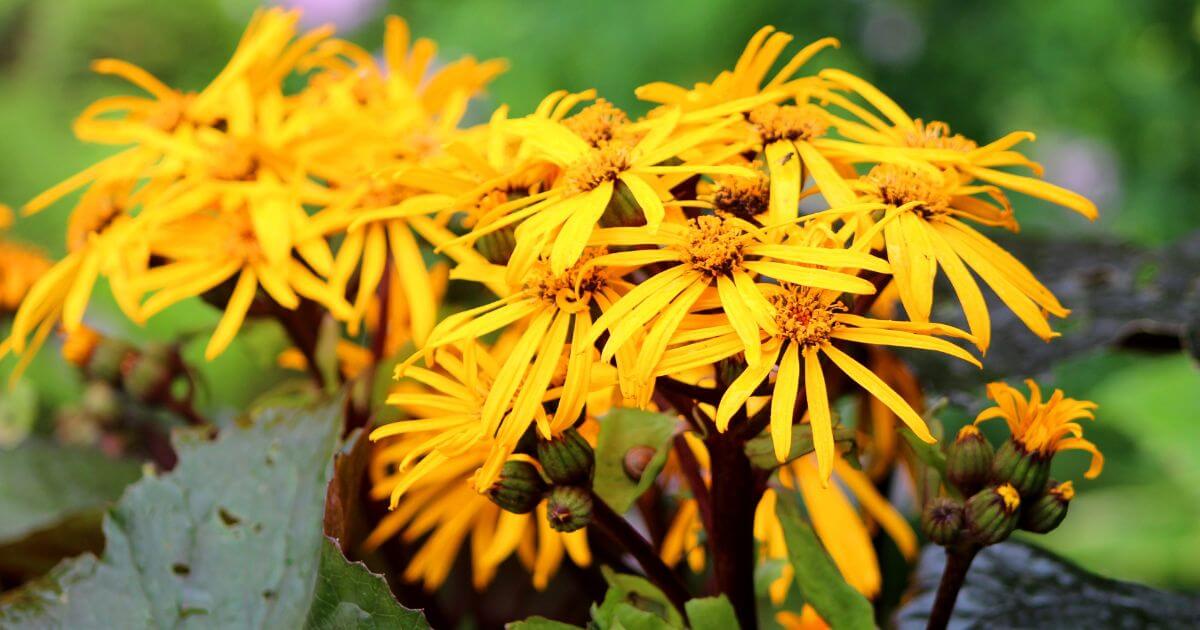
The large, dramatic leaves of ligularia also make it an attention-getter in the shade garden; it grandly holds court with its statuesque structure. I sometimes marvel how it delivers it’s bright yellow, daisy-like flowers in the shade, where such a cheery form and color is hard to find. Ligularia is the perfect way to brighten up the darker parts of your garden.
Many of the growing conditions for astilbe apply to ligularia, though I find ligularia to be happier in more shade; the poor thing wilts like crazy in full sun, especially when it’s dry. Like astilbe, consistently moist soil is ideal, and mulching can help with this. You will want to water during dry spells, especially when establishing it in your yard.
Rich soil will help to maintain moisture as well, so amend your planting bed with compost, especially if it’s less than ideal. From my research, fertilizing isn’t considered as necessary with ligularia as it is with astilbe. Make the planting bed rich with organic matter, mulch plantings, and dig in a little compost each year and your plants will be happy.
Minneapolis-based Eric Johnson blogs at gardendrama.wordpress.com.

Do you have any recommendations for dry shade?