


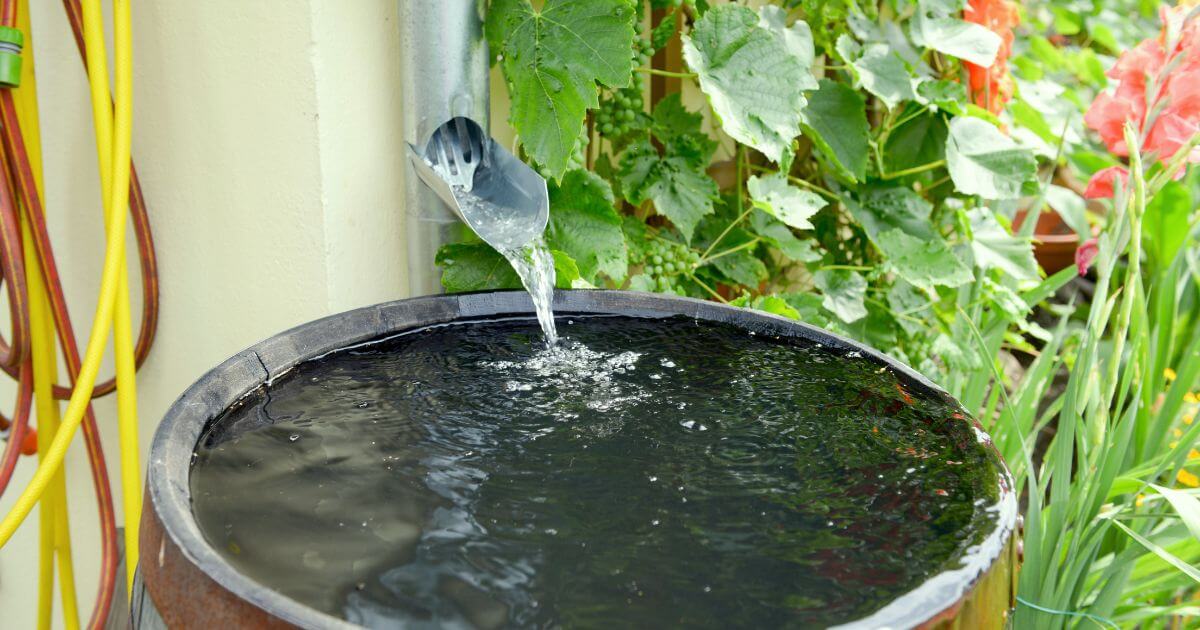
Ask a Master Gardener: Rain Barrels
Spring is here! Central Minnesota’s two-year drought has recently all but come to an end with some glorious rainfall. It’s wonderful to see the way my plants are responding to rainwater, especially compared to the city water they’ve been forced to survive on for the past two summers. Because rainwater is so precious, I like to save as much of it as possible: I have rain barrels on 3 corners of my house. I love using the saved rainwater for various purposes, but I also get questions like this each year.
Question:
Is it safe to use rain barrel water on my garden veggies and fruits?
Answer:
The University of Minnesota Extension does not recommend using rain barrel water on your vegetable gardens, and for good reason: birds and squirrels regularly defecate on your roof, and rain washes all those feces into your rain barrel, where the bacteria has a nice warm and wet environment in which to thrive.
Additionally, depending on the material and age of your shingles, various chemicals can also wash down those downspouts and into your barrels. A study in Seattle found that runoff from asphalt shingles was cleaner than the researchers had anticipated, while runoff from wood shakes was basically unusable because of high arsenic levels.

Splashing all those bacteria and chemicals onto your lettuce is an easy way to get one heck of a stomach bug, at the very least. Yet, there are so many good reasons to collect rainwater, and easy ways to mitigate your risks.
The least risky rain barrel option
Collect that rainwater. Use it on perennials, trees, shrubs, and fruit trees. Just water close the ground and avoid splashing the water onto the fruits. I have a hose with an open end. When a barrel is full, I simply attach the hose to it and let it slowly run out on various shrubs or trees. My houseplants also thrive on rain barrel water.
A slightly more risky rain barrel option
Use rain barrel water on trees, shrubs, and any vegetable that you’re not going to be harvesting for at least 3 weeks—this gives any bacteria in the water plenty of time to dry out and die out. I’ve been watering my tomato and pepper plants that I started indoors with rain barrel water, but I also know I won’t harvest any fruit from them for nearly two months. A similar strategy with my strawberry plants: after harvest season is over, rain barrel water is absolutely fine for maintaining the plants, and they thrive on it.
Other rain barrel mitigation strategies
There is some debate on whether “first flow diverters” really work, but the theory is great: simply discard the first few gallons of water that wash off your roof, along with the crud that is mixed in, then let your barrel fill with the cleaner water. It takes less than ½ inch of rain to fill my barrels, after all. I’ve tried a version of this, letting my barrel drain completely on a tree halfway through a rainstorm and then letting it fill up again. The second barrel-full is definitely cleaner water.
Also: research is also not completely conclusive on this issue—Rutgers University did some research and concluded that in most circumstances, it’s perfectly safe (they recommended strategies similar to the ones I recommend).
Your best bet? Get a rain barrel. Water your trees and shrubs with it and watch them absolutely thrive. But use a hose on your veggies, and always rinse them inside the house with tap water before eating them, since hoses can also be a source of bacteria—despite the fond memories most of us GenXers have of drinking from them.
What have you used rain barrel water for? What other questions do you have about it? Sound off below!
Have gardening questions? You can Ask a Master Gardener online or call the Yard & Garden Line at (612) 301-7590.
Other helpful resources:
The Master Gardener Volunteer program
Jennifer Rensenbrink is a University of Minnesota Extension Master Gardener Volunteer for Hennepin County. She somehow has two mini-prairies on her tiny south Minneapolis property.

I have made wicking beds out of IBC totes, we also collect rain water off our pole building’s metal roof into a couple IBC totes. Is it safe to use this rain water for our wicking beds that I will be growing Vegetables like tomatoes, peppers, carrots, and onions in since the water will be wicking up through Pea gravel then upto the soil where roots are?
I’m looking for a rain barrel for my gardening and front flower garden. How I can get it?