


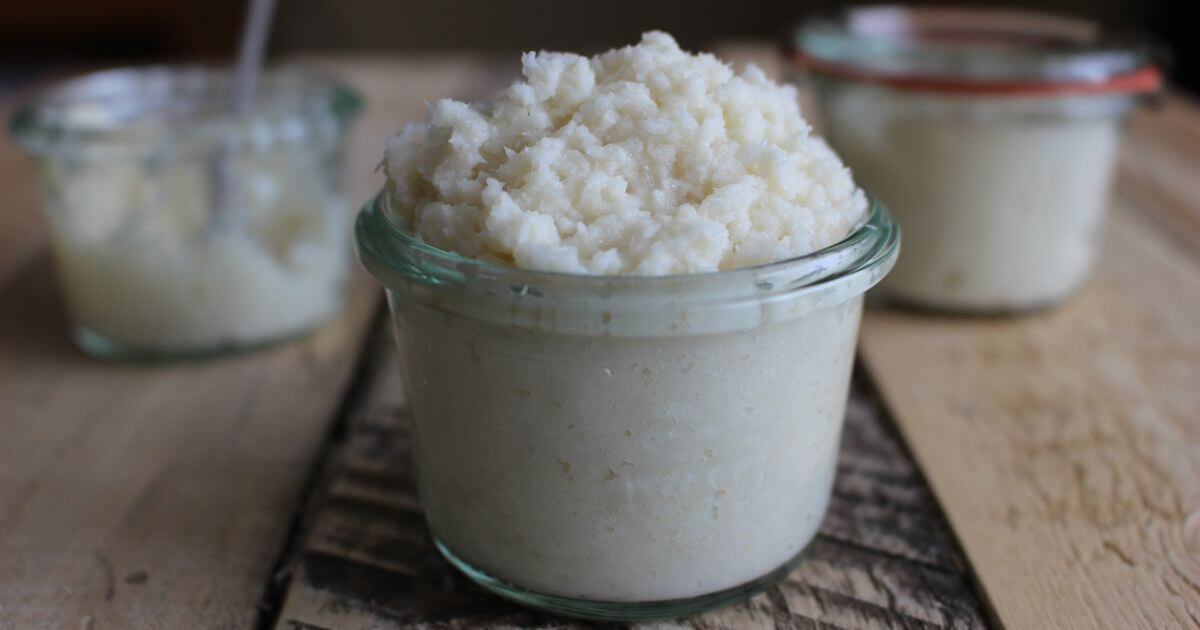
Ground Horseradish Root Recipe
Horseradish grows easily (aggressively, even) for us northern gardeners due to our cold winters. I find it to be incredibly easy to grow, so much so that’s disregarded by some gardeners because it can be difficult to get rid of once you plant it. Each root left in the ground after harvest can grow the following season.
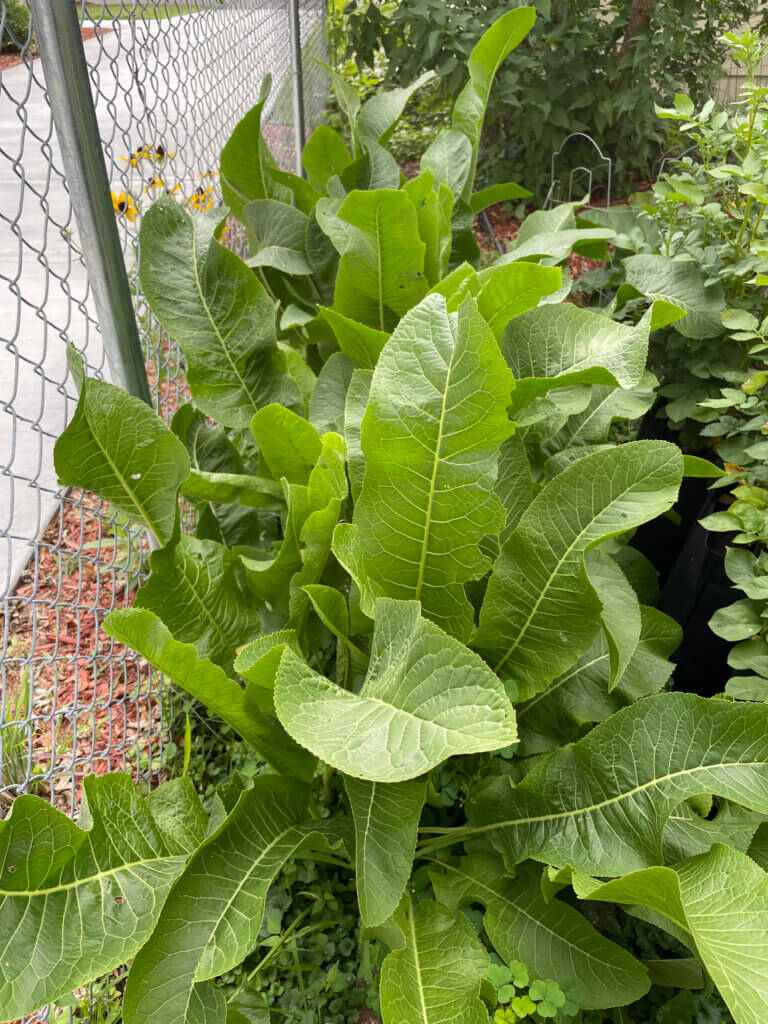
If tamed, this horse is a deliciously kicky herb. My family loves horseradish so much that I have three garden beds of it. I’m able to harvest from one or two gardens each fall, while allowing the third to take a year off to mature. Ground horseradish is delicious mixed with ketchup for a quick cocktail sauce to enjoy with chilled, poached shrimp, or combined with mayo or plain yogurt for a creamy horsey sauce that pairs well with prime rib or steak. The sauce is also a zippy spread for sandwiches and wraps.
I add the fresh root (peeled and chopped, not ground) to fire cider or grate it into chopped cabbage to make sauerkraut blends. You can even ferment the freshly ground root for a unique spin on the recipe below. I could go on and on, but here’s one of my favorite recipes for starters:
Ground Horseradish Root (Refrigerator Recipe)
Yield: 3/4 cup
Ingredients
- 1 cup horseradish root, peeled and cubed
- ¼ tsp canning salt
- ½ cup distilled white vinegar (5 percent acidity)
Directions
Warning: Blended horseradish root will take your breath away and make your eyes water like never before. Be sure to keep a safe distance when removing the blended root from the food processor, or process outside if possible.
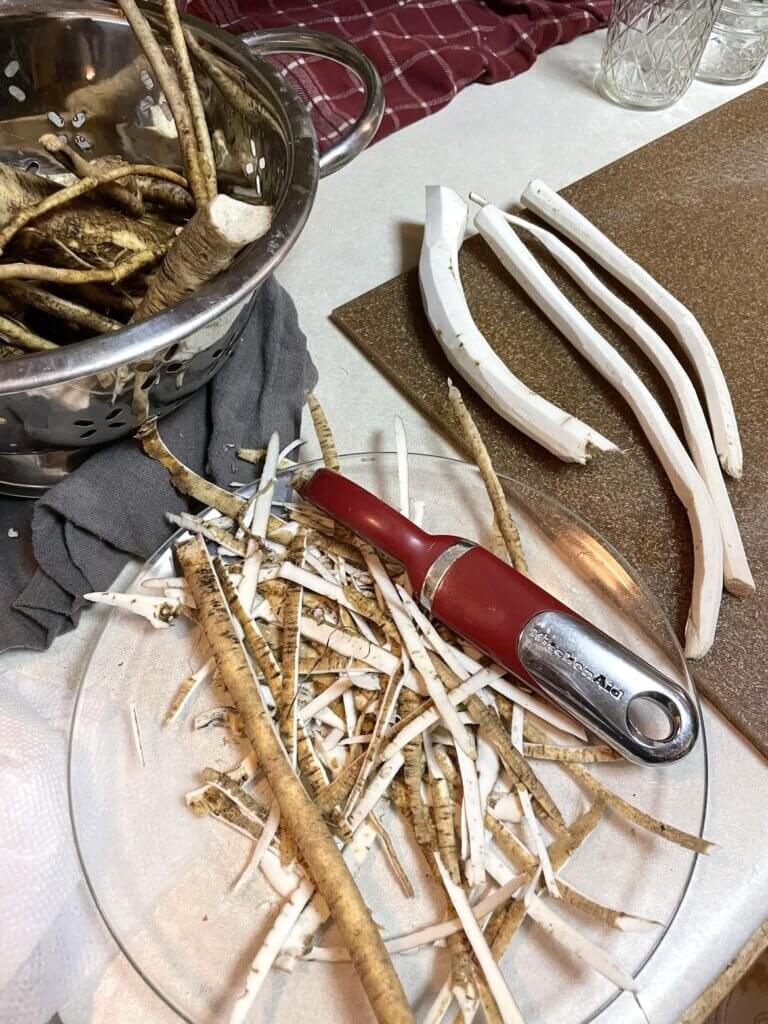
Scrub the horseradish root clean, removing all dirt and debris. Peel the skin off—I find it easiest to use a potato peeler for this task. Roughly chop the horseradish into chunks.

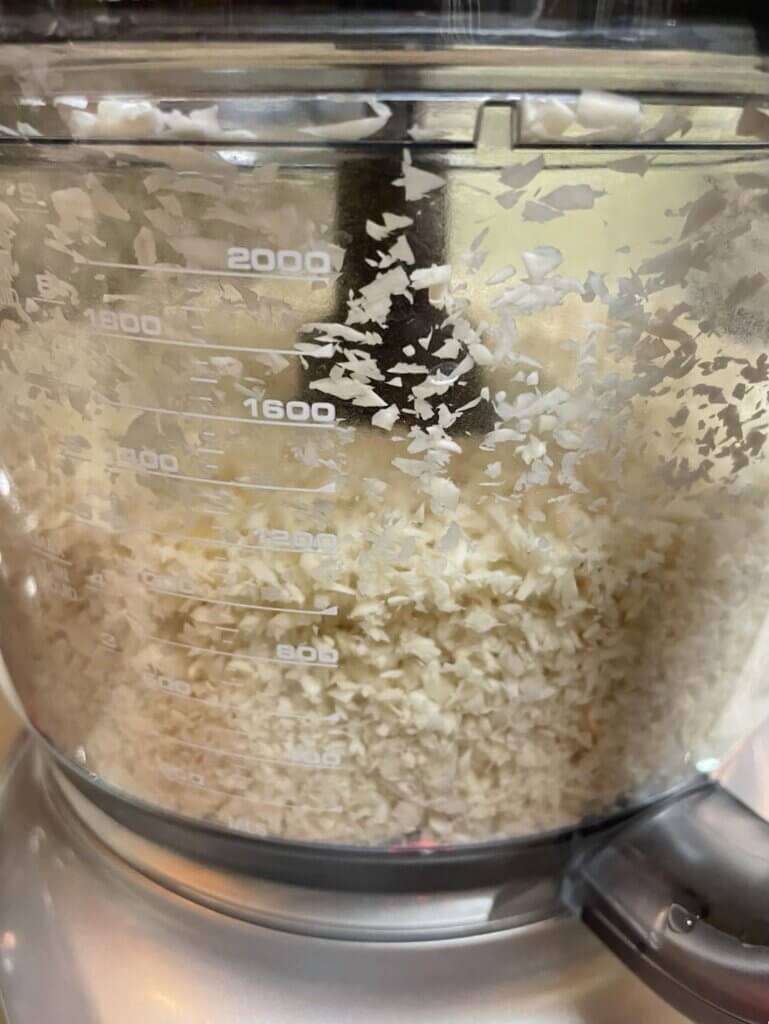
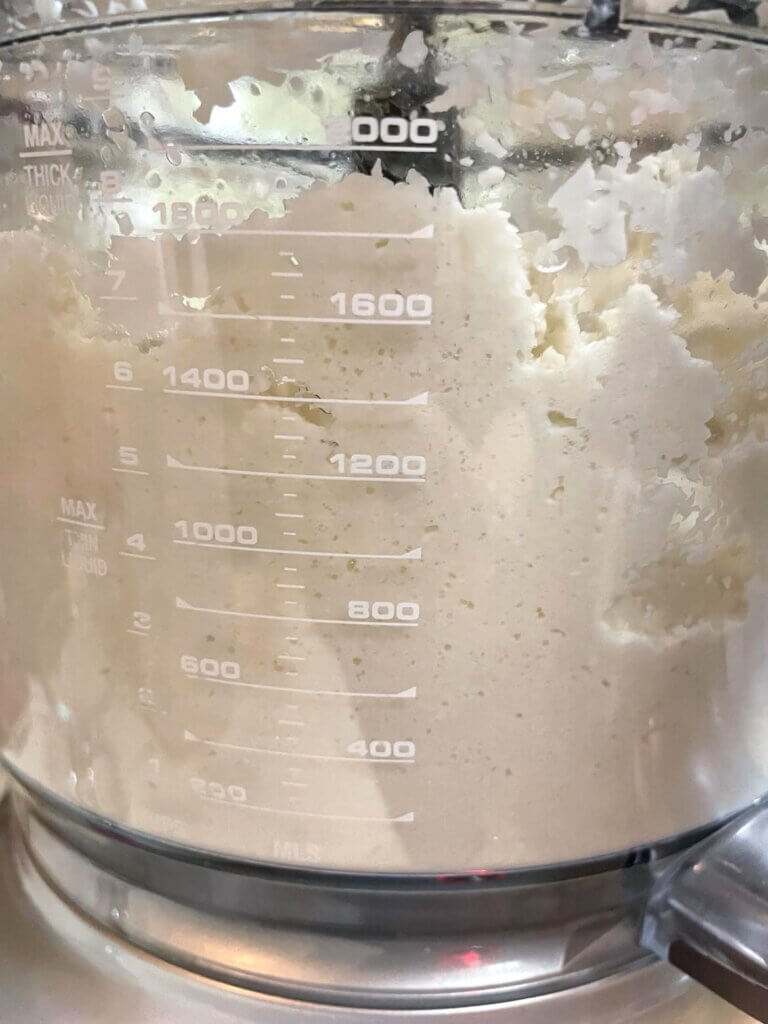
Add the horseradish root to a food processer and blend. Once chopped, the oils in the root become exposed to the air and will make the ground root spicy, vinegar will stop this reaction. If you want a spicier horseradish, allow the chopped root to sit 5 to 10 minutes before adding vinegar. If you prefer a milder flavor, move on to the next step immediately.
Once ready, add vinegar and salt to the food processor and blend together. If the horseradish seems too dry, add a little more vinegar and blend again. Repeat until the ground horseradish reaches ideal consistency.
Transfer to a clean jar, wipe any food from the rim, apply the canning lid and tightly screw on the ring. Refrigerate. Horseradish loses pungency quickly once ground. The fresher it is enjoyed, the more spice it will have; the older it is, the less kick it will have. So, I make small batches as needed and try to use it up within a month.
This recipe has been adapted from Stephanie Thurow’s WECK Small-Batch Preserving with permission from Skyhorse Publishing, Inc.

Stephanie Thurow is the author of Can It & Ferment It, WECK Small-Batch Preserving, WECK Home Preserving and co-author of Small-Scale Homesteading.
Stephanie is a certified master food preserver, master gardener, writer and traditional living skills instructor. Find her online: @minnesotafromscratch
Photo credit: Stephanie Thurow
You may be interested in:
Fermented Radish Salsa
Radishes are some of the first seeds I direct sow in spring. To me, they signify the kickoff of a new growing season. I really…
Book Review: Preserving by the Pint
For many gardeners, canning is a way to say, “Winter — take that! I will continue to enjoy my garden no matter how much snow…
Plant Profile: The Humble Radish
It’s springtime and that means it’s time to talk about one of the best (and sometimes overlooked) vegetables: the radish. As gardeners, we praise the…