



The Silphiums: Grand Midsummer Bloomers
Is there a spot in your garden where you’d like a plant with height and presence? The Silphiums might meet your needs. While they’re big, tall plants, they might be good choices for borders, backdrops, or other garden areas—for example, growing next to a backyard staircase up to a second floor, along a fence line or at the back of a border.
Two Silphiums are native to Minnesota: Compass Plant (S. laciniatum) and Cup Plant (S. perfoliatum). Two more are native to neighboring states Wisconsin and Iowa—Prairie Dock (S. terebinthinaceum) and Rosinweed (S. integrifolium)—and are commonly available in the nursery trade and in seed form and seed mixes.
All four Silphiums prefer sunny locations, are low maintenance and have medium water needs, according to the Missouri Botanical Garden. They all attract birds and pollinators of all types. And they tolerate poor soils, although they grow best in rich, prairie soils. They bloom in mid- to late summer and work well in floral arrangements.
While the flowers of all four are similar—golden, sunflower-like, open blooms—the distinguishing characteristics of each plant can suit unique preferences, conditions and locations.
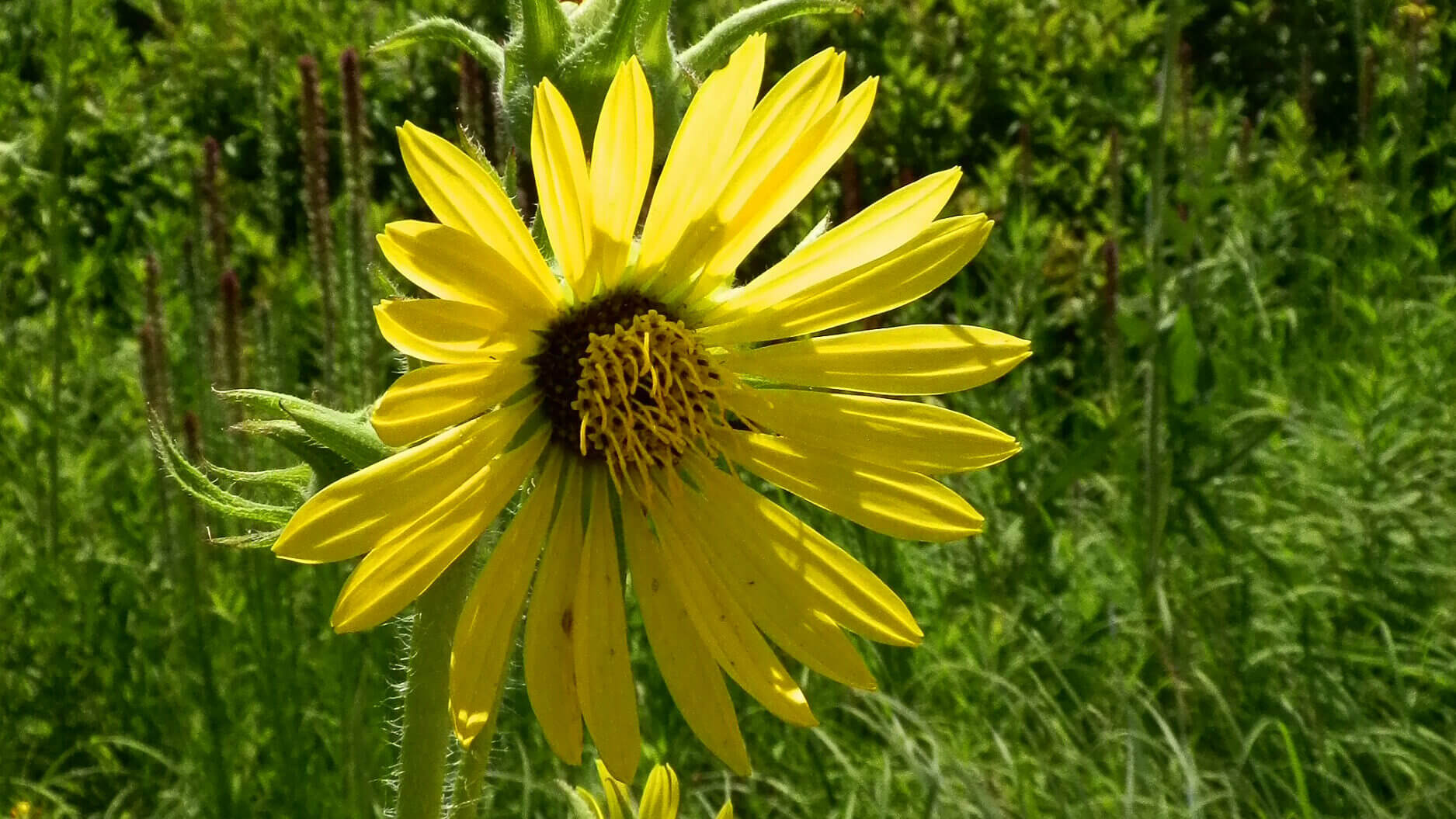
Compass plant (S. laciniatum) has unique foliage with deeply cut oak-like leaves that are 12 to 24 inches long at the base of the plant and becoming smaller up the stem. The name derives from the leaves’ alignment—their edges point north to south and their surfaces face east and west, to avoid the direct rays of the midday sun. Zones 3-8, 5-9 feet.
Cup plant (S. perfoliatum) has square stems and its leaves form “cups” that hold rainwater for birds, insects and small mammals. Among the Silphiums, this is the most aggressive, as it has a strong taproot and shallow underground stems that can form colonies. It can also spread by seed. It may be a good choice for a larger garden or a border along a fence. Zones 3-9, 4-8 feet.
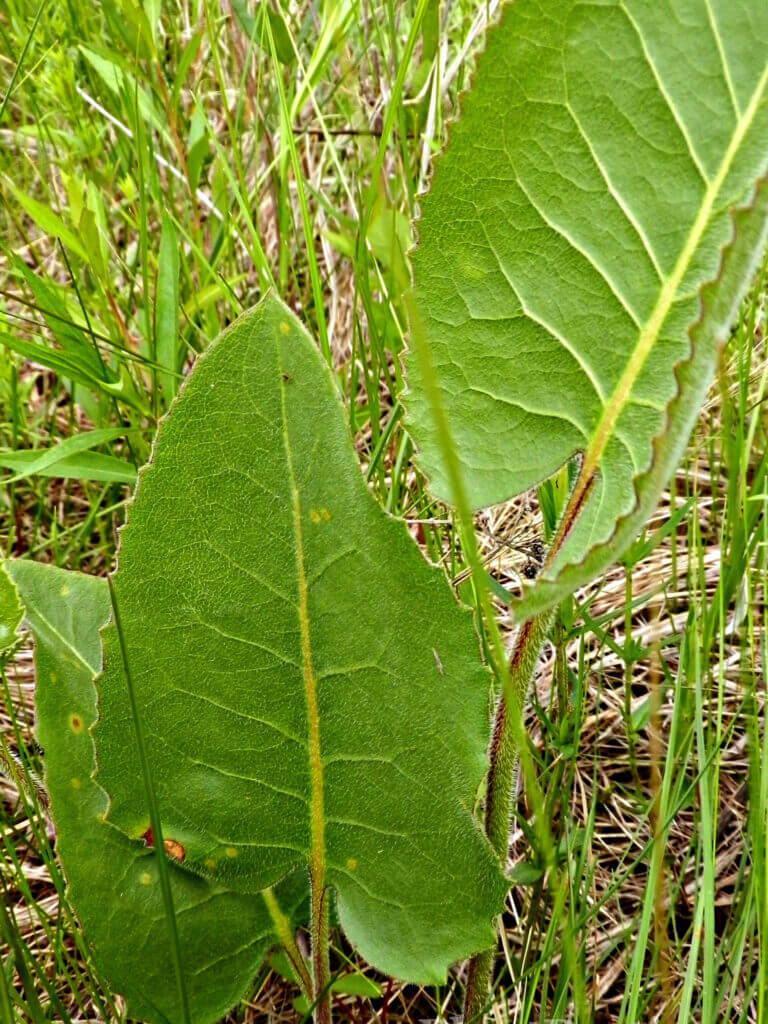
Prairie dock (S. terebinthinaceum) often towers above shorter prairie plants, with its narrow stem and broad basal leaves that can be 12-16 inches long. The rosin of this plant has a pleasant scent. Prairie dock tends to bloom later than the other Silphiums, toward the end of summer. Once established, like the others, it is deer- and rabbit-resistant. Zones 4-8, 3-10 feet.
Rosinweed (S. integrifolium) tends to grow faster than compass plant and prairie dock, and it’s less aggressive than cup plant. Among the Silphiums native to the Upper Midwest, it’s the shortest. It has more tolerance for light shade for part of the day and is sometimes found in open woodland settings. Zones 4-8, 2-6 feet.
While Silphiums, like sunflowers, are in the Aster family, Silphium ray flowers (on the edge) are female and produce the seeds, while the disc flowers (center) are male; which is the direct opposite of sunflowers. Similar to sunflowers, they make a strong statement and they’re hardy, dramatic plants that can make an impact when placed appropriately in the garden or open meadow areas.
To learn more about these beauties and where they might fit in your garden, visit minnesotawildflowers.info.
Beth Stetenfeld is an organic gardener, native plant enthusiast and garden blogger and writer. She’s also a master naturalist volunteer and instructor.
You may be interested in:
Colorful Sun-Loving Bloomers for Partial Shade
Do you have a partially shady garden, with patches of bright sun here and there? Do the sunny spots shift throughout the growing season and…
Late Bloomers
Lilacs blooming in September? Apple blossoms in October? Perhaps you have seen spring blooming plants flower this fall in your garden. It has not been…
Vegetables You Can Plant in Midsummer
As the first part of the vegetable garden season winds down, harvest holes may start appearing in your garden. These are the spots where you…