


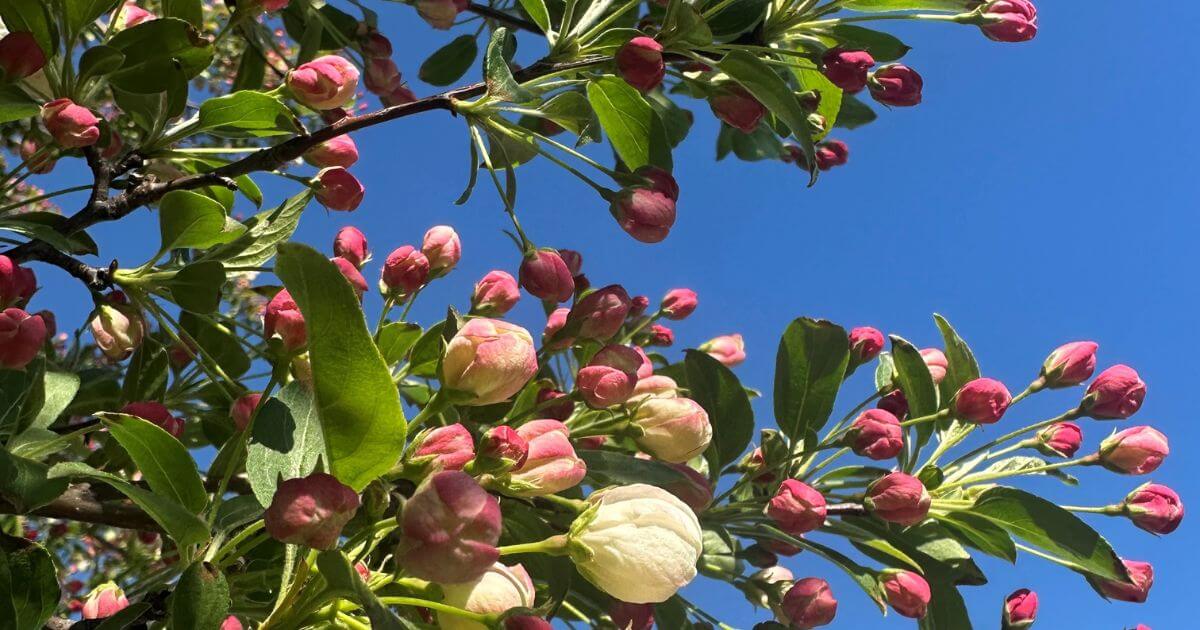
Crabapple Season
It seemingly happens overnight. Every year, crabapple season in Minnesota bursts on scene with a vengeance as the bare branches of flowering crabs are suddenly covered in buds and blooms. Pinks, deep maroons, whites… these early spring bloomers burst to life on city boulevards, parks, home landscapes, clearly signaling that winter has truly retreated and summer cannot be far off.
A great specimen plant in the landscape, crabapple trees come in a variety of sizes ranging from dainty 8-foot-tall dwarf varieties to full-size crabs that will grow more than 25 feet tall and wide. An established crab in full bloom is impressive. Because the fruit can fall and be “messy” in the landscape, a growing number of crabapple varieties are sterile, producing flowers but no fruit. If you have a spot where dropping fruit isn’t a problem, however, crabapples with very small fruit are popular with birds. Larger fruit produced by some crabs make a delicious jelly.
Like apple trees, crabapples are included in the Malus genus, and both types of trees originated in Kazakhstan. The main difference? The size of the fruit (must be more than 2 inches across to be considered an apple) and the sweetness (crabs are much more puckery). The wide variety of crabapples in North America is the result of intense hybridizing in the 18th and 19th centuries to create fruit that would produce tasty hard cider.
Savor this springtime show! Make time for an evening stroll to admire the fleeting beauty of crabapples.


We have a Crabtree growing outside our apartment & it was beautiful when it bloomed but now it looks almost dead. Just a few green leaves on top. Wondering what’s going on?
Any recipe for pickling crabapples my mom always had done it and I was just wondering what exactly goes into a recipe