



Ask a Master Gardener: Propagating Houseplants
Neverending winter has me really searching for any plant-related activity I can find. April just also happens to be a great time to repot and/or propagate houseplants, so I recently took stock of my own collection to see what I could do. Here are the results—and these are just a handful of the many houseplants that can be propagated.
Q: Which houseplants are easy to propagate?
A: Quite a few of them. Here are some examples.
Succulents
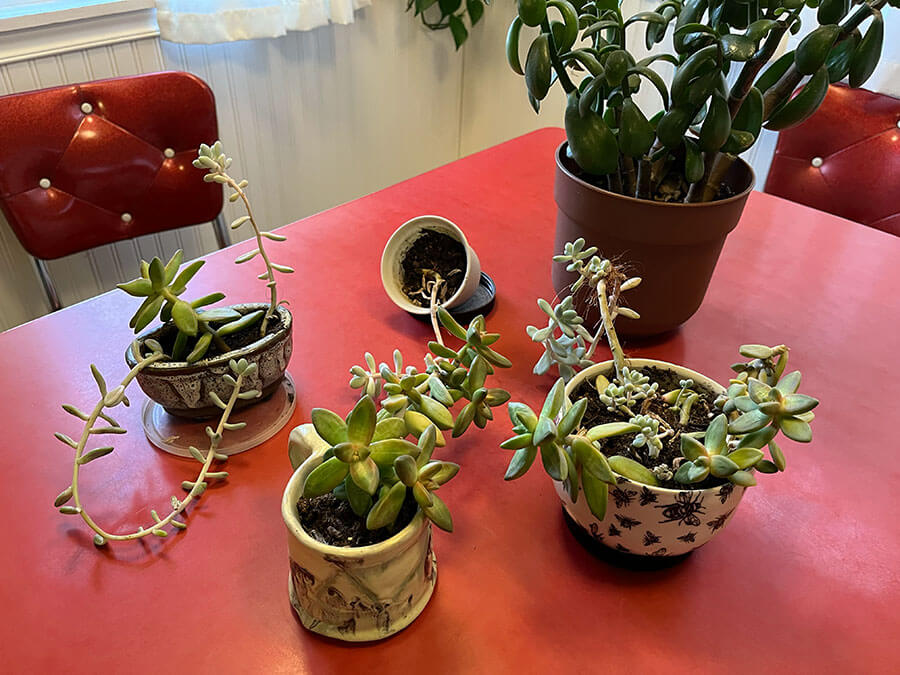
Let’s start with succulents. Several of these have outgrown their pots or are so leggy they belong in a Dr. Seuss book. In the case of the jade plant, I’d simply like more of them because it’s one of my favorites.
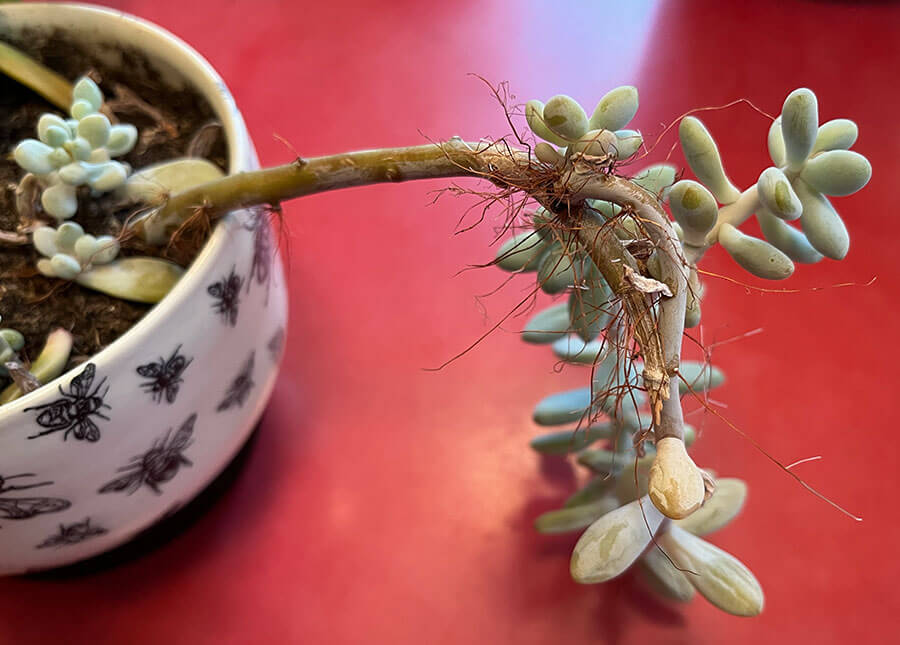
Here’s a close-up of one of the leggier succulents. See how it’s growing roots in mid-air? Time to divide and repot.

I use normal garden pruning sheers to clip off sections of my jade plant. Cutting it like this encourages new, bushy growth.
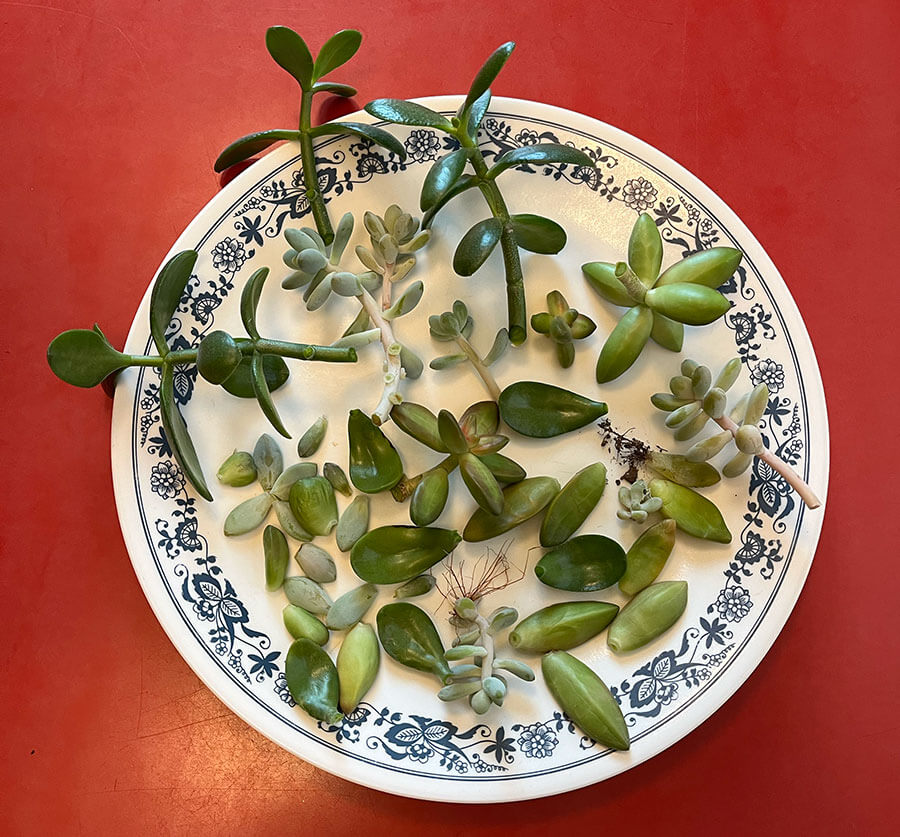
I cut the tops off the leggy plants, plus some leaves. Whenever possible, I try to leave at least ½” to 1” of stem. I leave the cuttings out of direct sunlight on a plate for several days so the cuts have time to heal over.

After the cuts have healed, it’s simply a matter of sticking the cuttings in soil. I’m using a long, shallow pot with drainage holes and cactus mix potting soil.

I place rocks on the soil surface to anchor the baby plants in place and make the planter more attractive. Then I water them in. It’ll take some time for the plants to bounce back from transplant shock and start growing again, so be patient.

From the succulents I wasn’t able to get a stem cutting, I take the leaves and stick them in a little succulent nursery.
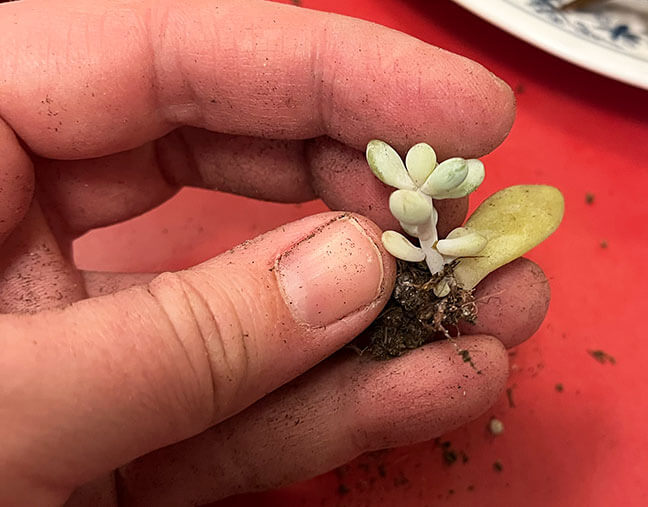
This is one of the babies I just dug out of my previous succulent nursery. The leaf sent down roots, then a new plant started growing. The original leaf will eventually wither away, or it can be very gently removed. Not every leaf that I start in the nursery will successfully grow a new plant, but it’s fun to try.
Pilea
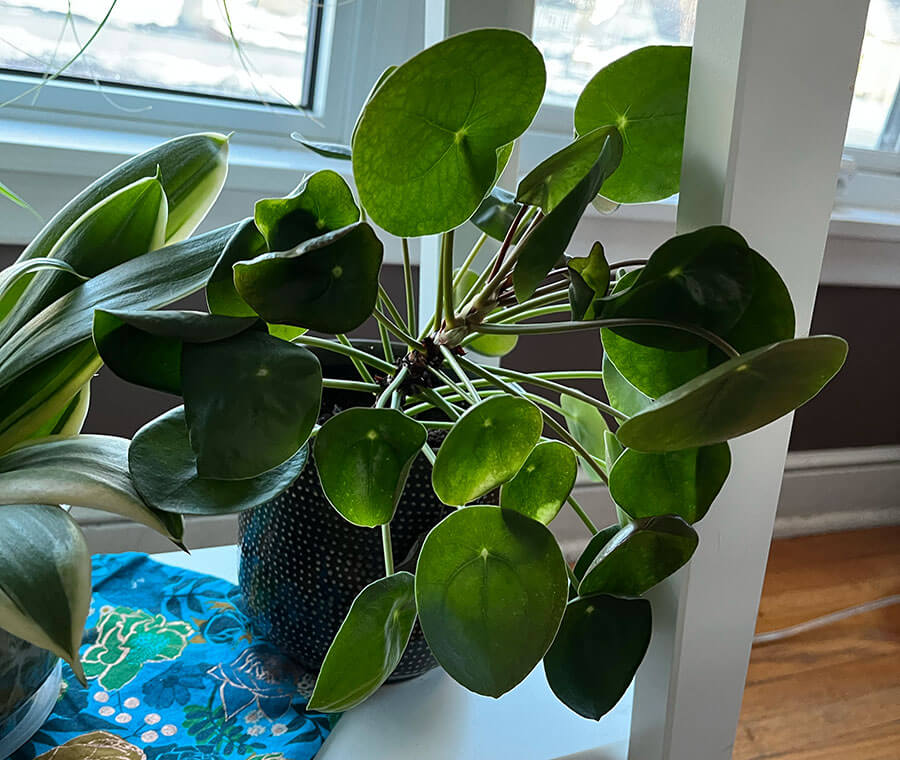
If you’ve ever grown Pilea peperomioides, you know how they practically propagate themselves by growing “pups” right in the pot you planted them in.

The pups are connected to the main plant’s root system, so you’ll need to cut them free with a sharp knife. After cutting the connection, carefully dig the pup out—the more roots it has, the faster it will start growing. I’ve had pups survive and thrive with hardly any roots, though, so don’t be discouraged if you don’t get any.

Place each pup in a small pot of its own, keep it watered (but let it dry out between waterings) and eventually you’ll have more pileas than you know what to do with. I have even composted a few of them, I’m not ashamed to say.
Peace plant

I also divided my peace plant. I’ve had it several years and it was looking decidedly overgrown for its pot. This is another of my favorite plants (who said I have to have one favorite?!) so I pulled it out of its planter and cut it in half with a sharp knife. The process is similar to dividing a hosta.

After cutting it in half, I carefully teased each half apart into 3 or 4 individual plants, then replanted them into two pots. It’s normal for the plant to look a little shocked and wilty the first few days. Just give it time to adjust and make sure to keep it watered.

Final propagation idea: I’d be silly to not mention pothos, because they are terribly easy to propagate. Simply cut off the end of a vine, stick it in water in bright but indirect light for 2-3 weeks, and voila! It will start to grow roots and be ready for planting.
What houseplants do you like to propagate? Leave us a note in the comments. I didn’t even mention spider plants, which might be the easiest of all. When in doubt, Google the plant you’d like to propagate. Chances are you’ll be able to find a tutorial or even a video that shows you how. Just try to use reliable sources whenever possible, such as the U of MN Extension houseplants website.
Have indoor or outdoor gardening questions? Ask them in the comments below. If we don’t get to yours, you can Ask a Master Gardener online or call the Yard & Garden Line at (612) 301-7590.
Other helpful resources:
The Master Gardener Volunteer program
Jennifer Rensenbrink is a University of Minnesota Extension Master Gardener Volunteer for Hennepin County. She somehow has two mini-prairies on her tiny south Minneapolis property.


I have two of those succulents & was wondering if you knew what they were called. In the first photo, not the jade, but the other two that you have in the mixed pots, what are they? Thank you!
Hi Katrina! I couldn’t remember what they were called because I’ve had them so long. But a few internet searches and I *THINK* they are some type of echevaria, and the reason they no longer look like a rosette is because they aren’t getting quite enough light—I just don’t have a sunny enough window to provide perfect conditions for them.
Here is a guide to echevarias:
https://worldofsucculents.com/grow-care-echeveria/
What do you think? Echevarias with slightly less-than-ideal light? That’s my diagnosis. 🙂
Sedum Adolphi