



Planting American Lotus
My daughter, the conservation biologist, gave me a packet of American Lotus seeds for Christmas. A native of shallow lakes, ponds, quiet streams and backwaters of the central United States and eastward, American Lotus (Nelumbo Lutea) is the largest of the midwest’s wildflowers. With leaves that can reach two feet across and flowers the size of soup bowls, both rising above the water line, these majestic flowers are easily distinguished from the more diminutive water lilies.
The seeds, twenty-two in my Christmas gift, look like smallish cap-less acorns. And they’re hard as rocks! Produced in a seed pod that looks like nothing other than a shower head, the seeds require “nicking” to jump-start their way to a growing plant.
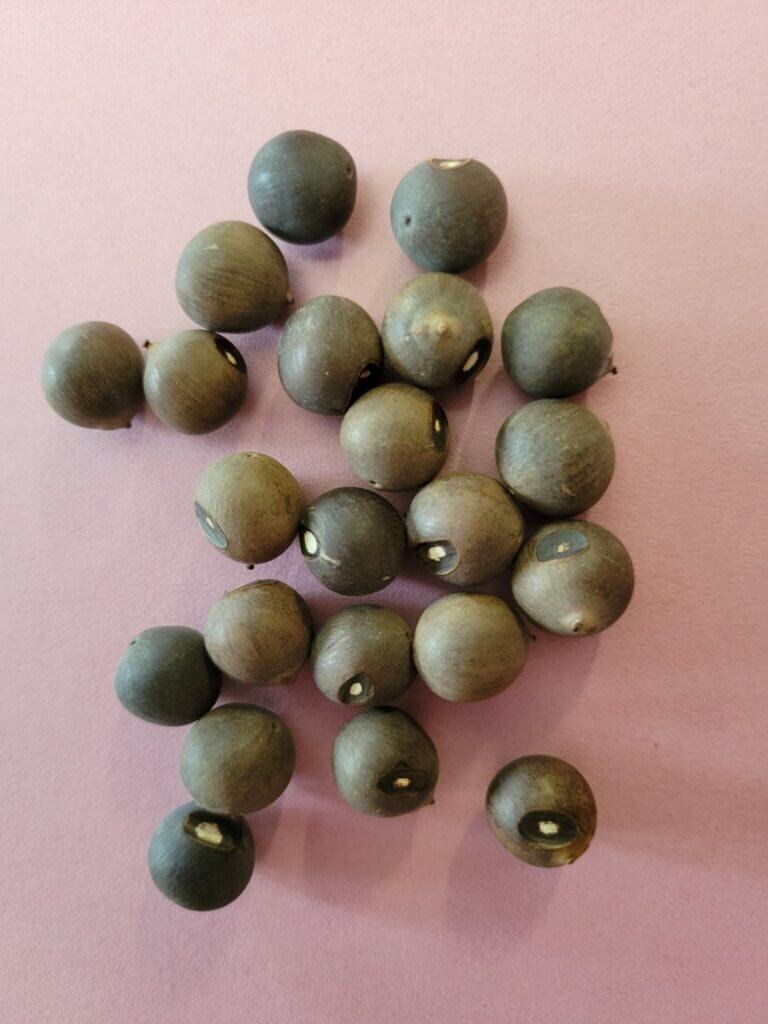
I tried nicking the seeds with a serrated knife as well as rubbing them on sandpaper. Those efforts produced little effect but the spinning wheel of a bench grinder bore through that tough shell to reveal a glimpse of the white inner seed. This scarification allows water to enter the seed and the sprout to swell and emerge. I do wonder how this happens in the wild. A food source for wild animals, it could be that just enough of them are cracked and dropped by beavers, muskrats, and otters to ensure survival of the plant progeny.
My intention was to grow several plants for the two small ponds in our yard and maybe a few would thrive in our larger wildlife pond. I put five seeds in each of two glass pint jars and half filled them with water. They all sank to the bottom as good healthy seeds should do. I lobbed the other 12 seeds over the wildlife pond at the edge of our woods.
I started the seeds on the 15th of May and changed the water daily (the goal is to sprout the seeds, not ferment them). By the end of the month, five of the seeds had sprouted, sending green tendrils up and above the surface of the water. It may be that the other seeds remained dormant as these seeds can do for many years.
Clean clay soil is preferred for water lotus. Organic matter is not recommended because it will simply float to the surface. The pots that contain the growing tubers need a minimum of three inches of soil. Because the pots will be placed in water, with about 4 inches of water above the pot, they don’t need drainage holes.


I stirred, sifted, and sieved clay soil and sprinkled two quarts in each of three containers about 10 inches across and 6 inches deep. I poured water over the clay until it no longer absorbed water and then made dimples in the soil to accommodate the sprouted seeds. After placing the seeds, I sifted more clay over the seeds to anchor them, up to the 3 quart mark on the container, making sure the sprouts remained free. I then filled the containers to the 4 quart mark with water. Because I had sifted the dry clay, the water became cloudy, so I allowed the clay to settle before adding water to the top of the containers. And then it started to rain and this blessing from the heavens filled the containers.
Water Lotus can’t be expected to bloom the same year they’re started from seed. Depending on the growing location, the growing tubers may need to be sunk deeper in a pond to avoid freezing over the winter, or taken up and replanted the next spring.
Source for American Lotus seeds: Prairie Moon Nursery, www.prairiemoon.com
Instructional videos for starting lotus:
YouTube, How to Plant Lotus Seeds
YouTube, How to Plant Lotus Tubers
Nancy Packard Leasman is a columnist, artist, and gardener who maintains 40 acres in central Minnesota. See twiggerprofiles.blogspot.com, etsy.com/shop/leatherwood and qdpainting.blogspot.com
Photo credit: The American Lotus flower photo (featured) is courtesy of, and with permission of, Dawn Tanner, PhD, Conservation Biology. The other photos are courtesy of Nancy Packard Leasman.
You may be interested in:
Climate Resilient Pollinator Plants for Minnesota
This is a short list of pollinator-friendly and climate-adaptive plants, compiled by the experts at the University of Minnesota Bee Lab, that provide food and shelter for Minnesota pollinators.
When to Plant Your Vegetable Garden
Updated May 2025 Planting a vegetable garden isn’t just a one-day affair. It’s often done over several weeks, depending on the weather and other factors….
Plant Selection for Upper Midwest Landscapes: Plant Elements of Design Database