



Herbal Teas for Your Garden
Where is your favorite tea source? How about making it a corner of your garden?
Herbal teas are all the rage and it takes only a little planning and the addition of a few accoutrements to make your garden the best tea source around.
Give your tea source a little protection by planting it in front of a fence, rock wall or building. Delicate herbs, like lavender (in our growing region), will appreciate the kindly consideration and a bit of extra mulch in the fall.
Best Plants for Herbal Teas
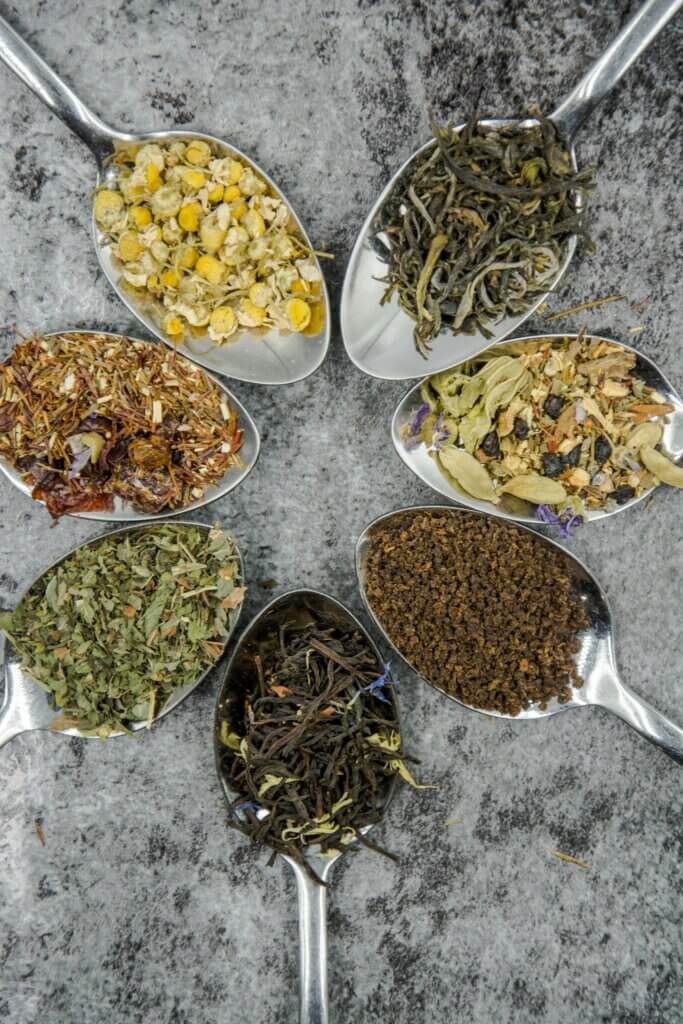
Now, what to plant? Rather than planting every herb that might be used in teas, think about your own likes and dislikes. While peppermint is a natural choice, and there are many varieties, if you don’t like mint—don’t plant it.
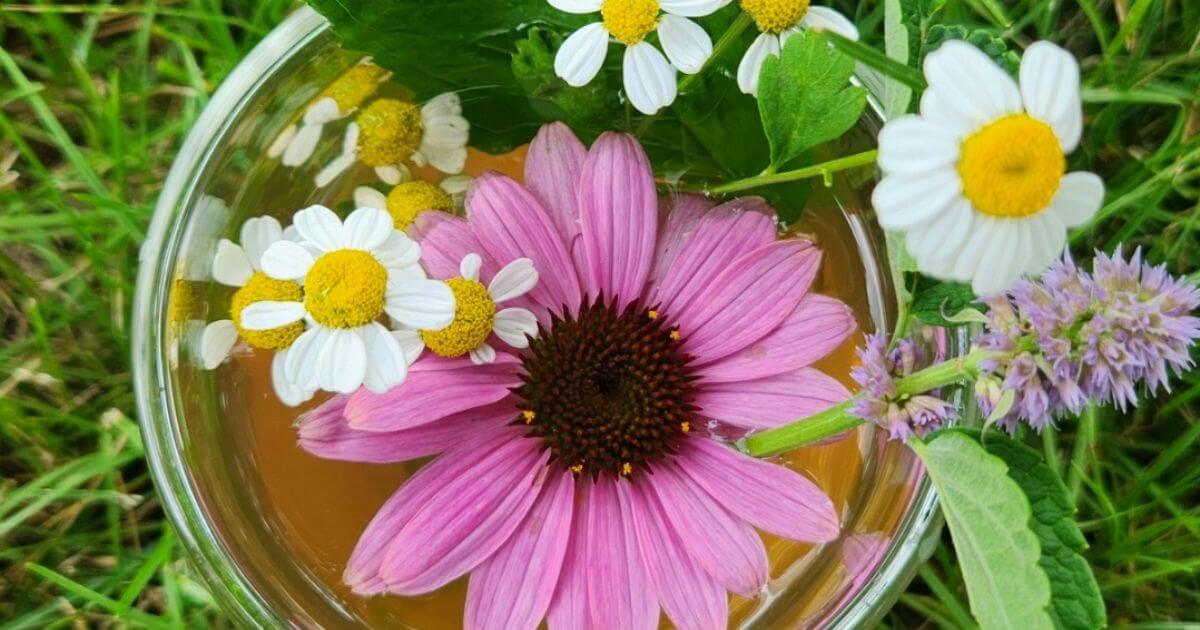
Some tea source suggestions: chamomile, lemon balm, lemon verbena, roses (petals and hips), calendula, mullein, marshmallow, sage, oregano, savory, thyme, raspberry, yarrow, marjoram, anise hyssop, and of course peppermint and lavender. Add rosemary and geraniums in pots. Consider ginger and echinacea (cone flowers) for their roots. Do more research for a medicinal tea source garden. (Search “medicinal teas” or “health benefits of herbal teas” for a garden’s worth of useful information.)
Also, don’t think that your tea source must be one and done. Gardens are usually works in progress and your tea source will be, too. Some plants will establish, settle in, and be happy for years. Others that could have been stars may need to be replaced by a standby, also-ran, or stunt double.
Planning a Herbal Tea Garden for Easy Harvesting
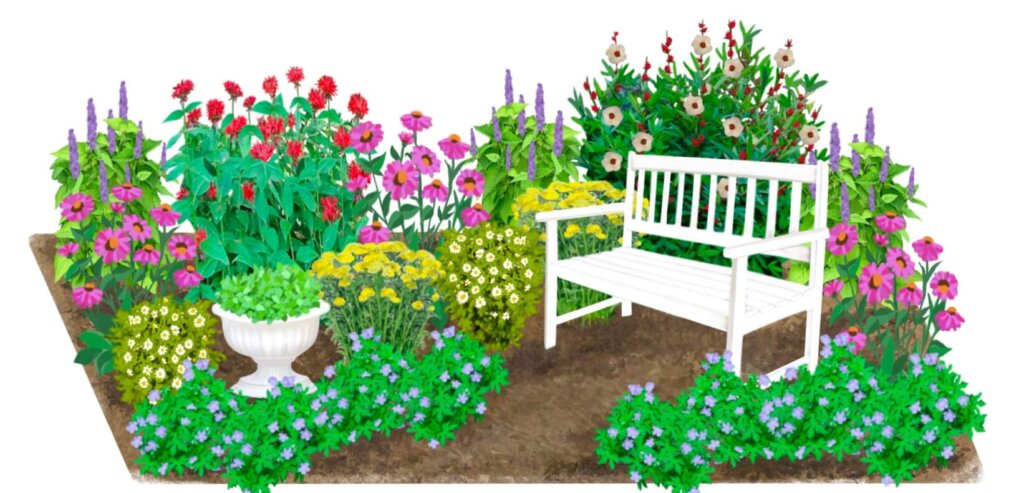
Like planning a good photo, put the tall ones in the back and the shorties up front. Also consider where perennials will be most comfortable (sun or shade) and where a few annuals might be easily tucked in. Study plant descriptions in garden catalogs or on plant tags to know growing requirements and heights of mature plants.
Harvest herbs when they’re at their peak of health and flavor. Choose morning for a harvest time over later in the day before volatile oils have had a chance to burn off. Use a few leaves for fresh tea or dry the plants in a dark place with good air circulation for use in blends.
Herbal Tea Blends and Recipes
To create tea blends, use 40-70% of a base herb (flavor or desired effect), 20 – 40% of supportive herbs (to strengthen or enhance the properties of the base herb) and 10-20% of accent or catalyst herbs (more potent flavor or stronger action). Accents may also be material that doesn’t come from your garden such as dried orange or lemon peel; fennel seeds, cinnamon sticks, cloves; foraged plants like vervain, sumac, wild yarrow.
Examples:
Relaxing tea (use 1-2 tsp. of dried herbal blend)
- Chamomile, 1 cup
- Lemon verbena, ½ cup
- Rose petals, ½ cup
Stomach soother (for one cup)
- Mint, 2 tsp.
- Fennel seeds, ½ tsp.
- Ginger root, ½ tsp.
If you’re not averse to garden kitsch, add a tea table and chairs, a sign or two, and a decorative tower made from a vase, glass plate, and tea cup. It’s your favorite tea source! Enjoy!
Nancy Packard Leasman is a columnist, artist and gardener who maintains 40 acres in central Minnesota.
Reading over Email very interesting.
For the Flower garden at the Arbor.
Do we get in Free or is it 20.00??
Also Tea Garden, we use the seeds from where? Did I miss read something.? Snow Storm so did not made it & that’s one of our perks?
When is the new magazine out?
A member