



Hello, Dahlia!
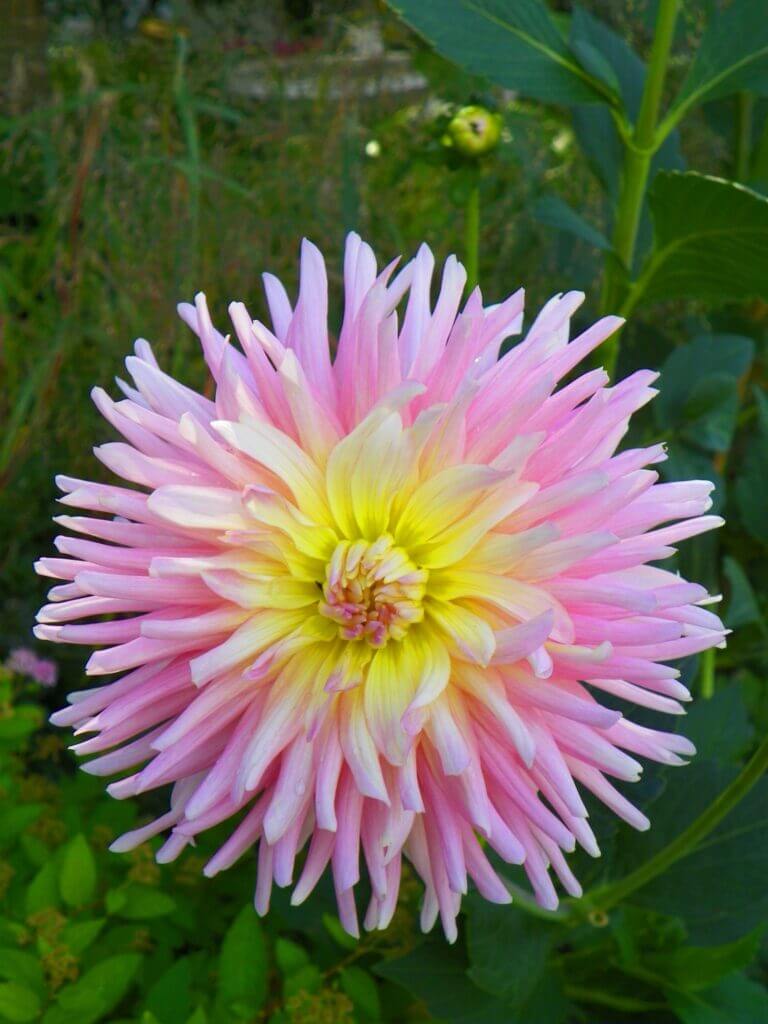
Dahlias are a true knock-your-socks off plant. Nothing produces a “ta-da” in your garden like the dahlia, especially at the time of year when our garden enthusiasm can begin to wilt in the late summer heat. They will begin their blooming around the fourth of July and go prolifically until a killing frost.
Varieties are endless. They sport their splendor in an endless array of kicky colors; their genetics make them easy to hybridize so the plant scientists have gone crazy! Sizes range from one-inch poms to the infamous “dinner plate” dahlias that can grow to 14 inches across or more. Plants can be anywhere from 12 inches tall to over six feet.
When starting out, consider starter plants rather than tubers. Dahlias as starter plants are all over in the garden centers in the spring and this is great way to go. It’s so easy and they aren’t just for planting beds. They do wonderfully in containers.
That said, planting tubers really opens you up to all the varieties this flower brings. Generally, tubers are planted three inches deep, at an angle, with the growing tip pointed up. And don’t fret if your tubers look a little shriveled, like old potatoes. They will likely rebound into lush plants.
A to-do list for drop-dead dahlias
Dahlias are sun worshippers who need a minimum of six hours of full sun. This part is pretty much non-negotiable. You really do need a full sun location to welcome them to your yard.
They have hearty appetites and thrive on being fed. Begin by supplementing soil with compost. Then plant the tubers with a slow-release granular fertilizer and water with a water-soluble fertilizer when buds form. This regime is what gives you the real beauties.
They are also thirsty devils. A minimum of one inch of water, by rain or hose, is needed all growing season. Up the watering to two inches when flowers begin to bloom.
Oh, yes, Japanese beetles love dahlias as much as we do. I think the best approach is to dutifully knock them into a plastic bag every morning (or whenever you see them) and dispose of them. Good news is the bees love dahlias, too!
Pinching back the plants, much like pinching back mums, forms branches and more branches means more blooms. The process is known as topping. After three or four sets of leaves have formed, pinch the stem off above the third set. It’s a must-do to get the really impressive blooms.
Disbudding is a second technique of removing side buds to make an extra special center bloom.
Dahlias need support. I staked mine, which works well. When you plant your tubers, or starter plants, put the stake in the hole a couple inches from it. When it gets a couple feet tall, begin to tie the stalk to the stake with garden twine.
The Minnesota Dahlia Society has a great website that details these techniques and is chock full of info. It’s an education in itself. They also give advice on how to dig and overwinter your tubers. Bookmark it and check out their sale in May of every year. You will get rockstar dahlias and a ton of great advice from friendly, fellow gardeners who have fallen deeply in love with the intoxicating dahlia.
Yes, dahlia are overall a bit high maintenance, but I can assure you, they are well worth the effort.

Eric Johnson is a longtime contributor to Northern Gardener, blogger and lifelong gardener in Roseville, Minn.
You may be interested in:
Dahlia
Let’s take a break from the cold, the slop and the just endlessness of January to appreciate one of the quintessential plants of summer: the…
Saving and Storing Dahlia Tubers
Revised July 2025 Since dahlias are native to Mexico, it’s not surprising that they can’t survive our winters here. What makes them so popular with…
How to Dig and Divide Dahlia Tubers
Dahlias are native to Mexico, but these stunning tropical plants shine in the northern garden, too. A member of the aster family, dahlias look a…