


Arranging Flowers Cut from the Garden
By midsummer, most gardens are bursting with blooms. Take advantage of the flowers, foliage and even fruits, vegetables and herbs in your garden—enjoy them indoors in lush, hand-gathered floral displays. Here are tips and tricks for creating beautiful arrangements, from cutting in the garden to conditioning to designing.
Tips for cutting from the garden
Always:
- Bring a bucket of cool water and place cut stems in water immediately after cutting from the plant.
- Use sharp, clean scissors or shears. Blunt tools will crush the stem, block water uptake and can damage the plant.
- Cut back to a stem intersection or leaf to avoid leaving bare stems on the plant.
- Cut stems long—this makes them easier to arrange and allows for more options on stem length when you design.
- When cutting bulbs, such as tulips or daffodils, cut only the flower stalk and leave the foliage to photosynthesize. Use your first finger and thumb, follow the flower stalk to the base of the plant and snap off.
If you can:
- Cut when it’s cool, i.e. in the morning. Cutting in the heat of the day or full sun is when the plants are transpiring more actively and are moisture deficient. They will be more likely to wilt after being cut midday.
- Cut after a thorough watering or soaking rainstorm.
- Take from the back or less visible side of the plant.
- Cut flowers when they are in loose bud with color showing or at different stages of bloom- this will extend your vase life. Exception: Dahlias, Roses and Zinnias do not open from bud stage after being cut.
- Cut a flower or two from various plants rather than every flower from one plant.
- Let cut stems sit in a bucket of cool water in a cool room for several hours or overnight to fully hydrate before designing.
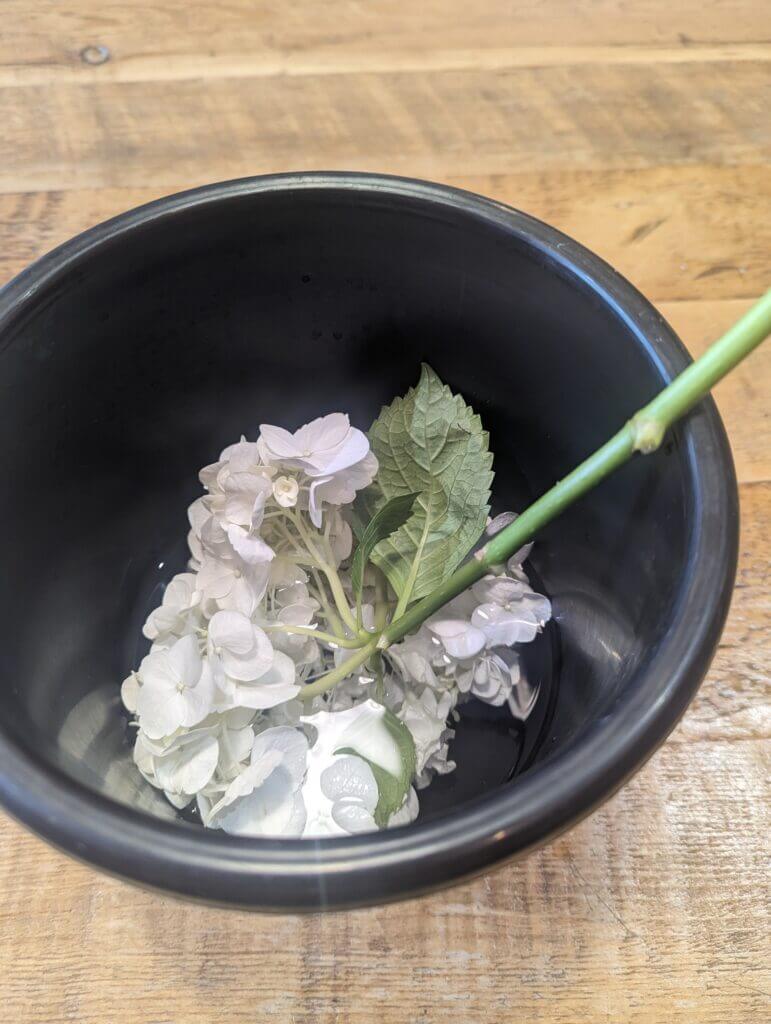
When cutting hydrangea flowers
My best advice is to plan ahead when using hydrangeas. Soak the plants in the garden the evening before and cut the flower heads the following morning. Whether or not you do the above step the next step will make your hydrangeas last days longer than you might expect.
After cutting the hydrangeas, remove all leaves from the stems. Next, soak the flower heads upside down in a bucket or sink full of water with the heads in the water and the stems in the air for 20 minutes. After 20 minutes, gently shake excess water from the flower head, recut the stem and place in a bucket of water until ready to design.
Conditioning
After bringing flowers inside, remove most to all of the leaves on the flower stems with your fingers or a sharp scissors. If you have one, mix a floral food packet in fresh cool water. Floral food will provide nutrients for the flowers and help the colors stay vibrant, keep stems clear to aid in water absorption and act as an anti-bacterial, keeping the water clear. Let stems hydrate for a few hours to overnight, if time allows.
Design
Now the fun part! Floral design is an art form. There are rules and reasons for doing things a certain way, but don’t let that discourage you. Once you know some basics, it’s fun to play around with your materials and bend some of those rules.
General guidelines:
- Start with a clean container.
- Always remove the lower leaves from the stems—any foliage that will be below the water level in the vase to prevent rotting and bacterial build up.
- Cut stems at an angle to maximize the surface area for water absorption and prevents stems from sitting flat on the bottom of the container.
- In a garden to vase arrangement, larger flowers – those with more visual weight– should be placed lower in the design while smaller flowers can be placed higher as though they are floating over the top.
To incorporate foliage, try adding hosta leaves, branches from shrubs or trees such as Ninebark, Cotinus (smokebush) and maples or oaks. Ferns, coleus and even Heuchera, Caladium or Alocasias work well, too. I like to use 2 or 3 different varieties showing different colors, leaf shapes and textures. Start by inserting these into the vase with the stems crossing. This creates a grid and the foundation into which all the floral stems can interlock through.
Mass, form and focal flower are all terms used interchangeably to describe large-flowered stems, typically round in shape such as a rose, dahlia, sunflower or chrysanthemum. They are traditionally used as the focal flower in an arrangement and tend to be the largest flower, having the most visual weight in a composition.
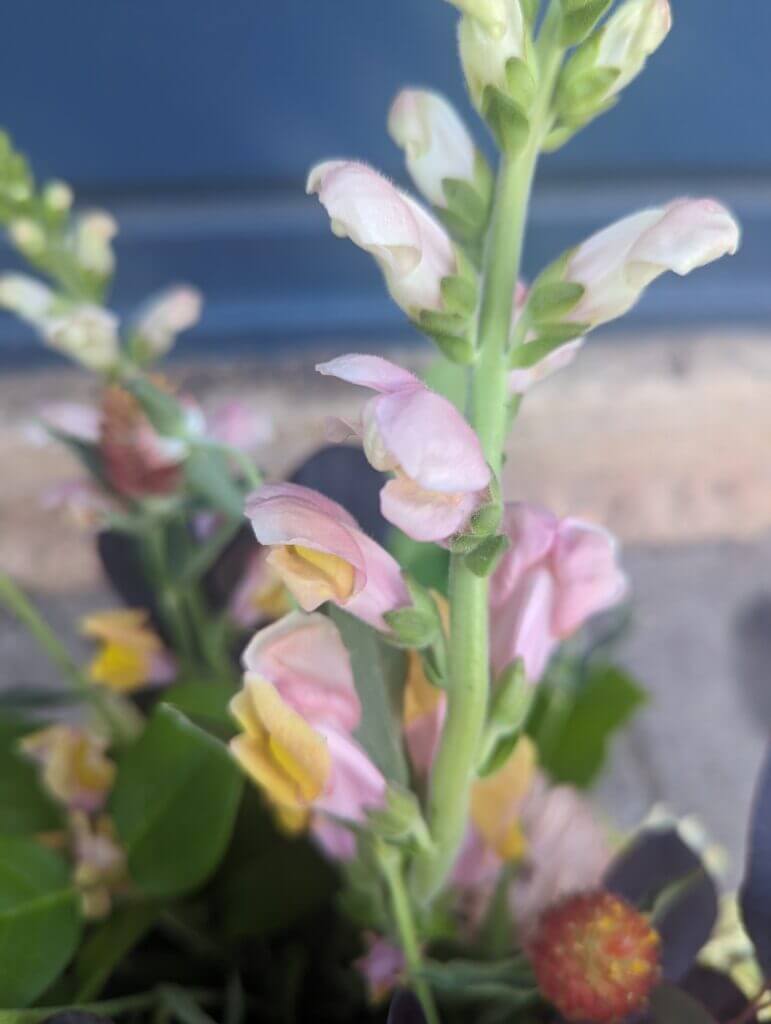
Line flowers such as snapdragons, gladiolus, bells of Ireland, Agastache and delphinium, have several florets growing one on top of another along the length of a stem. These types of flowers can be used in a design to add height or to literally create a line directing the eye to the focal area.
Branches such as curly willow, or foliage such as a sword fern (aka Boston Fern- don’t be afraid to cut from your houseplants too!) can also be used in place of a line flower to create the same effect.
Accent flowers are smaller flowered stems and are placed in an arrangement to compliment and highlight the focal flowers. Sweet William, Asters, and Astrantia are examples of accent flowers.
Color is an entire subject on its own, but if you like it together, chances are it works! When in doubt, try to find an accent flower that bridges the two (or more) colors you have in the arrangement. Don’t forget, there are lots of colored foliage such as Coleus, that might do the job nicely.

How to Extend Vase Life
- Use floral food, if you have it.
- Change the water frequently.
- Different flowers will last different lengths of time. Try including longer lived stems such as foliage, seed heads and grasses. If a flower stem fades, don’t be afraid to remove it and replace it with something else.
- Display your arrangement in a cooler room out of direct sunlight. That said, if the location where you will enjoy the flowers most is hot and sunny, absolutely display your flowers there. They may lose a day or two of longevity, but your gorgeous arrangement will be right where you want it.
I hope these tips inspire you to try cutting and designing with flowers from your garden. Remember that all the above tips and tricks are best advice to maximize vase life. Sometimes a quick snip of a few stems set in a vase of water is all you need. The important thing is to enjoy your gardening efforts in a new way and display those beautiful blooms indoors!
Jenn Hovland, CPFD floral designer and owner of Studio Louise Flowers in downtown Stillwater, MN, loves to help us find beauty and connection with nature in our busy lives. Swing by her shop or follow her on Instagram at @studiolouiseflowers.
You may be interested in:
4 Cut Flower Garden Designs
Garden #1: Cut Flower Garden with Annuals I’ve always grown flowers for the value they add to our green landscape. I love the way a…
Grow a Cut Flower Garden
With farmers’ markets overflowing with beautiful bouquets of local flowers, it seems everyone is thinking about adding a cutting garden. Even a small 4-by-4 foot…
Plants for a Cutting Garden
Wondering what to grow in your cutting garden? Check out this list of best plants for a cut flower garden from author Susy Morris. For…