


Framing Your Winter Garden
The key to having a satisfying view out your winter-gazing window is to extend the season in both directions and think outside the box. I’m going to give you a long list of plants to consider for your winter garden, but a few plants merit more of an explanation.
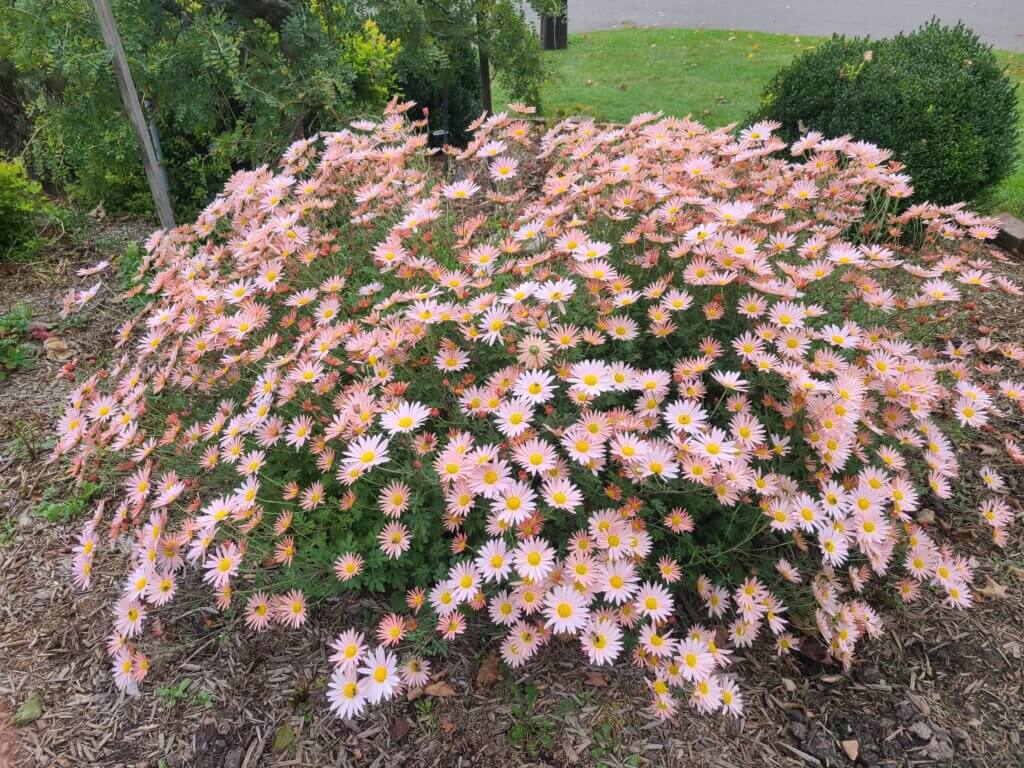
If the only chrysanthemums you know are the ones already blooming in the fall, you are missing out on the northern gardener’s secret weapon. Korean mums (Chrysanthemum rubellum) bloom in mid-October, later than the disposable mums offered on every corner. Yes, that’s often after the first frost, but these mums can take it and keep on blooming. A hard frost doesn’t stop them either. In fact, they usually get buried in snow before they’ve quit. They are hard to find, even online, but don’t give up!
The Christmas rose (Helleborus niger and hybrids) will open a few blooms before snow falls. Then it remains in suspended animation until mud season, when it blooms profusely in March. These hellebores function as bridge plants, blooming in the end of autumn and the beginning of spring. Look for hellebores described as blooming in late winter or early spring, not Lenten roses. Keep your eyes peeled for these plants around Easter sold in your supermarket or big box store as seasonal holiday decoration. You can harden them off and plant them outside after the soil thaws.
And don’t forget, you can also improve the view with artificial color and structure provided by sculpture, hardscaping and colorful garden art.
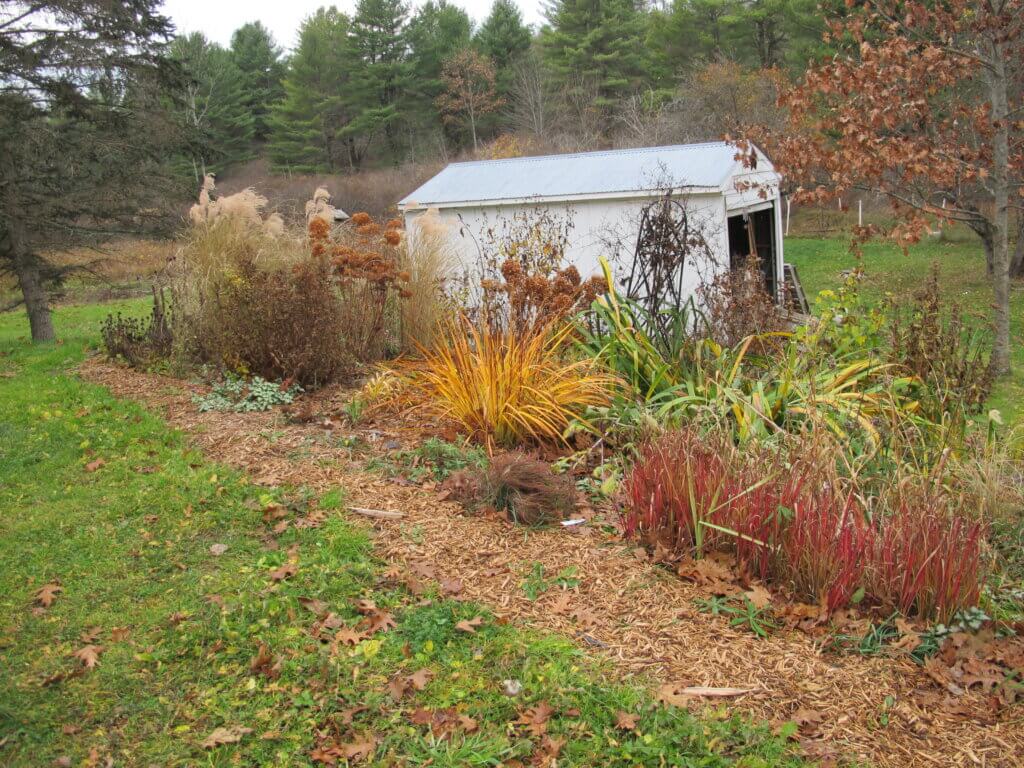
Stick season: no leaves on the trees, but no snow
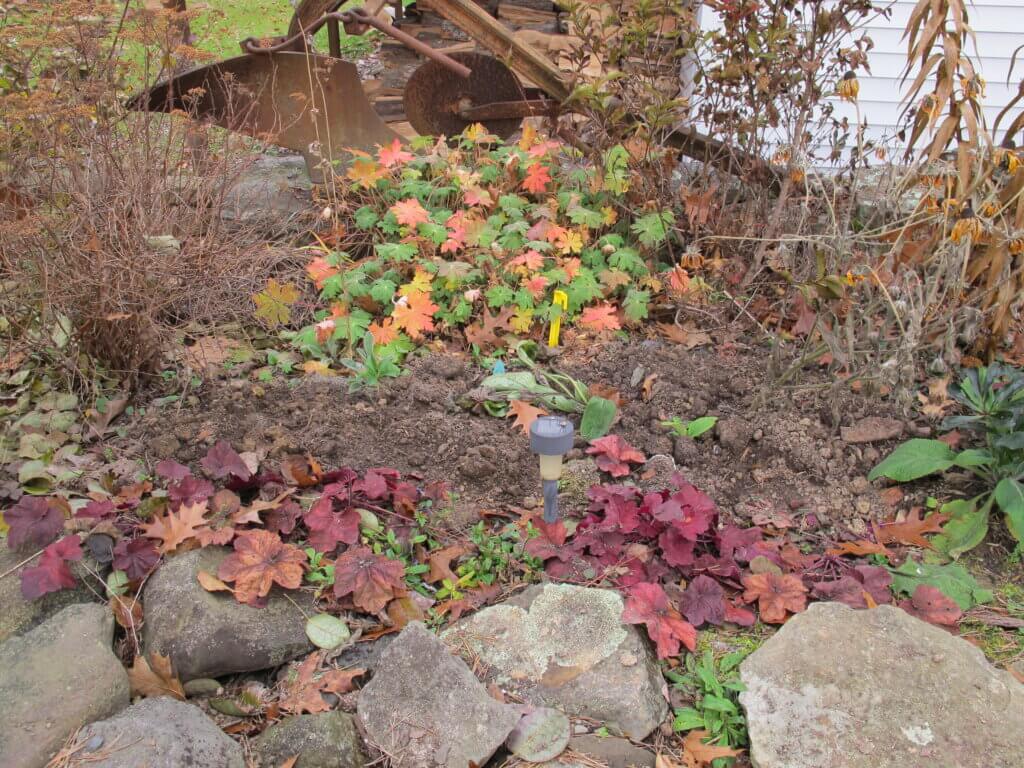
These have attractive foliage in autumn; they either retain their growing season foliage or look good going dormant.

Siberian iris (Iris sibirica) (USDA Zone 3)
Jacob’s ladder (Polemonium reptans) (Zone 3)
Dianthus sp. (hardiness varies)
Golden variegated sweet flag (Acorus gramineus ‘Ogon’) (Zone 5)
Spotted dead-nettle (Lamium maculatum) (Zone 3)

Amsonia hubrichtii (Zone 4)
Heucheras such as Dolce® Cinnamon Curls™ (Zone 4), Northern Exposure™ series (Zone 3)
Big-root geranium (Geranium macrorrhizum) (Zone 3)
Ornamental grasses such as Panicum virgatum Ruby Ribbons® (zone 4)

Golden feverfew (Tanacetum parthenium ‘Aureum’) (zone 4)
Bergenia with winter color, such as ‘Bressingham Ruby’ or ‘Winterglut’ (zone 3)
Foxglove (Digitalis purpurea) seedlings (zone 4)
These will still be blooming after frost. Really!
‘Rozanne’ geranium (Geranium Rozanne® (‘Gerwat’)) (zone 5, zone 4 with mulch)
Hardy chrysanthemums (Chrysanthemum rubellum) ‘Sheffield Pink’ (aka ‘Single Apricot’ and ‘Hillside Pink Sheffield’, Zone 3), ‘Will’s Wonderful’ (Zone 3), ‘Cambodian Queen’ (Zone 3), ‘Mary Stoker’ (Zone 4), ‘Prairie Lavender’ (Zone 3), ‘Bronze Elegans’ (Zone 4), ‘Mei Kyo’ (Zone 4), ‘Emperor of China’ (Zone 4), ‘Venus’ (Zone 4), ‘Clara Curtis’ (Zone 4),’ Duchess of Edinburgh’ (Zone 4), ‘Paul Boissier’ (Zone 4), ‘Old Fashioned White’ (Zone 4), ‘J. C. Weiglan’ (Zone 3), ‘Penelope Pease’ (zone 3)
Johnny-jump-ups (Viola tricolor) (Zone 3)
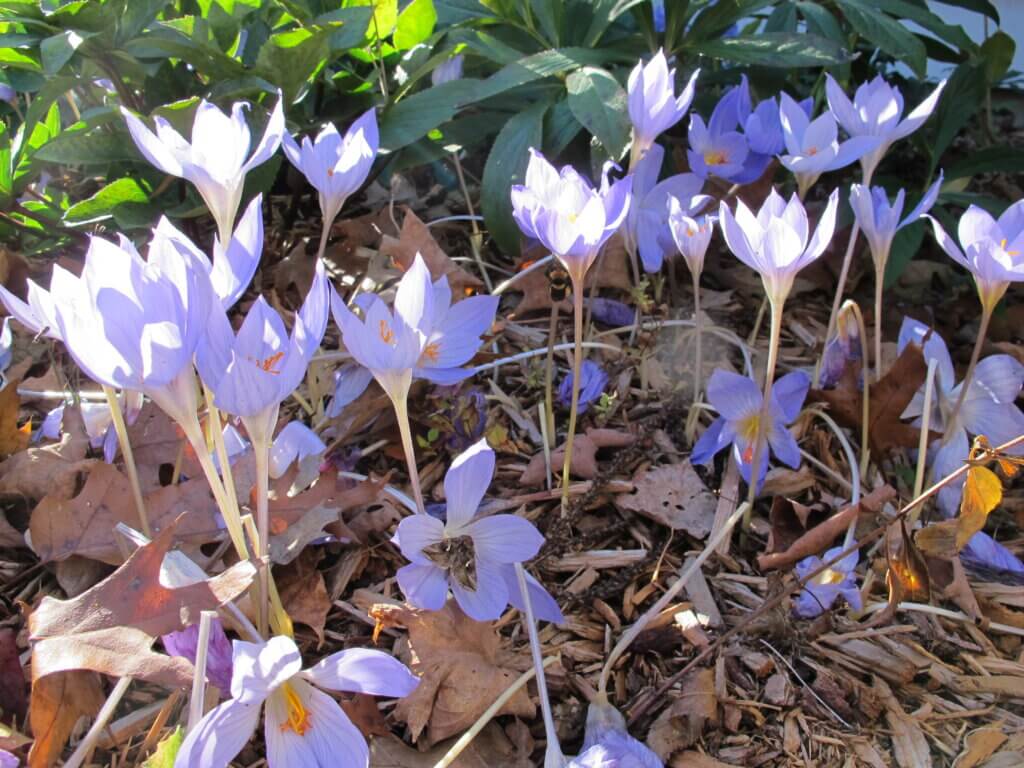
Hardy autumn crocus (Crocus speciosus) (zone 4)
Christmas rose (Helleborus niger & hybrids) such as Helleborus Gold Collection®, Ice N’ Roses® series, Winter Jewels® series, Frost Kiss™ series.
Best-looking plants for snow season
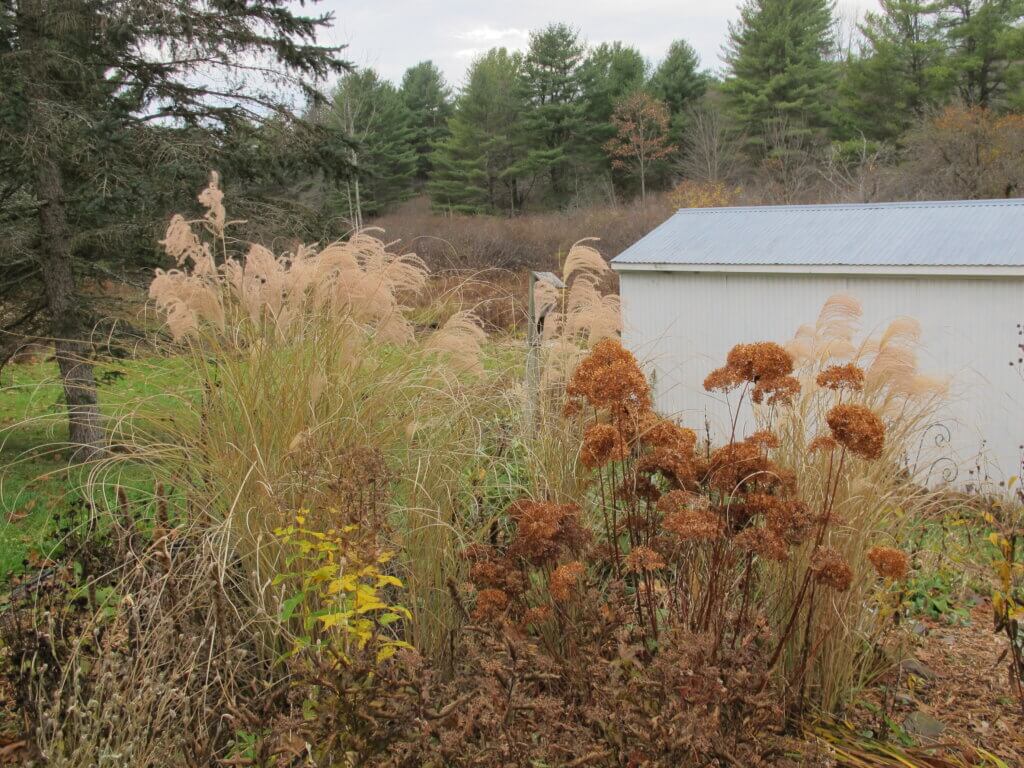
These provide structure for snow to highlight:
Red Majestic contorted hazel (Corylus avellana ‘Red Majestic’) (zone 4)
Poppy seedheads (Papaver somniferum, P. rhoeas) (annual)
Coneflower seedheads (Echinacea and Rudbeckia species) (zone 3)
Panicle hydrangea (Hydrangea paniculata) flowerheads (zone 3)
Smooth hydrangea (Hydrangea arborescens) flowerheads (zone 3)
Showy stonecrop (Hylotelephium spectabile) flowerheads (zone 4)
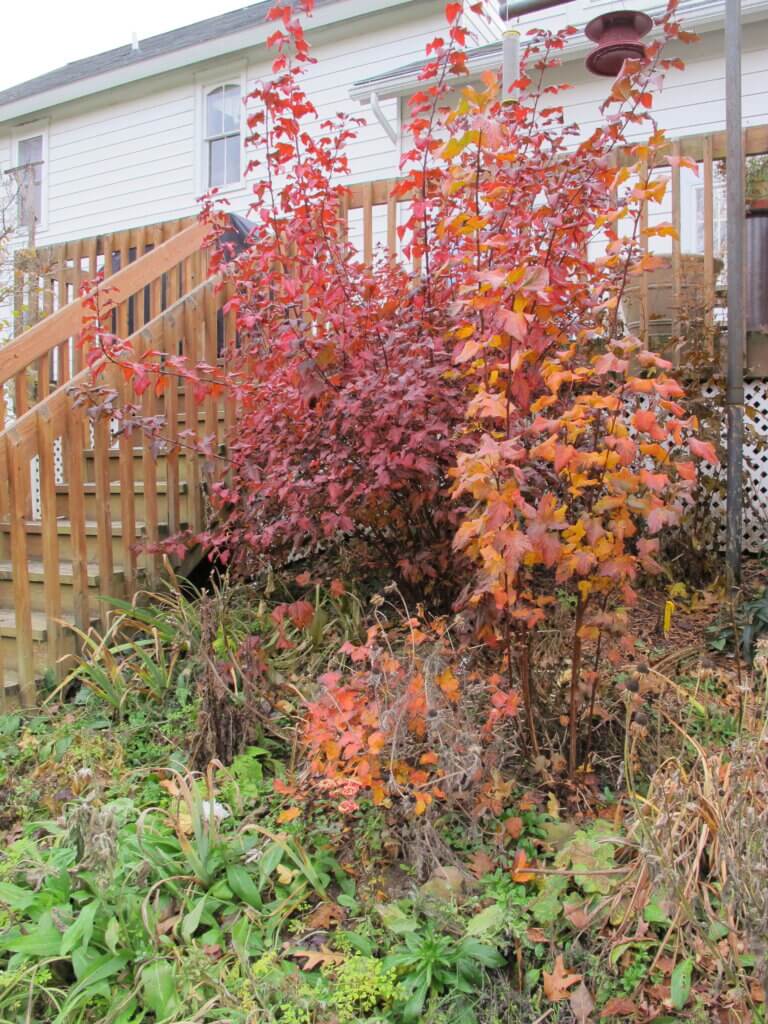
These provide color with bark or berries:
Twig dogwoods (Cornus sericea) (zone 2)
Bloodtwig dogwood (Cornus sanguinea) (zone 4)
Coral bark willow (Salix alba ‘Britzenzis’) (zone 2)
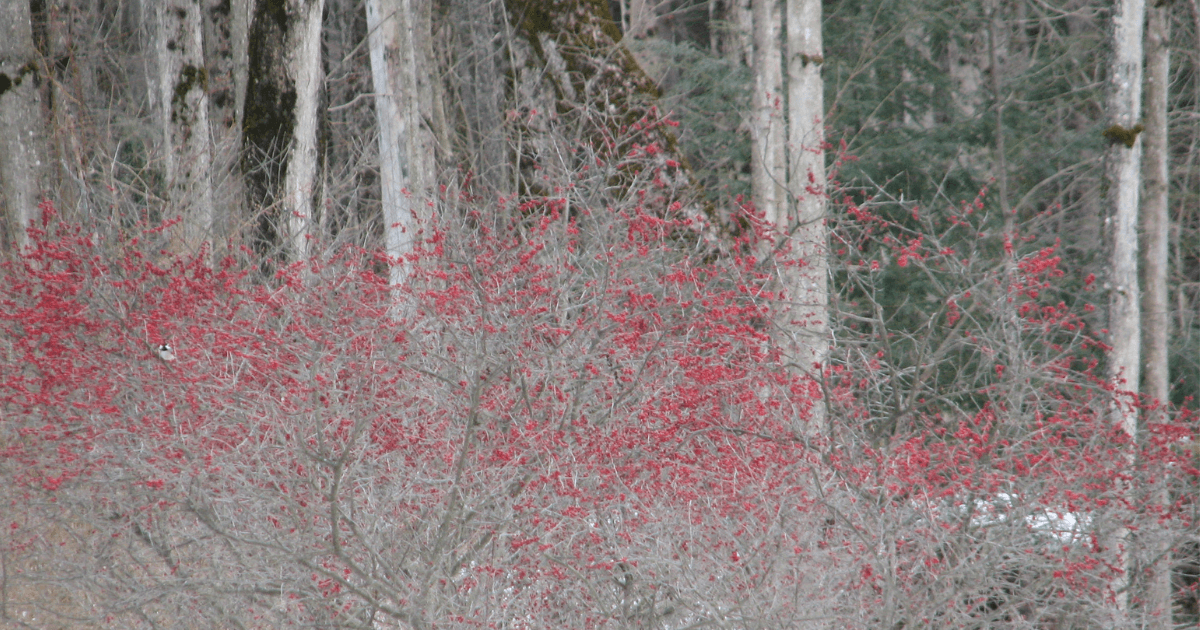
Winterberry (Ilex verticillata) berries (zone 3)
Mud season: the last of winter, the first of spring
The species listed below are all flowers:
Pink pussy willow (Salix gracilistyla ‘Mt Aso’) (zone 4)
Black Cat pussy willow (Black Cat® Salix chaenomeloides ‘Lubbers Zwart’) (zone 4)
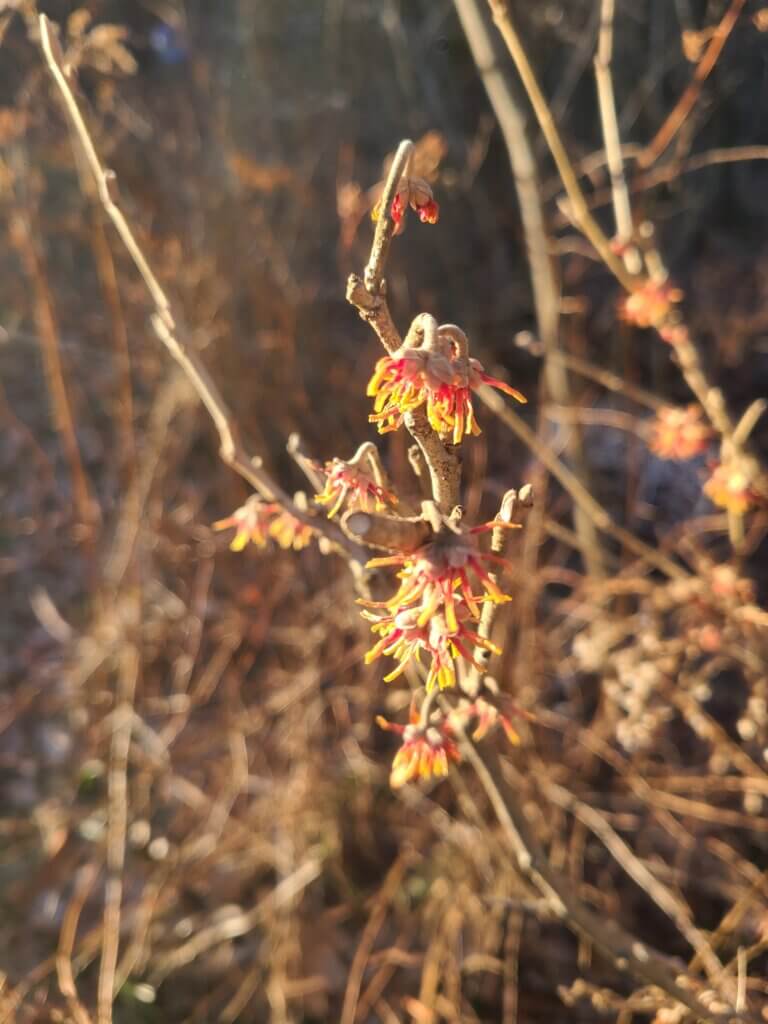
Ozark witch hazel (Hamamelis vernalis) (zone 4)
Winter aconites (Eranthis spp.) (zone 3)
Snowdrops (Galanthus woronowii) (zone 3)
Tommy crocuses (Crocus tommasinianus) (zone 3)
Helleborus niger & hybrids—these were listed in Stick Season, because that’s when they start. But they continue blooming once the snow melts.
Further Reading
The Prairie Winterscape by Barbara Kam and Nora Bryan (Fifth House, 2003)
Fallscaping by Nancy Ondra (Storey Publishing, 2007)
Note: This post supplements ‘A Window on Winter’ featured in the Winter 2024 issue of Northern Gardener® (page 14).
Kathy Purdy is an award-winning writer on Instagram (@kopurdy), Facebook and coldclimategardening.com. She gardens on 10 acres in upstate New York.
Very much enjoyed this article.
I am the person in charge of education for the Excelsior Men’s Garden Club and we would like very much to modify our multiple gardens in Excelsior to look less bleak and gray during the winter. Would it be possible for one of the experts of the Horticultural Society to speak with us at our February 10th business meeting next year on this subject? We would, of course, compensate them or the Society for their effort.