


True Companions: Edibles and Ornamentals
Growing ornamental, blooming plants alongside fruits and vegetables offers many benefits, and it’s fun! The term “companion planting” is defined by WebMD as “the practice of enhancing your crop production by growing combinations of different plants close together.” Research and care are required before planting because some combinations provide benefits, while others can negatively affect each other.
Companion planting can include combinations of edibles that work well together, or interplanting edibles with ornamentals. In good-case scenarios, companion planting can:
- Increase yields—For example, in addition to the beauty of garden ornamentals, their flowers attract pollinators to help set the produce for better production.
- Maximize space—Companion planting species that benefit each other allows tighter spacing and helps to fully use garden space.
- Improve soil health—This is where edibles can really benefit the ornamentals. For example, legumes (beans and peas) add nitrogen to the soil, while other edibles help prevent soil compaction. Borage deters pests, such as cabbage worms and tomato hornworms. Borage also adds trace minerals to the soil.
- Help repel pests and weeds—Many edibles and ornamentals are selected for their pest-repelling and weed-controlling properties. Pest-repellers include garlic and other alliums, which have strong scents that repel many insects and mammals, and marigolds (Tagetes spp.), which secrete a chemical that repels nematodes and other pests. And plants like lamb’s ear (Stachys byzantine) and creeping thyme (Thymus serpyllum) form thick carpets around plants to suppress taller, invasive weeds.

Some of the combinations I’ve found beneficial include:
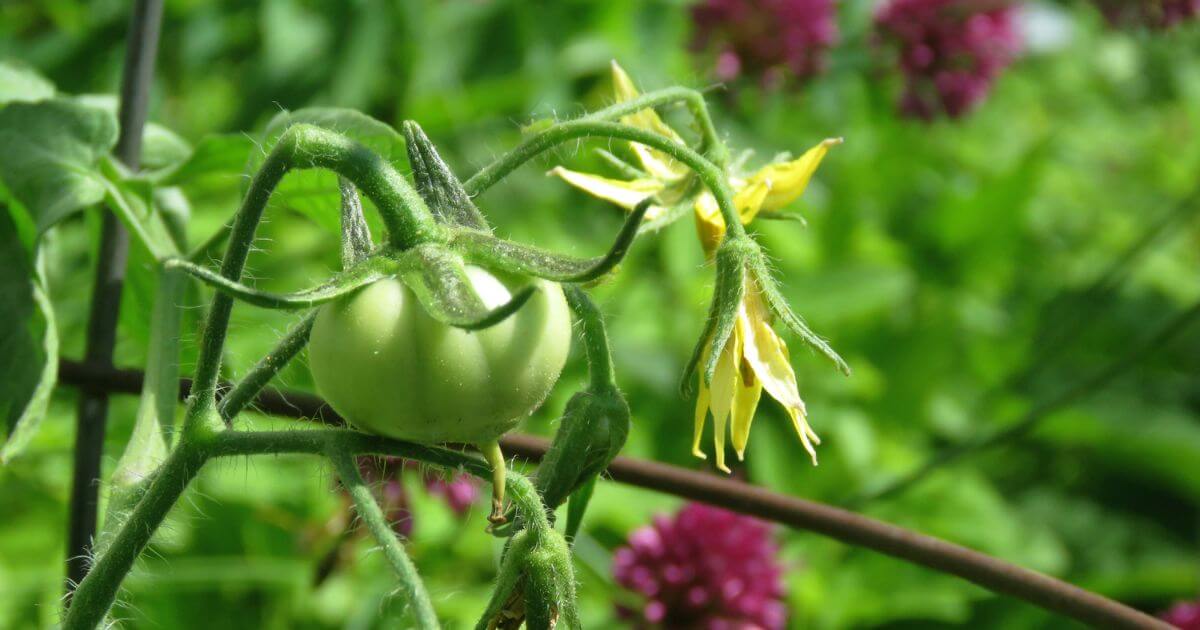
- Tomatoes and marigolds to repel pests and increase yields
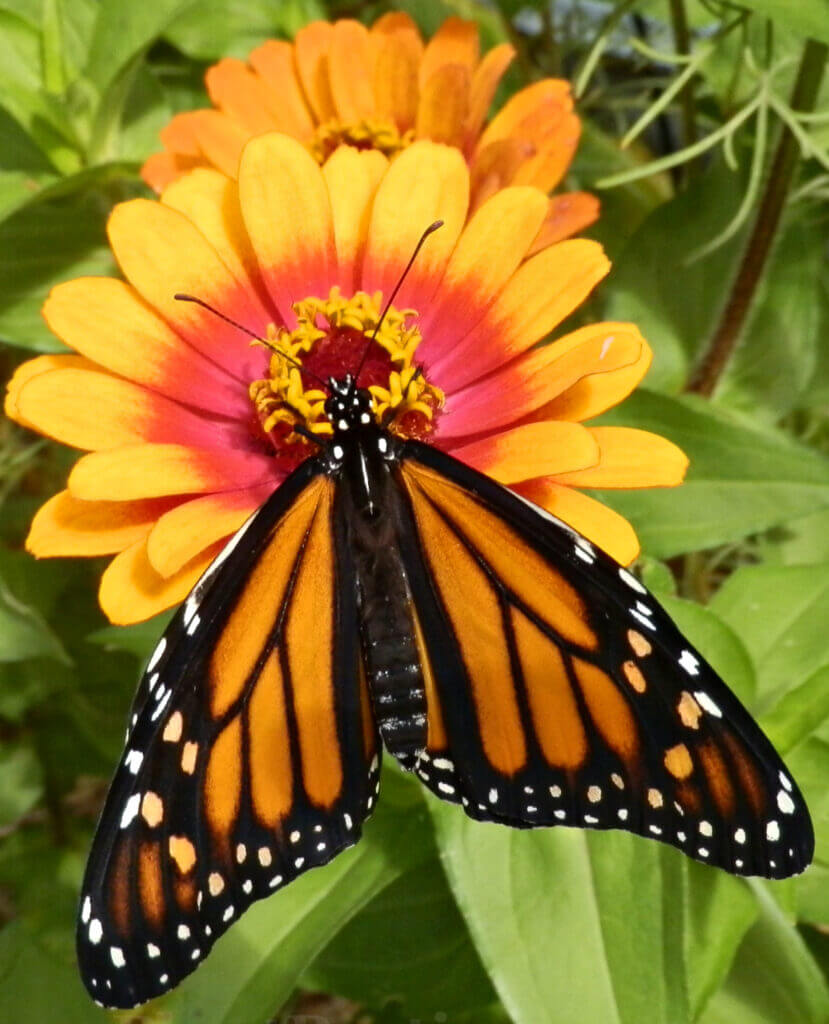
- Lettuce and zinnias, with onions to keep aphids away
- Peppers and tomatoes because they have similar needs for nutrients and growing conditions.
Country Living provides a helpful list of recommended edible and ornamental plant combinations.
Some combinations can be detrimental, however. For example, horticulturists recommend avoiding:
- Black walnut trees near most garden plants—black walnuts produce a toxic substance called juglone that can cause brown, twisted leaves and plant wilting.
- Sunflowers and potatoes—they compete for nutrients in the soil and some studies show sunflowers can increase the chances of potato blight.
- Alliums near asparagus—alliums, such as leeks, garlic and ornamental and garden onions can stunt the growth of asparagus.
For more guidance on plant combinations to avoid, consult this information from Gardening Know How.
As The Old Farmer’s Almanac describes, “Until recently, a lot of companion planting was based on little more than hearsay, but there’s an increasing body of scientifically grounded research that actually proves that growing specific plants together can reduce pests, boost growth and even help wildlife.”
Try it—you might be surprised with plumper, more robust tomatoes and brighter, healthier annuals and perennials!
Beth Stetenfeld is an organic gardener, native plant enthusiast and garden blogger and writer. She’s also a master naturalist volunteer and instructor.
You may be interested in:
Foraging for Edible Native Plants
Forests of the northern Midwest offer more than just a beautiful environment—they also represent an opportunity for small-scale food foraging. Not only is foraging fun…
Day 8: Vegetables in the Ornamental Garden
While many people like to place their vegetable garden in a separate space designed just for growing and harvesting food, others either lack enough space…
Layering Your Edible Garden
Think of Christina Chung’s new book, The Layered Edible Garden, as permaculture made easy. Chung, a horticulturist known on social media as @Fluent.Garden, guides gardeners…