


Unusual and Unexpected Flowers for Arrangements
Growing your own flowers to create arrangements for your home is, in a word, fun. You can make the process even more exciting by growing some unexpected and unusual varieties in your garden to bring indoors. It’s satisfying to make arrangements with flowers you can’t get in the stores. A few that I’ve had good luck with include:

Amaranth
Foxtail amaranth, also known as love-lied-bleeding, is always striking in a container or garden bed. Kooky, exotic, unexpected and Dr. Seuss-like, they bring their own qualities to a larger floral arrangement as well. Long, ropelike tassels drape off arching stems to create drama, drama, drama. They aren’t for everyone, but if you like the look, you won’t be able to get enough. Tassels can grow to three feet but are quite often around 12-inches. You can have a lot of fun pairing them with other flowers and finding a way to use them in an arrangement.
‘Hopi Red Dye’ variety has a more upright flower and exquisite burgundy leaves. (Indigenous Americans used it as a fabric dye.) The leaves create an effective backdrop in the arrangement and the flowers hold court in a bouquet. The plant sends off wonderful little side shoot flowers that can be trimmed and used.

Both varieties mentioned are easy to grow in a pot or in the ground and are not difficult to find as starter plants in the spring. Once you plant them, they will reseed pell mell in your garden for years to come but can be easily weeded out if you wish. An added bonus: they last for weeks and dry beautifully. Allow the water to evaporate in the vase, they will slowly dry and be gorgeous for months.
Bachelor’s Button
They may not be the newest or must unusual, but I don’t hear of people growing them much anymore. So easy to start from seed and so entrancing, this old-fashioned flower deserves a revival. They come in pink, purple and white, but blue is the way to go; it’s magical color in a bouquet. They almost look as if lit from within. Their feathery foliage is also delightful—no filler needed.
Ageratum
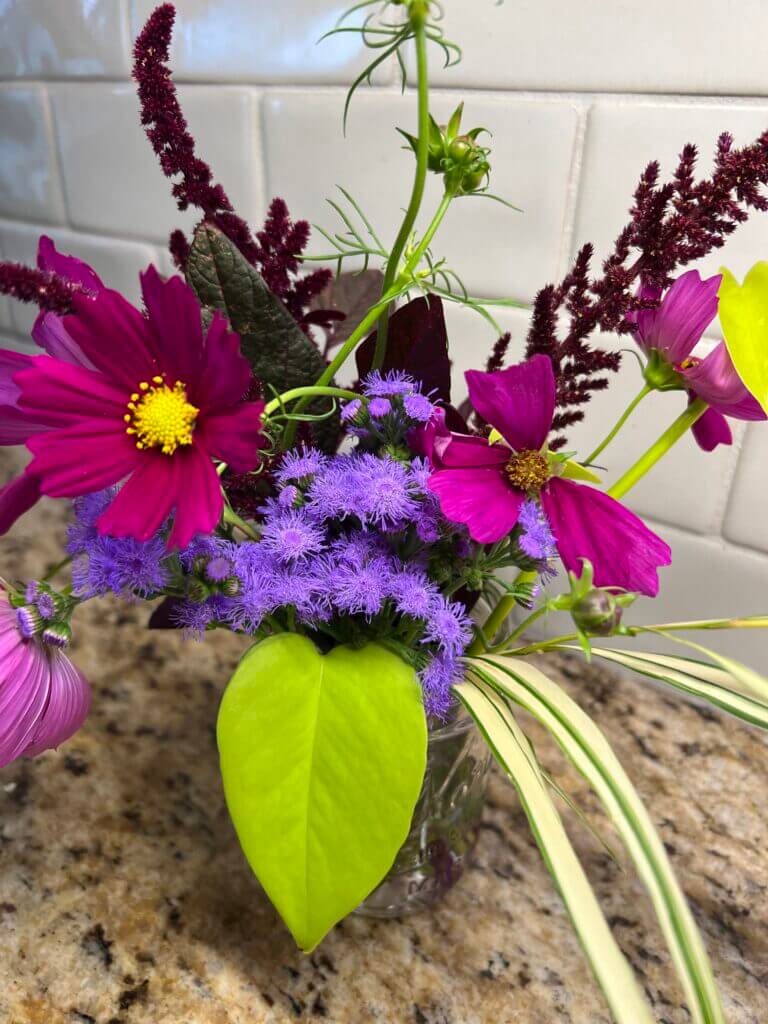
Nearly as blue as bachelor’s button, but with just a touch more purple, ageratum is a great addition to arrangements, not only for it kicky color, but for it’s form. The clusters of little spheres contrast nicely with many flowers, adding an interesting texture. One sprig will add so much. I had only ever thought of it as a bedding plant, until I saw a neighbor grow it and I asked for a couple stems. Now I like to include it in my repertoire.
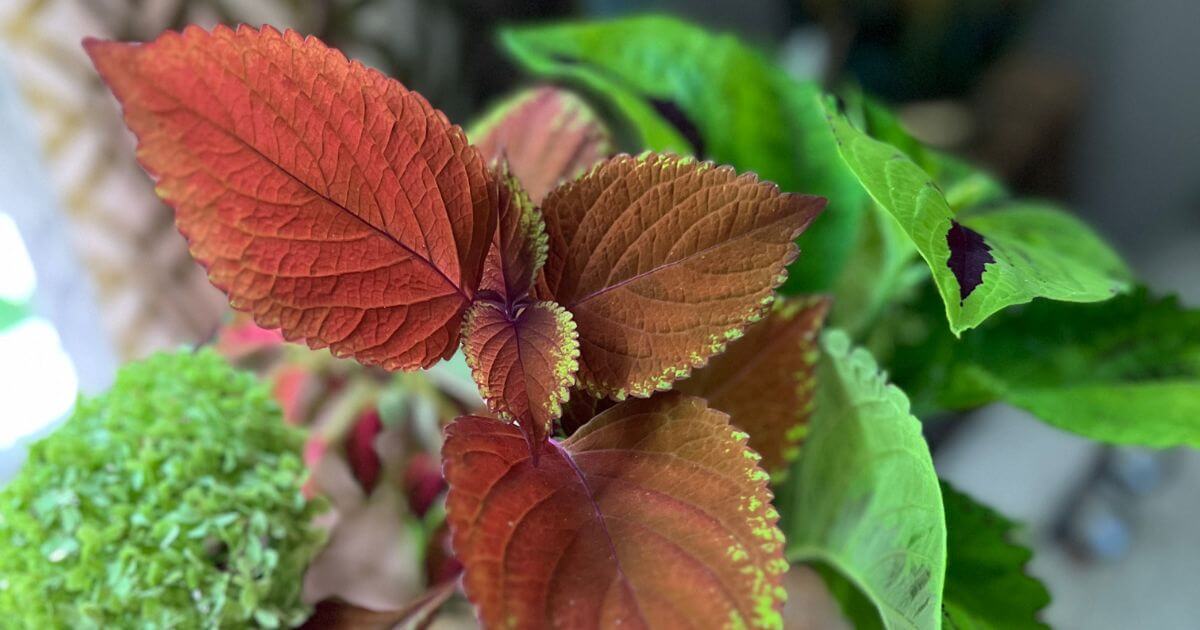
Coleus
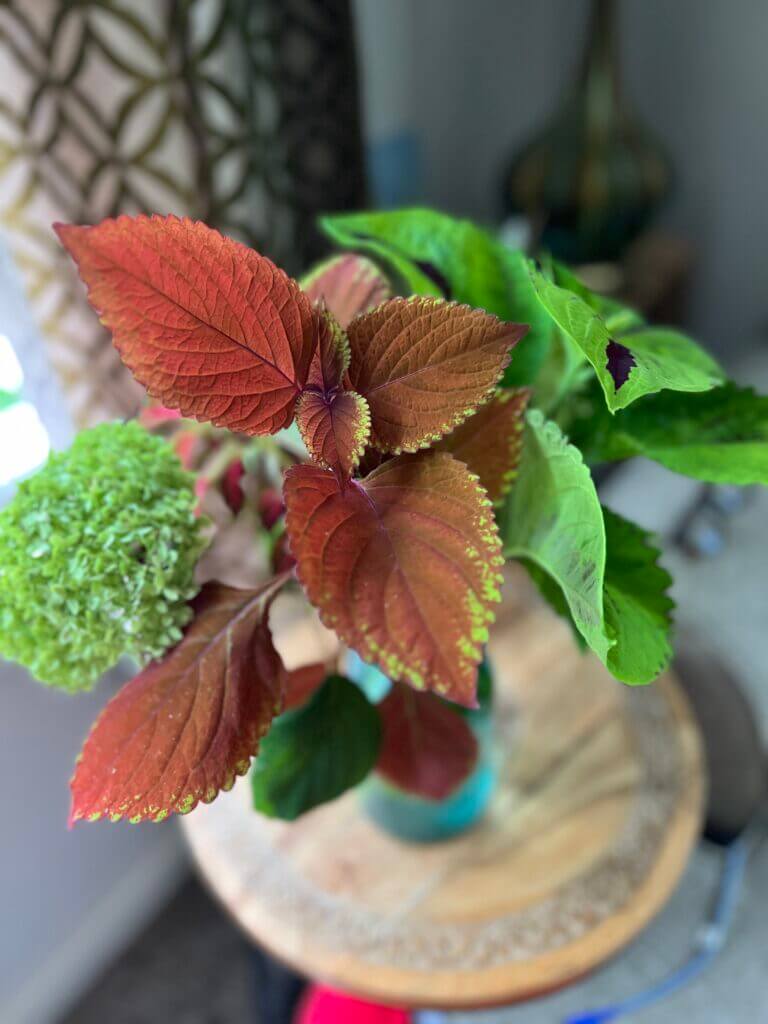
I sing the praises of coleus to everyone who gardens. It’s like having stained glass in the garden. Plant a few varieties and cut some stems to assemble a quick bouquet. You can’t go wrong.
Gaura
This unassuming annual adds lovely texture and movement to containers and borders. The delicate little flowers dance along the reddish stems. A few stems loosens up a bouquet, giving it a wildflower look. It comes in white and pink.
Nicotiana
Nicotiana is an all-star annual to me. It comes in a kaleidoscope of colors and the flowers and brachy stems combine to create a sculptural addition to an arrangement.
Torenia
Also known as the wishbone flower (look closely at the bloom and you’ll see a delicate little wishbone). I really amped up my shade garden after discovering this intricate and detailed little bloom. It will take a lot of shade and from my experience, suffers a little if it gets afternoon sun, but keeping it well watered helps. The stems aren’t long, but they are great for making a little bouquet for your desk. They last a long time once cut.
If you are like me, cutting flowers from your garden to make indoor arrangements doesn’t instantly register as a thing to do—the show has always seemed best outside—but I’ve discovered the great fun of it. If you make a couple, you will soon want to make more, and even challenge yourself as to what will work in a bouquet.
Minneapolis-based Eric Johnson blogs at gardendrama.wordpress.com.
You may be interested in:
Arranging Flowers Cut from the Garden
By midsummer, most gardens are bursting with blooms. Take advantage of the flowers, foliage and even fruits, vegetables and herbs in your garden—enjoy them indoors…
Hot Off the Press: Simple Flower Arranging
Simple Flower Arranging by Mark Welford and Stephen Wicks (DK Publishing, 2014) This visually stunning book is a piece of art itself, but you won’t…
Five Unexpected Fall Flowers for Northern Gardens
Some plants reliably look good in a northern fall garden. Asters, goldenrods, sedums, maybe a Russian sage and some grasses. Add a hydrangea with big,…