


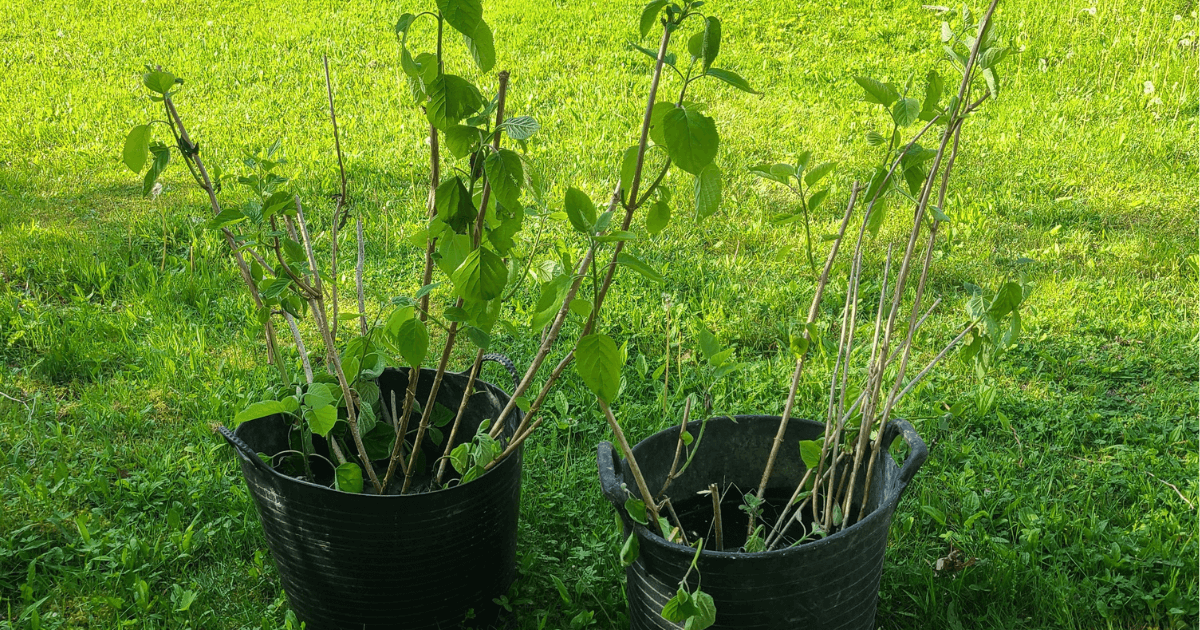
Move and Save Mature Shrubs
To save or not to save? That is the first question. It will take time, energy and a modest financial investment to save mature shrubs, so before you start, find out how much that shrub would cost to replace. New, improved cultivars of common shrubs are frequently brought to market, so buying new may be your best bet. But if the shrub is rare or has sentimental value, here are strategies for propagating and saving it.
Root Pruning and Thinning Your Shrubs
The best way to save mature shrubs is to root prune it six months or more before it needs to be moved: in fall for a spring move and in early spring for a fall move. Do this when the shrub is dormant—before bud break in spring or after leaf drop in fall. Warning: this is not a job for weak or out-of-shape gardeners.
The next step is to cut a circle around the shrub as wide as you want the root ball to be. There are charts showing recommended diameters, but I just eyeballed it and hoped for the best. I knew my strong son was going to do the actual digging and moving, so I probably made a smaller root ball than recommended, but the shrub survived (and it took two of my sons to move it).
For cutting the roots, I relied on my Root Slayer shovel. I also thinned out some of the oldest branches and cut all the branches back to reduce weight and bulk, because my shrub was over six feet tall before pruning. The shrub was already dormant so I wasn’t worried that pruning it would stimulate new growth.
Moving Your Mature Shrub and Transplanting Suckers
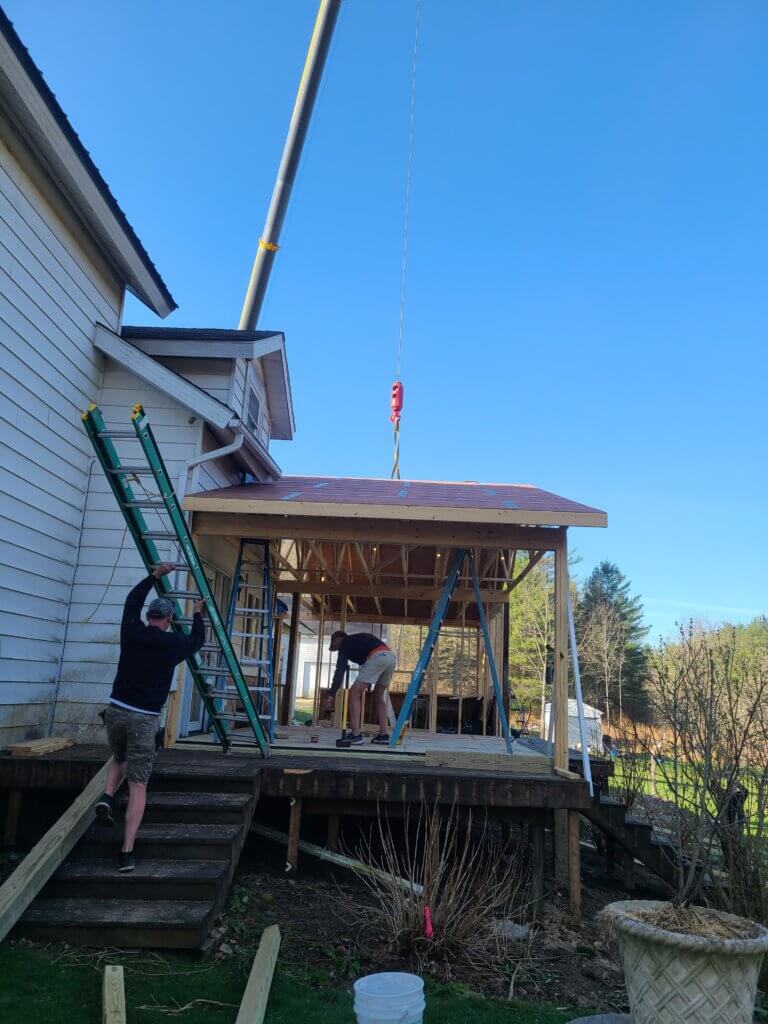
The following spring, my son dug a hole in the new location as soon as the soil had thawed. He then dug around and under the shrub until it was free of the soil. He and his brother picked it up and put it in its new location. You might prefer to heave it onto a tarp and drag it. You will still need a second person to hold it steady on the tarp as you drag. After that, it’s just a matter of filling the hole. Make sure you form a little wall of dirt around the shrub to hold water, because it will need extra water during that first year in the new location.
But you might not have a half year’s advance notice that a shrub needs to be moved, or you might not be physically able to do so. If your shrub suckers, you can dig out a few suckers with roots and replant immediately in the new location or pot them up for a while. Put potted shrubs in a protected location for the winter, such as an unheated garage.
I’ve also asked my boys to dig up shallow rooted shrubs such as hydrangeas and rhododendrons and replant them immediately without any root pruning. They need extra watering but only one failed to survive. It helps to have a cool summer.
Taking Cuttings of Your Shrubs
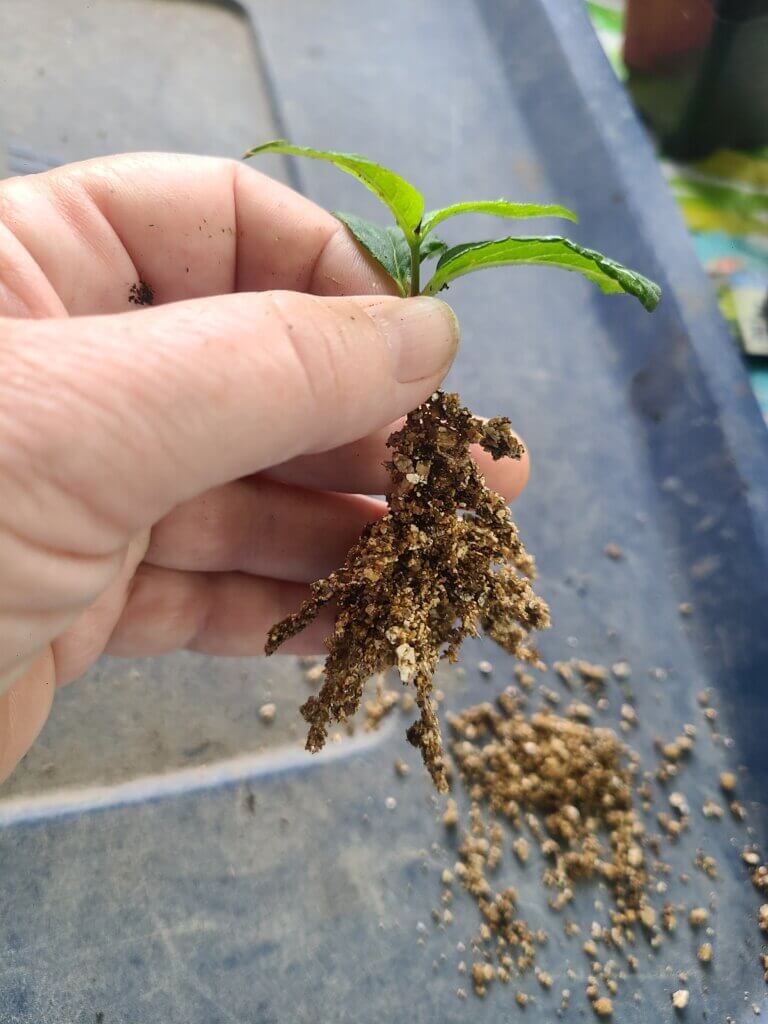
If it doesn’t have suckers, it’s not shallow rooted, or it’s way too big to dig, you can take cuttings. I’ve taken cuttings following the directions in Making More Plants by Ken Druse (Clarkson Potter, 2000) using a deep, disposable foil cake pan with a high plastic lid. The cuttings successfully rooted, but only the ones I planted in the ground survived. I didn’t have a good location to keep the potted plants sheltered and cold, but not too cold. Shrubs grown from cuttings take longer to make substantial plants, but you’d be surprised how quickly ten years go by.
Unless they’re very small, trees are difficult and expensive to move. You’ll need at least 10 to 12 inches of root ball diameter for every inch of trunk diameter. That gets heavy fast. Is the cost of renting a tree spade or hiring an arborist less than replacing the tree? If it has sentimental value, taking cuttings (assuming you can reach the small branches) or growing from seed (which won’t come true if it’s a cultivar) are probably your best bets if you don’t have deep pockets.
For more detailed information visit these websites:
Transplanting Established Trees and Shrubs
Propagating Shrubs and Trees from Softwood Cuttings
Propagating Plants with Hardwood Stem Cuttings
Note: This post supplements ‘Coping with Construction’ featured in the Winter 2024 issue of Northern Gardener® (page 16).
Kathy Purdy is an award-winning writer on Instagram (@kopurdy), Facebook and coldclimategardening.com. She gardens on 10 acres in upstate New York.


This is very helpful. I am thinking about moving a ninebark that’s in an otherwise thriving row of other ninebarks. The one on the end may not be getting enough sunlight. I’ve also thought about moving a little lime hydrangea. Thanks!
I’m confused. The first paragraph says to root prune the shrub. The second paragraph says: “The next step is to cut a circle around the shrub as wide as you want the root ball to be.” Doesn’t this need to be the FIRST step? How can you root prune it before you cut around it?