

When Can We Plant Vegetable Seeds?
As this long and snowy winter finally eases its grip, many gardeners are wondering how much they should adjust their vegetable planting schedule. By some reports, we are a good three weeks behind the usual weather and planting for Minnesota.
Of course, many gardeners have already started seeds under lights in hopes of getting them into the garden in early to mid-May.
You may recall 2013 or 2014, when we had winters that ended with snowstorms in early May. Still, if you have seeds under lights, you can keep them inside longer than planned. You may need to add fertilizer—a weak solution of liquid fertilizer is a good option—or pot them up into larger pots with fresh potting mix to keep them growing strong.
Those who have greenhouses may just spend more time babying their plants as we wait for the right weather.
But when should you plant vegetable seeds that you normally plant outdoors? One of the best ways to know is to check the soil temperature in your garden and go by that. You can buy a soil thermometer at garden centers. Soil thermometers usually have a metal probe that you stick in the soil to check the temp. Some seeds (lettuces, for example) can be planted when soil temperature is as low as 40 degrees — BUT, and this is a big but—it will take those seeds a long time to germinate—like weeks. So, what’s a northern gardener to do?
Four options:

1) Start some of your cool weather favorites indoors to plant out as seedlings. The cool soil won’t bother the seedlings as much as the seeds, and they’ll get growing quickly as more seasonable weather arrives.
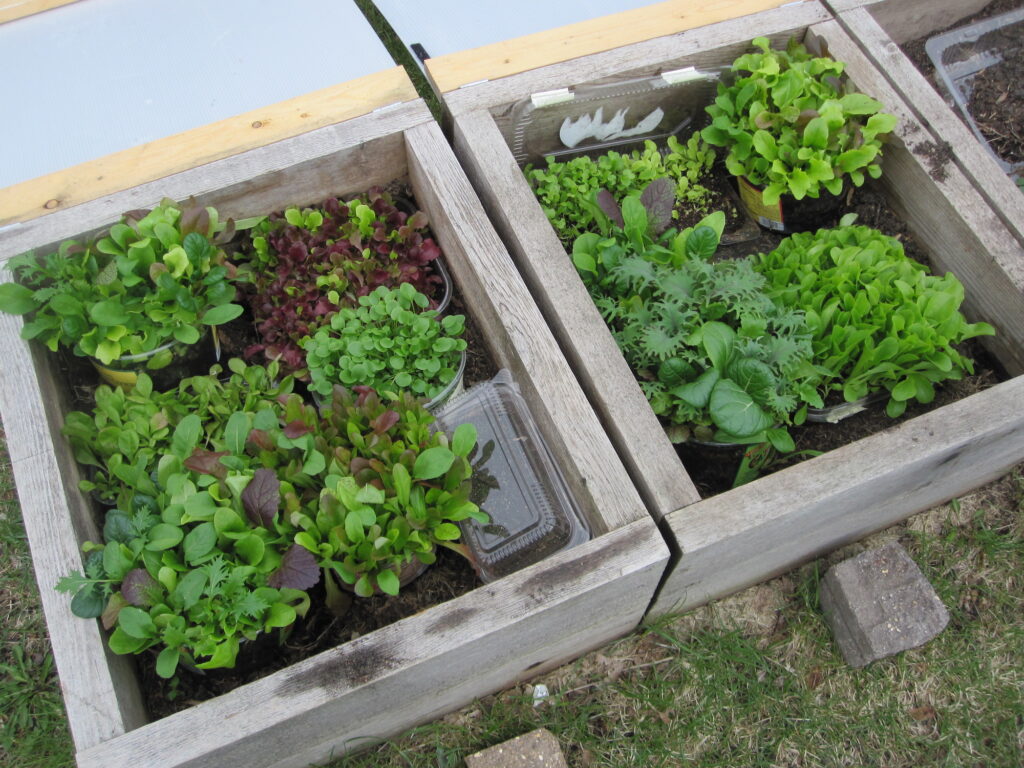
2) Use a cold frame to plant vegetable seeds outside or hold seedlings before you want to put them in the garden. Cold frames do not have to be fancy. Just set them up so the frame can be covered at night and you have a way to open the frame to let out hot air on warm days—which will come eventually. If you have planted seedlings out, something as simple as a soda bottle can be used as a cloche or single-plant cold frame.
3) Wait for fall — Yep, for some crops, such as broccoli, it might make sense given our late spring and Minnesota weather’s penchant for warming up rapidly in June, to plant them in the garden in August and harvest them as a fall crop.
4) Try to warm the soil. This works best with raised beds or other smaller vegetable spaces. Laying down black or clear plastic will help increase the heat under the plastic. There is considerable debate online about whether black or clear is better at raising soil temperature. I have two identical sized raised beds in my vegetable space and will run an experiment this spring (as soon as the snow melts!) and report back.
Just remember — this cannot last forever!
You may be interested in:
When to Plant Your Vegetable Garden
Updated May 2025 Planting a vegetable garden isn’t just a one-day affair. It’s often done over several weeks, depending on the weather and other factors….
Vegetables You Can Plant in Midsummer
As the first part of the vegetable garden season winds down, harvest holes may start appearing in your garden. These are the spots where you…
Seed Catalogs 101
The snow squeaks under your boots as you trudge through the drifts to the mailbox. It’s only December, but you’re already growing weary of the…