


Creating a Bird Lover’s Garden
Birds are the flowers of the air. There’s no need to plant, fertilize, or harvest. Merely by attracting birds to your garden can you enjoy the color, sound and antics of an ever changing assortment.
Birds are primarily seed and insect eaters. Of course there are those that go for nectar, suet, and seasonal delicacies. Migration allows for those with special dietary needs to thrive.
To attract the flowers of the air, consider what your garden has to offer them. Think of your garden as the entire area over which you have control. Weeds, trees (deciduous and evergreen living and dead), shrubs, grasses, and fungi all have things to offer the birds. Bugs, insects, worms, and spiders are avian delectables.
Use an illustrated bird book to learn about specific birds and their preferred food sources. Backyard feeders are also good teachers. Offer sunflower seeds (black and regular), millet, thistle seed, suet, and sugar water (nectar) and get to know the guests who respond to your invitation.
Attracting northern birds with feeders and habitat
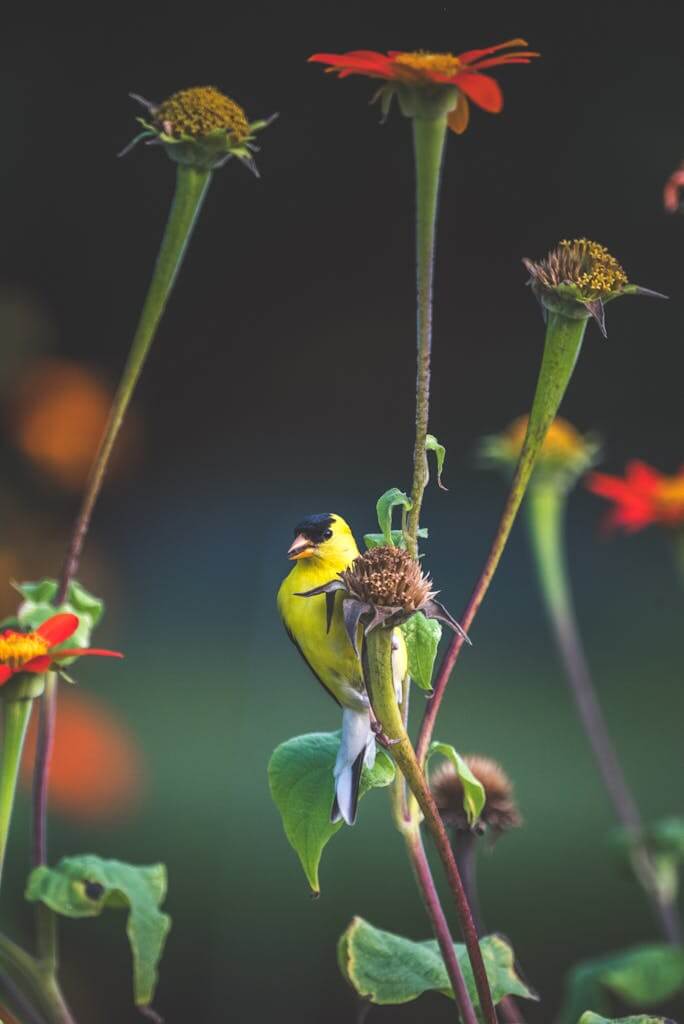
Gold finches are easy to spot as the brilliant yellow autumn males alight on sturdy thistles to glean a meal of seeds. Their less auspicious female friends accompany them. Both males and female exhibit dull colors in the winter and are happy to frequent backyard feeders. The house and purple finches, though wearing different color palettes, will, too.
The brilliant crimson male cardinals and their green hued mates will come to your feeder if you have conifers in your garden. Pine, spruce and cedar trees offer dense cover for nesting. Once cardinal pairs have discovered their ideal nesting sites, they remain in the area year-round and appreciate the free meals of a feeder.
Pileated woodpeckers, like all woodpeckers, love the banquets provided by dead trees and the crawly insects that inhabit them. They also love snacks of suet. One raucous pair of pileateds couldn’t help but announce to the world when they found the ripe grapes in my garden arbor. It was worth sacrificing that crop to watch and listen to them each time they returned for a meal. You’d think they would have kept silent at their find but they were very loud about it.
Plants for an attractive bird garden
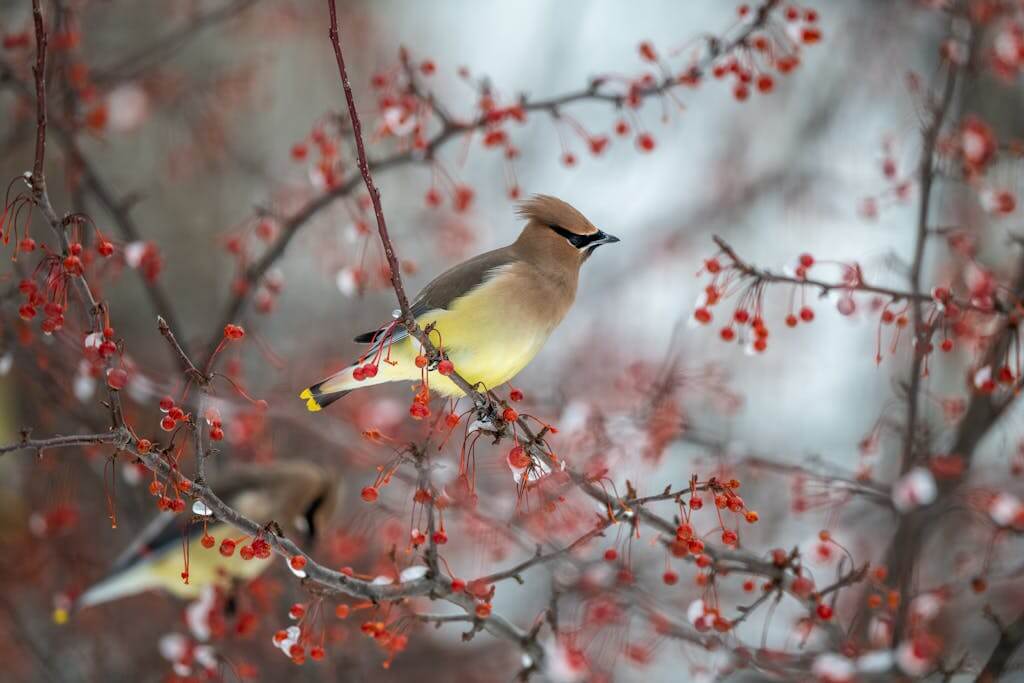
It’s well known that robins returning to the north rely on the still-clinging mountain ash berries and flowering crab apples. But birds are blossom eaters, too. Imagine my surprise when I read an online account of cedar waxwings eating apple blossoms and looked out my window to witness that activity in my own garden. A flock of the sleek sagey gray waxwings, wearing their black bandit-like eye masks, gobbled blossoms as quickly as they could. I needn’t have worried about whether there would be enough left to develop into apples. In fact, maybe they did the tree a favor by their fruit-reducing commotion.
Crows love cherries. They don’t discern between sweet and tart when it comes to fruit preferences. But they do like them to be red and ripe. Other birds love the year-round shelter provided by cherry shrubs. The cornelian cherry growing near our bird feeder is loved by the finches, woodpeckers, chickadees, nuthatches, hummingbirds, cardinals, sparrows, juncos, as well as the less frequently seen buntings, orioles, and tanagers. The blue jays and chickadees snatch seeds from the feeder, wedge the seeds into nooks in the branches and feast in relative safety.
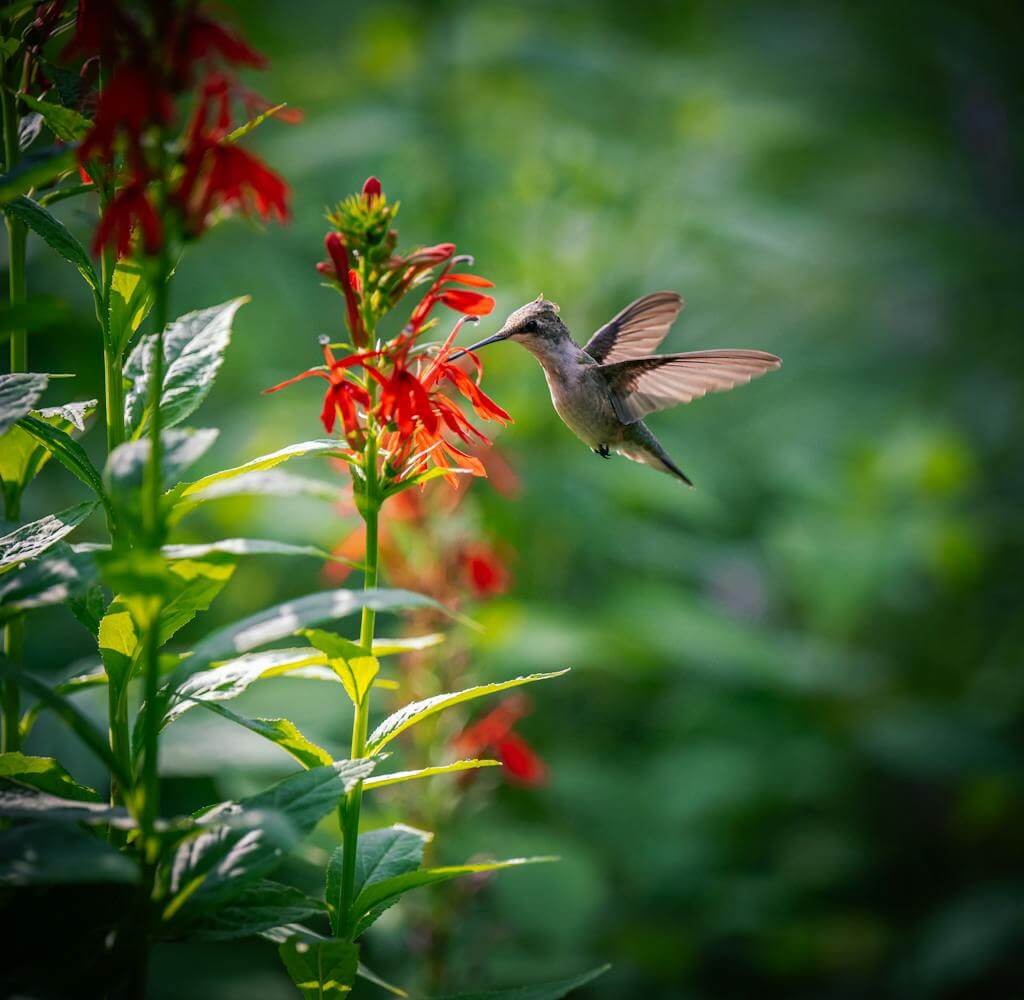
Of course hummingbirds appreciate the hanging nectar feeders but they are also drawn to tubular flowers. Offer fuchsias in hanging baskets, hostas in borders, and columbines scattered in flower beds. A quick online search for “flowers that attract hummingbirds” will give you many more ideas.
For some delightful reading about bird lovers and their gardens and more ideas in attracting birds, find a copy of Amy Tan’s (yes, the author of The Joy Luck Club and The Bonesetter’s Daughter) The Backyard Bird Chronicles and Julia Zarankin’s Field Notes from an Unintentional Birder.
Nancy Packard Leasman is a columnist, artist and gardener who maintains 40 acres in central Minnesota.
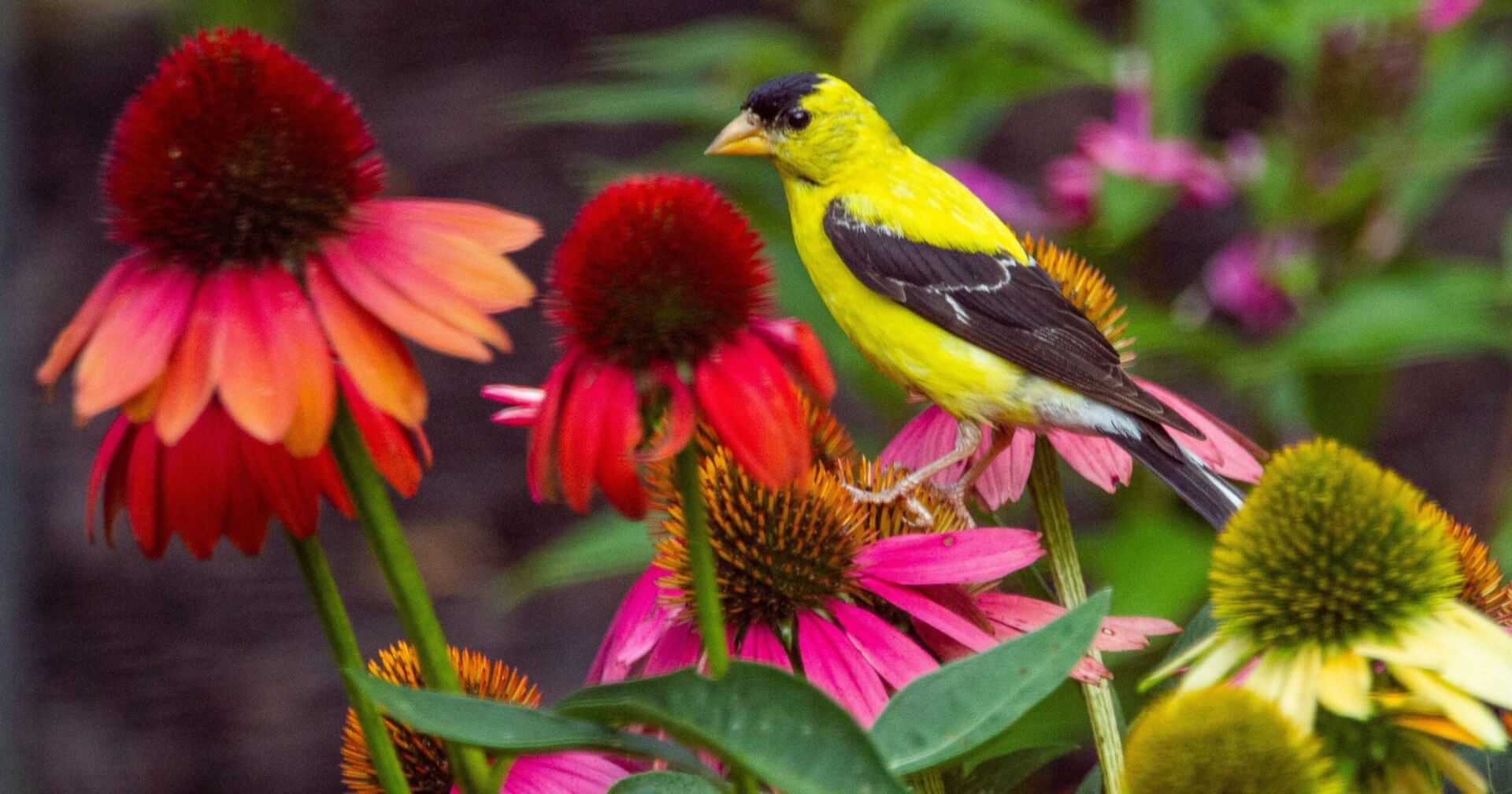
Featured image: Goldfinch among echinacea. Photo by Joshua J. Cotten on Unsplash.
You may be interested in:
Creating Community Gardens
Bird Gardening and More in the Latest Northern Gardener
The November/December 2018 issue of Northern Gardener is on newsstands today, and it’s the magazine with the stunning photo of the black-capped chickadee sitting in…
How to Create a Bird Friendly Garden
Not too long ago, we came across a pamphlet from the Saint Paul Audubon Society on sustaining songbirds and other wildlife in your garden. It’s…