



Night Shift Pollinators
I’m always looking at the world of pollinators for a new angle, yet I hadn’t really delved into the subject of moths until recently. Although moths share the order Lepidoptera with butterflies, public interest leans heavily to the latter, and I’ve been guilty of the same attitude. But as I’ve been digging into the shadowy world of this often-maligned and overlooked species, I’ve discovered that moths are fascinating.
Adult moths are pretty harmless; some don’t even have functioning mouth parts. It’s the ravenous larvae that earn moths their bad reputation, especially the ones munching on sweaters or pitching tents in treetops. And yes, the larvae do eat all manner of plants, but hey, they have to live, too. Just remember, caterpillars are bird food! Bats and spiders dine on them, too. They are a vital part of the food web.
Moths work the night shift, pollinating flowers that bloom late in the day and in the dark, especially white or pale-colored blooms with a heavy fragrance, like jasmine, yucca, moonflower, four o’clocks, tobacco and gardenia. A moonlight garden with flowers that glow at dusk would welcome plenty of moths.
Getting to know your moths
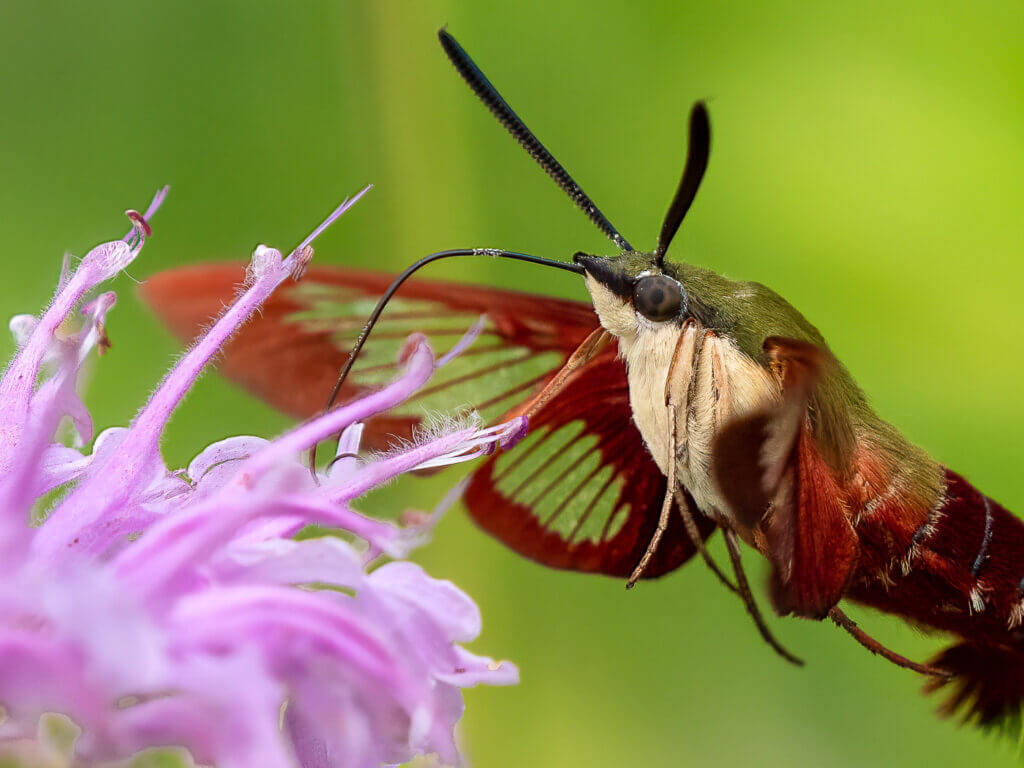
During the day, you may see different sphinx moths buzzing about, often mistaken for hummingbirds. They forage on a variety of plants, but I see them frequently on purple-colored flowers composed of many florets. They use their long proboscises to access nectar.
Most moths are drab and dull but many are spotted, banded or striped. Some are shades of green; the tiny primrose moth is a bright pink. Several species have a pink or red petticoat beneath their wings. Others, such as the polyphemus moth, are large with distinctive eyespots.
Sometimes the clue is in the name. Many larvae are named for the plants they consume—oakworm moth, melonworm moth, mint-loving pyrausta moth, honey locust moth. At times they are labeled by their behavior—actions like cut, roll, bore and mine. Examples include army cutworm, basswood leafroller or ash-tip borer.
More intriguing are the moths with unique names such as ambiguous moth, confused woodgrain moth, venerable dart, promiscuous angle moth and definite tussock moth. You wonder what they did to deserve such monikers. The Hebrew, the joker, the scribbler are named because of their scriptlike markings. The rustic Quaker and the somber carpet moth sound so plain and dour.
Methods for observing moths
To observe moths at night, hang a white sheet on a windless, dry evening away from other light sources, then shine a light so that the whole sheet is illuminated. You can use any type of light, but UV or black lights attract a greater diversity of species. Be patient as different moths will arrive at different times throughout the evening. And because this method can be somewhat disruptive to moths, be sure to limit your light usage to allow moths to get back to their work of nighttime pollinating.
Another method for moth-watching that doesn’t involve light is called sugaring. Combine brown sugar, beer, molasses and overripe fruit such as bananas. The ratios needn’t be exact. Then, let the mixture ferment for a few days. Paint this malodorous bait on a tree trunk and wait to see what arrives. Don’t paint it on anything that you don’t want stained.
National Moth Week is July 17-25 this year, but don’t limit your moth-watching to that period. Any time this summer is a great time to view these misunderstood creatures right in your own backyard. Lots of folks even throw moth-watching parties!
- Moths outnumber butterflies 10:1, with somewhere between 150,000 to 500,000 species in the world, with 11,000 species in North America.
- Moths are among the most diverse and successful organisms on the planet.
- Most are nocturnal and their muted colors make them harder to observe.
- Moths are hairier and fatter than butterflies.
- Their antennae are feathery and clubbed at the tip.
- At rest, they flatten their wings or spread them in a “jet plane” position.
- They shiver their flight muscles to stay warm after the sun goes down.
- Moth larvae (caterpillars) may chew on leaves, buds, flowers, stems and seeds.
This article originally appeared in the Summer 2021 issue of the members-only Grow! zine.

Rhonda Fleming Hayes is a freelance writer and author of Pollinator Friendly Gardening (Voyageur Press, 2016). She tends a bountiful kitchen garden in Minneapolis..


Did you know that the light that attracts these moths and insects also disorients and kills them? It is important, therefore, to use yellow lighting at night which will not harm them. Moths are important pollinators and we need to protect them in any way we can. We are losing our pollinators at alarming rates. Thanks.
Please do not encourage readers to “leave the light on” as this is disorienting and harmful to night time pollinators